"The MWS must alert the F-15EX aircrew to the presence of missiles that may threaten the aircraft without unreasonably distracting the aircrew with false alarms," the Air Force Life Cycle Management Center’s Fighters & Advanced Aircraft Directorate wrote in a contracting notice seeking missile warning systems for the new Eagle II.
AFLCMC seeks field-installable missile warning systems
Yesterday's contracting notice formally moved the F-15EX missile-warning question from debate into purchasing action. The notice asks for "an operationally qualified threat missile launch and approach warning system for rapid integration into the United States Air Force (USAF) F-15EX Eagle II fighter aircraft" and makes clear the Air Force remains in market-research mode: the posting "does not constitute [a] solicitation and shall not be construed as a commitment" to buy.
The notice specifies installation constraints and performance expectations: the MWS must use the six pre-existing F-15EX sensor, data, power and cooling connections and be "easily, safely, rapidly, and organically installable and removable in the field by USAF military aircraft maintenance personnel" without changing aircraft configuration beyond installing line replaceable units (LRUs) in those six locations.
F-15EX configuration: six pre‑existing sensor locations
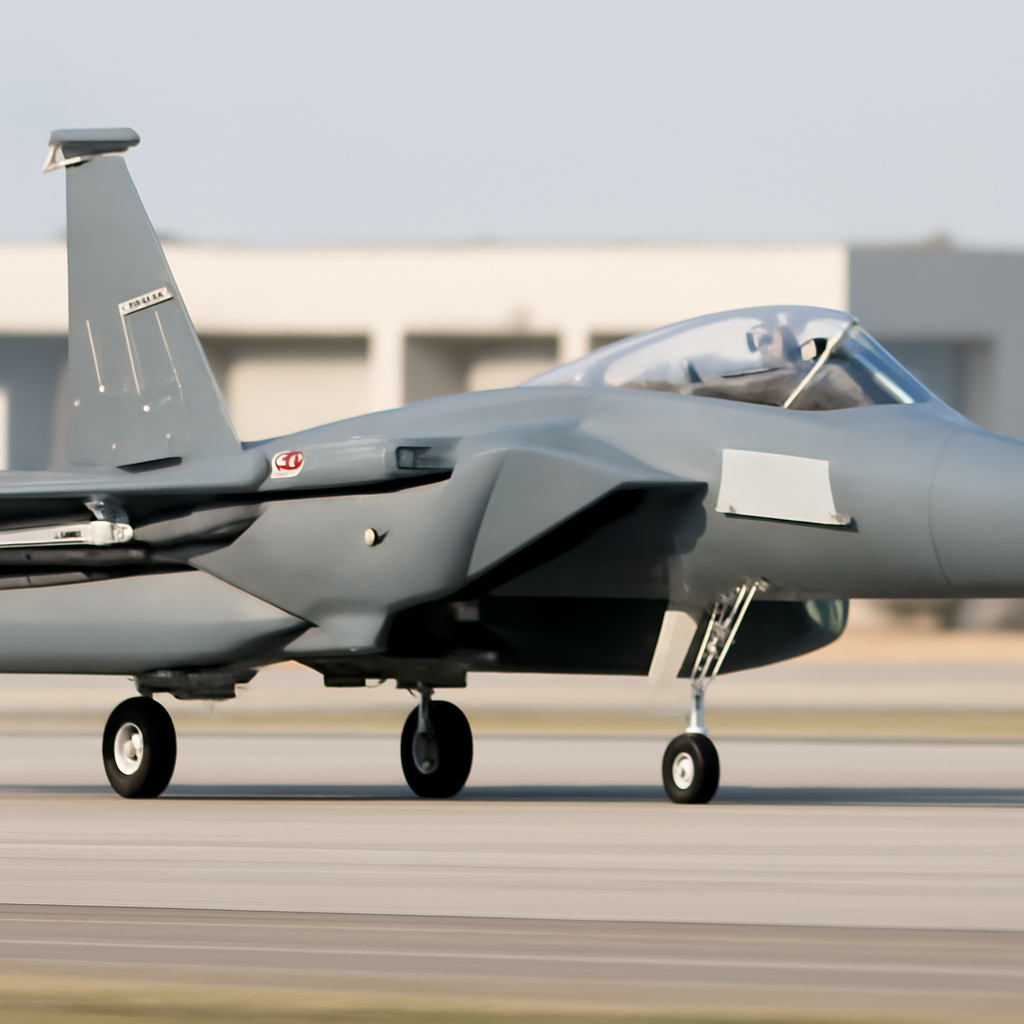
The Eagle II was derived directly from Qatar’s F-15QA and retains provisioned spaces for a missile warning suite. Visually prominent are two horn-like sponsons beneath the forward fuselage, one per side, and two sensor locations at the ends of the jet’s tail booms. Two additional locations are positioned to provide straight-up and straight-down coverage, giving the potential for true 360-degree optical coverage once populated with sensors.
Despite those accommodations, the Air Force currently fields 22 F-15EXs and plans a fleet of 267 jets; Boeing is contracted to build 120 Eagle IIs, including a lot of 22 jets under a new $2.38 billion deal announced alongside the contracting notice. Yet the initial production aircraft rolled out without an installed missile warning system, even though earlier F-15 variants routinely carried such systems.

Audit-ready is a season. It shouldn't be.
Evidence in spreadsheets, controls drifting between audits, frameworks multiplying on flat headcount. Nubivance runs continuous compliance on Rapid7 Cyber GRC - SOC 2, HIPAA, ISO 27001, PCI, CMMC.
End the scrambleAN/AAR-57 CMWS on other F-15 variants and rotary-wing fleets
One obvious candidate on the market is the AN/AAR-57 Common Missile Warning System (CMWS), used on the F-15SA and understood to be fielded on the F-15QA. BAE Systems is the current prime contractor for CMWS variants. Versions of the AN/AAR-57 are also in service across several U.S. rotary-wing platforms including the AH-64, UH-60 and CH-47.
All CMWS configurations consist of several electro‑optic missile sensors (EOMS) linked to a central electronic control unit (ECU). BAE Systems says current-generation AN/AAR-57 variants can be sensitive enough, under the right circumstances, to detect infantry anti-armor rocket launches and even small-arms fire from the ground. The contracting notice, however, does not name a specific system; it invites prospective vendors to submit proposals and leaves open the possibility the Air Force could select an alternate or newer system offering added functionality.
Combat prompts re-examination: the April F-15E loss and broader threat trends
Recent combat experience has sharpened the urgency. The New York Times reported details about the shootdown of an F-15E Strike Eagle over Iran in April, saying a shoulder-fired, heat-seeking surface-to-air missile (MANPADS) was responsible; that account remains unconfirmed. TWZ noted the F-15E lacked an MWS and that reporting which suggested the crew received only "half a second of warning" would, in the absence of an MWS, effectively amount to no warning at all.
Infrared-homing missiles and passive infrared sensing are not limited to the Iran theater. TWZ cited Houthi claims of downing a Saudi F-15 earlier this month and the group's release of FLIR-captured video and wreckage imagery purporting to show an F-15SA Advanced Eagle. The piece stresses that while MWSs are not countermeasures in themselves, their early warning enables deployment of flares, other defensive actions, or evasive maneuvers—functions the F-15EX’s radar-focused Eagle Passive/Active Warning Survivability System (EPAWSS) is less suited to provide against heat-seeking threats.
What this means for the USAF, Boeing, and BAE Systems
- For the USAF: the contracting notice signals a pivot toward fielding a tailored optical missile warning capability on a jet already produced in quantity; the service will watch proposals that meet the rapid, field-installable requirement and avoid aircraft reconfiguration beyond LRU swaps.
- For Boeing: the company is delivering production aircraft—22 already in inventory and a 120-jet contract in place—and faces integration work on aircraft that were provisioned for sensors but shipped without the MWS LRUs installed.
- For BAE Systems and other vendors: existing CMWS offerings (AN/AAR-57 variants) represent a proven integration path, but the open market notice leaves room for competing systems that claim added capability or easier installability into the six pre-existing locations.
For now, the Air Force has formally started the procurement conversation while leaving its options open: which system will be chosen, how rapidly it can be fitted across the fleet, and whether similar work will follow for F-15E Strike Eagles remain open questions. The contracting notice, and the built-in MWS accommodations on the Eagle II, at least make one thing plain — the service has signaled it intends to close this specific defensive gap rather than leave it an unresolved omission.