188 days at sea: that is how long USS George H.W. Bush had been underway before dropping anchor off Phuket, Thailand, on October 4, 2026.
USS George H.W. Bush sails into Phuket after long CENTCOM tour
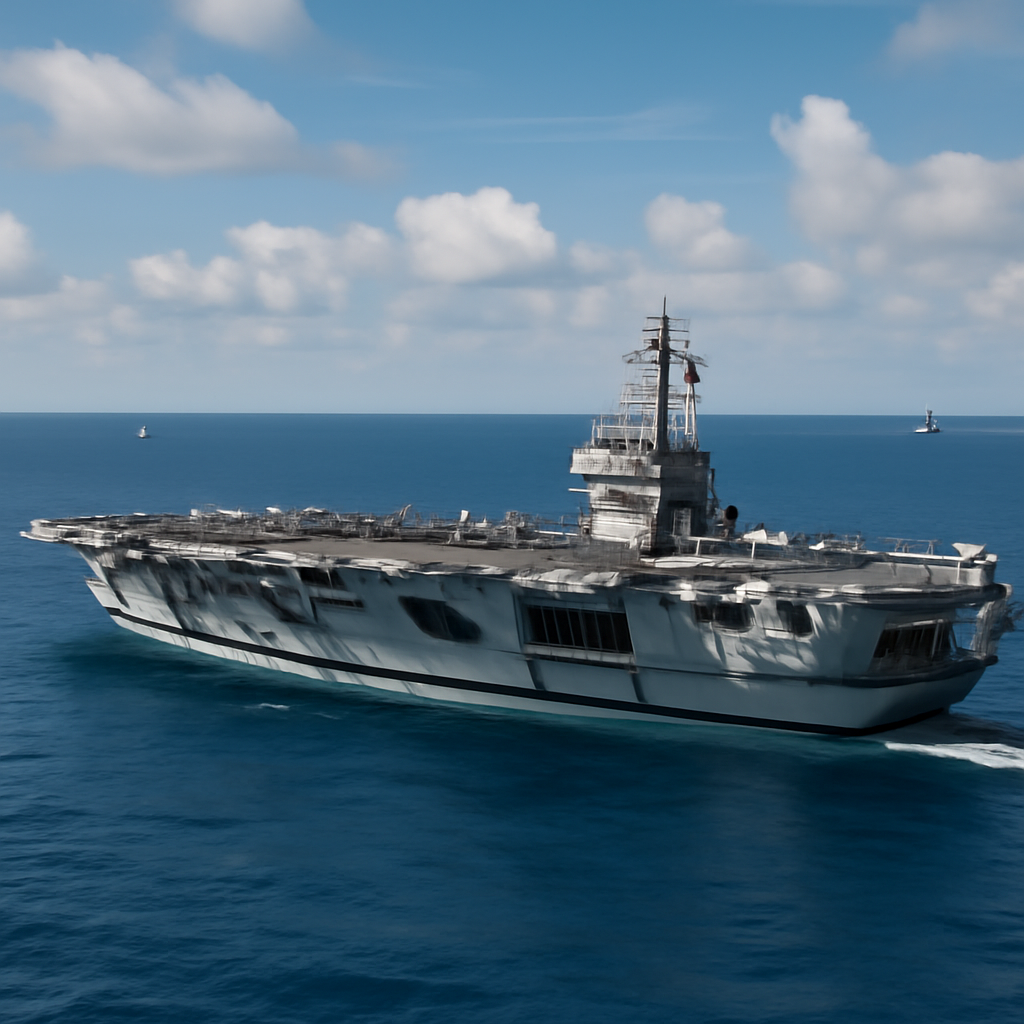
USS George H.W. Bush (CVN 77) rounded the Cape of Good Hope en route to the Middle East and later switched her Automatic Identification System (AIS) on about 15 nautical miles southwest of Thailand on October 3, broadcasting publicly for the first time since April, according to MarineTraffic data. The carrier dropped anchor approximately two nautical miles off Phuket on October 4. U.S. 7th Fleet said the strike group had “supported Operation Epic Fury and the U.S. naval blockade in the U.S. Central Command area of responsibility to secure maritime security and stability in the Middle East” during the last six months.
Delbert D. Black escorted Bush from the Arabian Sea into Phuket; the current CENTCOM carrier strike group composition listed in public reporting is USS George Washington (the deployed flagship), USS Mason, USS Ross, and USS Donald Cook. Mason steamed south through the Malacca Strait on September 29 and was in Singapore; Ross and Cook had not broadcast positions in months. The escort choice and movements left a single carrier strike group led by USS George Washington in CENTCOM after Bush chopped into the U.S. Pacific Command area.
USS Abraham Lincoln holds off California, closes an extended deployment
USS Abraham Lincoln reappeared on AIS on October 3 about 200 nautical miles southwest of Naval Air Station North Island, then held off the California coast to disembark Carrier Air Wing 9 and offload ammunition alongside USNS Washington Chambers. Lincoln departed San Diego on November 21, 2025; an arrival this week would make the cruise roughly 321–322 days — the second-longest modern-era carrier deployment after USS Gerald R. Ford’s 326-day record in May.
The deployment drew scrutiny for strain on sailors and families. The source notes family accounts of supply shortages and difficult living arrangements and records a response from Acting Secretary of the Navy Hung Cao who “called [the reporting] dishonest while also acknowledging that ‘a small number of mental health cases were treated with no loss of life, meal plans were adjusted when fresh resupply was unavailable, without a single meal being missed, calls home were limited when the operational threat was too high.’” The source also records that “at least eight personnel across the strike group attempted suicide during the cruise,” a fact Cao wrote in a letter obtained by CNN. Elements of the air wing — including Helicopter Maritime Strike Squadron 71 and a Growler squadron — have begun returning to home bases.

Audit-ready is a season. It shouldn't be.
Evidence in spreadsheets, controls drifting between audits, frameworks multiplying on flat headcount. Nubivance runs continuous compliance on Rapid7 Cyber GRC - SOC 2, HIPAA, ISO 27001, PCI, CMMC.
End the scrambleIncidents, overhauls and new arrivals: Eisenhower, Truman, Kennedy, Reagan
The Nimitz-class carrier USS Dwight D. Eisenhower returned to Naval Station Norfolk on October 5 after an eight-day underway following a Sept. 28 aviation mishap that resulted in the loss of an EA-18G Growler. The Navy said in a statement: “The Nimitz-class aircraft carrier USS Dwight D. Eisenhower (CVN 69) will return to Naval Station Norfolk to allow for a comprehensive assessment of the ship’s aircraft launch and recovery equipment following the Sept. 28 aviation mishap. The decision reflects the Navy’s deliberate approach to flight safety and readiness. While the cause of the mishap remains under investigation, Navy technical experts will conduct a thorough assessment of the affected systems and complete any necessary maintenance before flight operations resume. USS Dwight D. Eisenhower remains capable of safely navigating and conducting shipboard operations.” The mishap reportedly involved arresting gear failure, the Growler was lost overboard, both aviators ejected safely and were recovered by MH-60s, and eight sailors were evaluated by medical personnel aboard.
Meanwhile, USS Harry S. Truman moved “dead stick” into Dry Dock 11 at Huntington Ingalls Industries’ Newport News Shipbuilding on September 30 to begin a mid-life Refueling and Complex Overhaul (RCOH). HII won a $5.1 billion contract to perform the work. USS John C. Stennis is also in RCOH at NNS with budget documents pointing to an October 2026 redelivery date, though the source notes uncertainty about that timeline.
The future USS John F. Kennedy completed “preliminary acceptance” on September 29, departed the shipyard that day, and arrived at Naval Station Norfolk on October 2. The Navy said Kennedy is “99% finished” with formal delivery planned for spring 2027. USS Ronald Reagan completed an extended Drydocking Planned Incremental Availability and transited from Bremerton to San Diego, arriving October 5; while in shipyard the carrier received an Unmanned Air Warfare Center to command and control the MQ-25 tanker drone and has been testing the new capability pierside and at sea.
Fleet posture: deployed numbers and regional distribution
As summarized in the reporting, four U.S. carriers are deployed (with one returning home this week), three are working up in various readiness states, three are in maintenance, one is used primarily for training before deactivation next year, and another will be delivered in 2027. Two amphibious ready groups are deployed, one is forward-deployed, three are working up or in port, and three are in maintenance.
Public reporting also indicates the possibility that USS Theodore Roosevelt will deploy to the Middle East, which could briefly return three flattops to the CENTCOM region, but any overlap is expected to be temporary given normal rotation schedules.
What this means for sailors, shipbuilders, and regional partners
- Sailors and families: extended deployments such as Abraham Lincoln’s nearly 11‑month cruise have already generated reports of supply and mental‑health strain; homecomings and phased returns of aviation squadrons offer immediate relief but underline stress points on long cruises.
- Shipbuilders and the Navy: Newport News Shipbuilding’s RCOH workload — Truman and Stennis — and the $5.1 billion contract underscore the heavy near‑term demand on industrial capacity as carriers cycle through multi‑year overhauls and acceptance trials (John F. Kennedy).
- Regional partners and forward bases: port calls such as Bush’s Phuket visit, and the presence of a single carrier strike group in CENTCOM, shape how partner navies and host ports experience U.S. maritime posture and rotational patterns in the short term.
The carrier fleet this week reflects a mix of prolonged deployments, shipyard work, and rapid responses to mishaps. Rotations and dockings — Kennedy’s handover, Truman’s RCOH, Reagan’s return, Eisenhower’s assessment, and Lincoln’s long cruise — will set the operational tempo through spring 2027 as new capability enters service and older ships undergo lengthy maintenance.
https://www.twz.com/sea/where-are-the-aircraft-carriers-october-6-2026