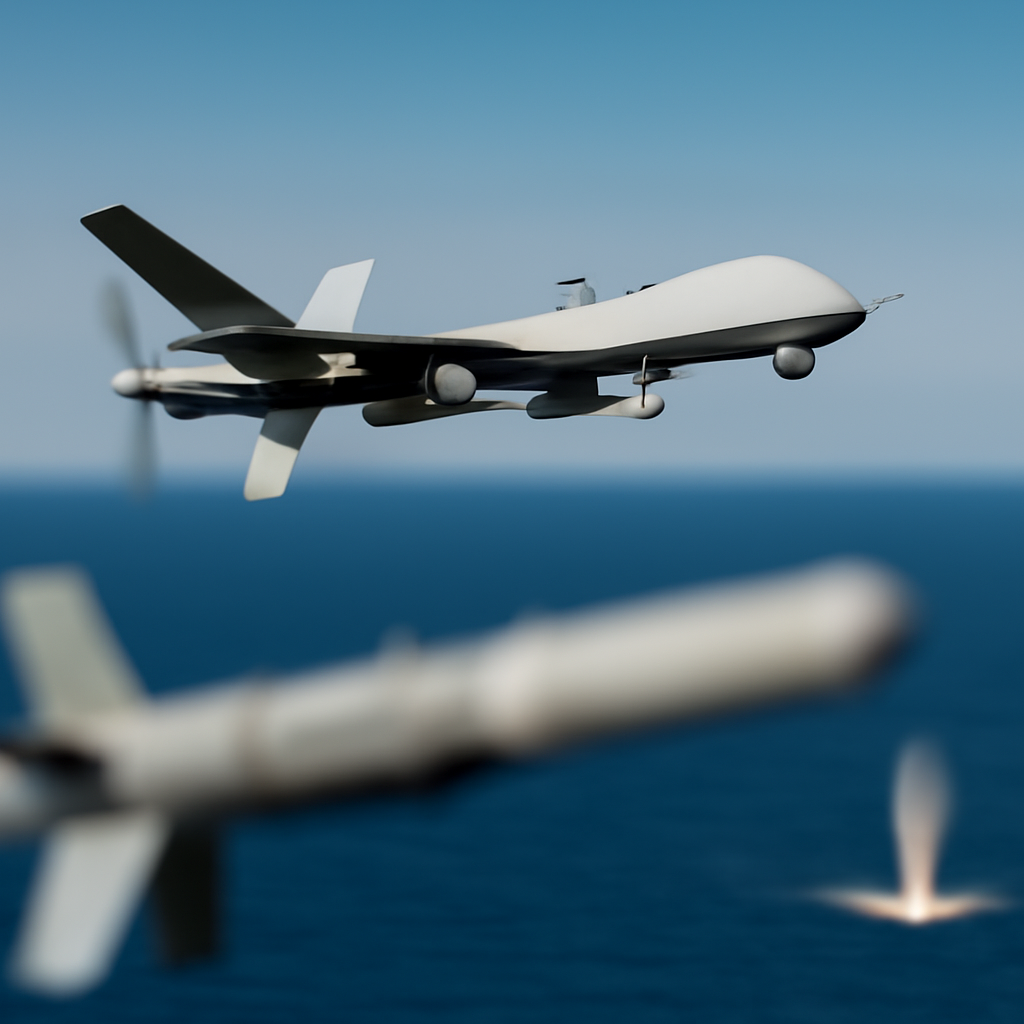
"the design, test, and evaluation of Air-Launched Rapid Response Weapon (ARRW) Increment 2 with terminal seeker and data link capability and other cost reduction production initiatives into ARRW," according to official budget documents.
That line, buried in the U.S. Air Force’s Fiscal Year 2027 budget materials, signals a significant shift in a program that was nearly shelved three years ago. ARRW — the AGM-183A boost-glide hypersonic weapon — is being pushed into a new iteration intended to chase moving targets, including ships at sea. The Air Force is seeking funding to turn that capability from concept into tested hardware.
ARRW Increment 2: an explicit request and where the money would go
The Air Force has asked for "just over $296 million" in its FY2027 budget request to support ARRW Increment 2 work. The funds are described in official budget documents as intended to "design, test, and evaluate" the Increment 2 variant, including a terminal seeker and a data link capability, plus cost-reduction production initiatives. The same documents note that earlier efforts "integrated Air Force and DARPA enabled system technologies into a prototype that demonstrated the viability of this concept to be fielded as a long range prompt strike capability," and that ARRW developers "designed, developed, manufactured, and tested ... a number of prototype vehicles to inform decisions concerning ARRW acquisition, production, and leave behind capability."
How ARRW works: boost-glide, speed, and maneuverability
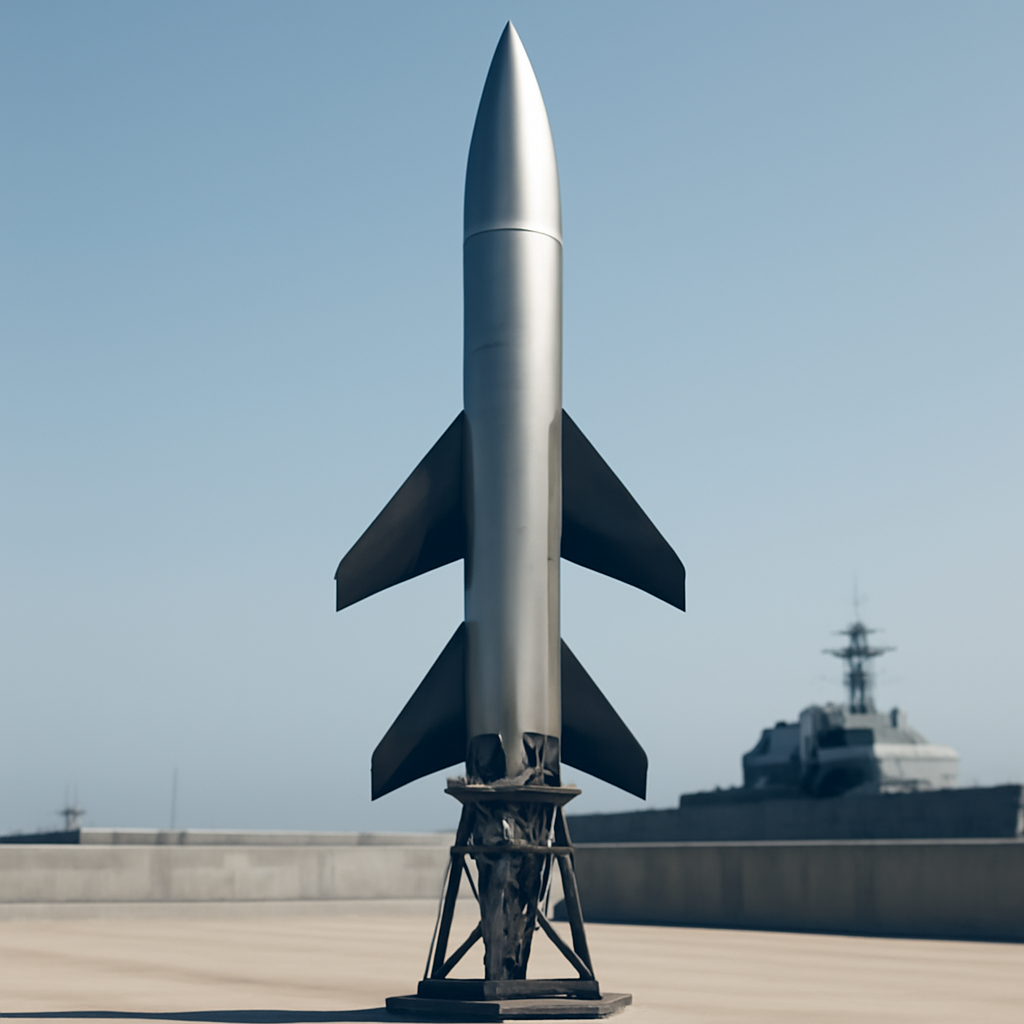
ARRW is a boost-glide vehicle-type hypersonic weapon. A booster propels an unpowered glide vehicle to altitude and speed; the glide vehicle then detaches and travels along a relatively shallow, maneuvering path within the atmosphere. That combination of high speed, a low-altitude glide profile, and in-flight maneuvering is intended to reduce warning and interception time against an opponent's defenses. The Pentagon’s Office of the Director of Test and Evaluation described ARRW as providing a "high-speed strike capability to destroy high-value, time-sensitive, land-based targets in anti-access/area-denial environments" and noted its standoff employment when launched from bomber aircraft.

Audit-ready is a season. It shouldn't be.
Evidence in spreadsheets, controls drifting between audits, frameworks multiplying on flat headcount. Nubivance runs continuous compliance on Rapid7 Cyber GRC - SOC 2, HIPAA, ISO 27001, PCI, CMMC.
End the scrambleOperational integration: bombers, networks, and tests to date
The Air Force has disclosed plans to integrate ARRW onto B-52 and B-1 bombers, and has demonstrated aspects of the sensor-to-shooter networks needed to employ such long-range weapons. During Exercise Northern Edge 2021 the Air Force simulated an ARRW strike against a target 600 nautical miles from the launch platform — a B-52 — though no weapon was released. The program has also conducted multiple flight tests, including a live AGM-183A launch with a warhead from a B-52 flying from Andersen Air Force Base on Guam in 2024.
In its current form ARRW is understood to be capable only against static targets. The Increment 2 additions — a terminal seeker and a data link — would permit in-flight targeting updates and engage moving targets at sea or on land. The budget documents place the Increment 2 seeker and data link mention inside the Pacific Deterrence Initiative portion of the FY2027 request, linking this capability explicitly to operations in the Pacific theater.
Seeker and data-link challenges, and a possible technology crossover
The budget request does not specify what kind of seeker the Air Force will add. The reporting notes imaging infrared, radar, or passive signal-homing sensors — or combinations of those — as potential options, but highlights that integrating any seeker into a hypersonic boost-glide vehicle is complex because of extreme heat, physical stress, and the glide vehicle’s shape. A data link would be needed to deliver updates to the weapon in flight and would itself have to operate under hypersonic conditions.
Lockheed Martin, ARRW’s prime contractor, is concurrently developing an anti-ship-optimized variant of the Army’s Precision Strike Missile (PrSM) that adds a multi-mode seeker to engage moving maritime targets. The reporting notes that some of that seeker technology “could be applicable” to Increment 2 ARRW work.
What this means for the U.S. Air Force, the PLA Navy, and defense technologists
- The U.S. Air Force: will continue procurement and development. The service received $362.15 million for ARRW procurement in the current fiscal year and requested "a little over $452 million" for FY2027 procurement; quantities ordered to date remain Controlled Unclassified Information and are not publicly releasable.
- The PLA Navy: is explicitly invoked as the operational context for Increment 2’s maritime relevance. The reporting points to China’s growing carrier and amphibious assault fleets and frames an anti-ship hypersonic as a tool to strike very high-value vessels in contested Pacific scenarios.
- Defense technologists and integrators: will need to solve seeker survivability and data-link communications under hypersonic flight conditions, then tie sensor feeds into off-board tracking sources to close an extremely long-range kill chain.
ARRW's trajectory as a program is notable: the Air Force moved to cancel the AGM-183 in 2023 after several failed tests and a decision to shift focus to the Hypersonic Attack Cruise Missile, yet the program resurfaced in procurement and now seeks further investment for Increment 2. The next concrete technical and programmatic milestones to watch — and which remain unspecified in these documents — are the exact type of terminal seeker selected, the engineering approach to hypersonic data links, and how many Increment 2 weapons the Air Force will buy once design, test, and evaluation proceed.
Source: New Version Of Bomber-Launched ARRW Hypersonic Missile Is A Ship Killer