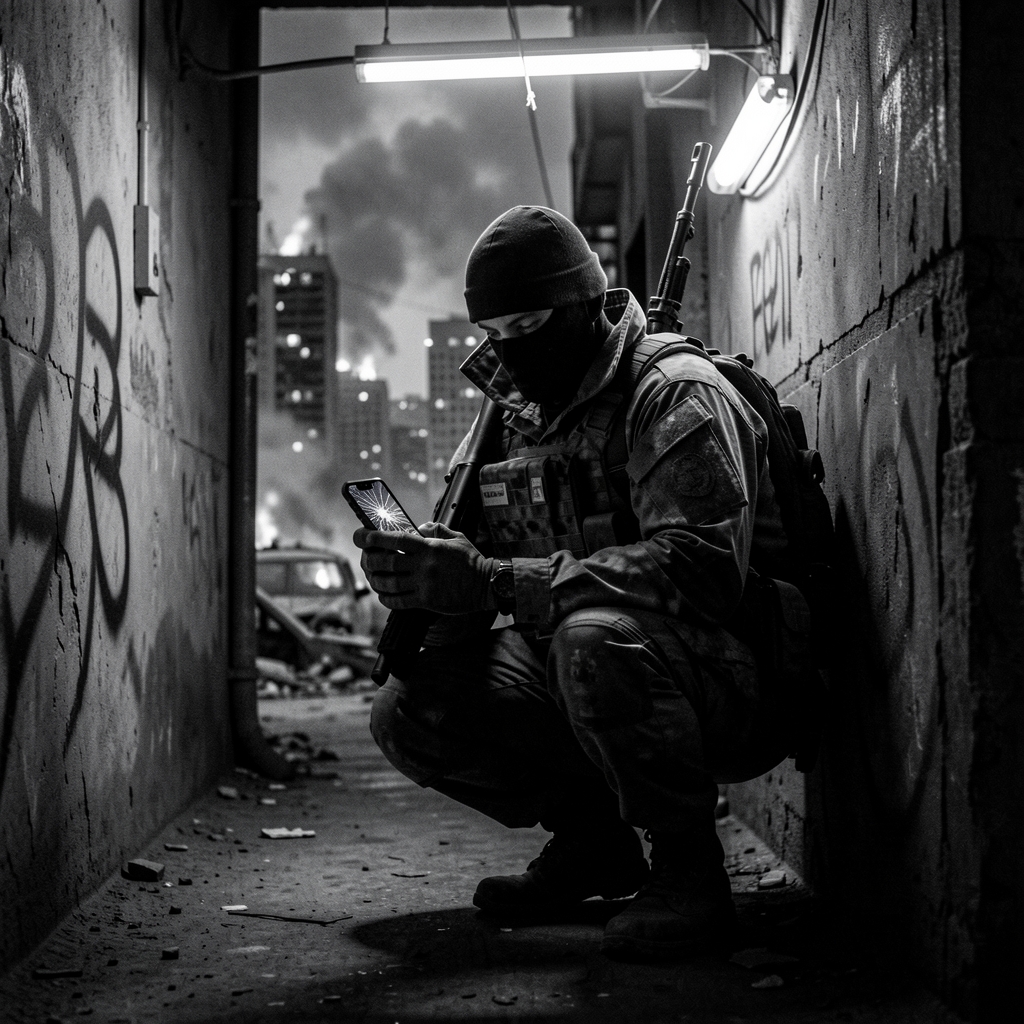
Shadows on the Training Grounds: FOG’s Covert Reach from Donbas to Sudan
At Fort Bragg and Camp Lejeune, where military traditions run deep and the terrain has witnessed countless exercises of strategic acumen, a quieter, high-stakes preparation is underway. The Forward Observations Group (FOG), a covert element whose operations have quietly spanned from the conflict-torn outskirts of Donbas to the volatile arenas of Sudan, is holding a series of advanced training courses that promise to reshape modern tactical warfare. Amid the structured drills, observers note that every maneuver carries a weight of intention—a blend of historical precedent and emerging doctrine.
Military analysts and strategists alike point to the significance of these covert operations. “When you see a specialized group like FOG investing in rigorous training at established bases, it’s a signal that the nature of operational conflicts is evolving,” remarked retired Lieutenant General David Petraeus during a recent conference on unconventional warfare—a statement echoed by several defense experts familiar with long-range reconnaissance strategies. Although the specific curriculum and end goals remain classified, what these training exercises suggest is a sharpening of skills that transcend conventional battle tactics.
FOG’s activities have long been shrouded in ambiguity. Emerging sometime in the early 2000s, the group has steadily built a reputation for its unconventional approach to modern warfare. Documents reviewed by investigative reporters in previous years highlighted FOG’s role in “observational reconnaissance” and its contribution to gathering actionable intelligence in zones where traditional operations face significant hurdles. Today, as international conflict zones witness a resurgence of asymmetrical engagements, the lessons honed in dusty fields and urban battlegrounds are being transposed onto the meticulous training grounds of North Carolina.
The backdrop to these operations is as complex as it is compelling. In the Donbas region, a landscape marred by years of geopolitical tension and intermittent warfare, FOG’s covert observations provided ground-level insights that informed both military strategy and diplomatic maneuvering. In contrast, the fluid dynamics of Sudan—a nation grappling with internal strife and external geopolitical influences—have demanded an equally adaptive method of information gathering. The synthesis of experiences from these diverse theaters is now being distilled into training modules designed to prepare operatives for a new era of conflict.
According to public records and Defense Department briefings, the courses at Fort Bragg and Camp Lejeune are not open to the general military population. Instead, they are reserved for select personnel identified for their capacity to operate in environments where clear-cut rules of engagement give way to ambiguity. One official, speaking on the condition of anonymity due to the sensitivity of the programs, explained that the curriculum integrates real-time simulation exercises with strategic analysis sessions designed to replicate conditions found in modern hybrid warfare. This integration of theoretical insights with on-the-ground fieldwork is indicative of a broader shift that questions how traditional military structures can adapt to unconventional threats.
Why do these developments matter? At a time when global security is being redefined by both state and non-state players, the training of elite operatives for covert observation and reconnaissance is not merely an internal military adjustment—it is a recalibration of our understanding of conflict. The FOG training programs underscore a movement toward deeper integration of intelligence and action. The challenges are multifaceted: operational security, inter-agency cooperation, and the broader implications for international law and policy are in constant flux. Each exercise is an investment in the future ability to reconcile rapid decision-making with the often murky realities of modern warfare.
From a strategic standpoint, the FOG operations represent a form of “shadow strategy” in which covert sources of intelligence work in tandem with overt crisis management maneuvers. Real-world implications include the potential for these trained operatives to augment conventional military efforts or to serve as independent units capable of pre-empting conflicts through rapid intelligence gathering. The balance of power in regions such as Eastern Europe and parts of Africa increasingly hinges on the ability to lead from the shadows, where information is the lifeblood of decision-making.
Analysts emphasize several key aspects that underline the importance of FOG’s role.
- Operational Innovation: The group’s training modules integrate lessons from diverse theaters of conflict to update conventional military tactics with a covert intelligence layer.
- Strategic Synergy: Bridging traditional military operations with intelligence gathering offers a holistic approach to emerging conflict dynamics, ensuring that swift decisions are supported by robust, field-tested data.
- Geopolitical Impact: As regions like Donbas and Sudan continue to pose complex security challenges, the advanced skills honed by FOG operatives have the potential to influence not only battlefield outcomes but also diplomatic negotiations and alliance-building efforts.
Internationally, reactions to these covert developments are mixed. Defense experts in Europe and Africa have noted that the modernization of tactical training in the United States—and its apparent emphasis on unconventional operational readiness—mirrors a global trend toward hybrid warfare. “In today’s environment, the line between intelligence and direct action is increasingly blurred,” said Dr. Andrew Exum of the Center for Strategic Studies and Security Policy. “What we see with FOG is a microcosm of that shift. The ability to operate in the shadows while providing transparent, actionable intelligence is a game-changer, albeit one fraught with ethical and legal complexities.”
Despite such acknowledgments, caution remains the watchword. Policymakers on Capitol Hill, while briefed on the necessity of these strengthening measures, have repeatedly underscored that the integration of covert operations must adhere to both domestic legal frameworks and international norms. The specter of unaccountable covert actions presents a perennial challenge to public trust and democratic oversight—a concern that has not gone unnoticed by former advisers and legal scholars. As Congress continues to debate the appropriate balance between operational secrecy and civil liberties, FOG’s activities serve as a reminder that national security in the modern age rests on an ever-shifting foundation of trust, transparency, and strategic necessity.
Looking ahead, experts suggest that the impact of FOG’s training programs may well extend beyond immediate tactical improvements. With global hotspots likely to become more contested and increasingly characterized by unconventional warfare, the lessons cultivated at Fort Bragg and Camp Lejeune could set the stage for a new paradigm in military doctrine. Future policy shifts, influenced by the evolving nature of conflict and the continuous need for operational agility, are expected to refine and expand these training initiatives. As the United States and its allies grapple with emerging threats in regions across the globe, the role of specialized, covert operatives may become central to both deterring aggression and maintaining geopolitical stability.
As the world watches these developments unfold from a safe distance, one cannot help but wonder: In an era defined by rapid technological advances and shifting alliances, what balance must be struck between the unseen guardians of national security and the public’s right to transparency? The FOG story, with its layers of history, strategy, and human endeavor, underscores that the answers are as elusive as they are critical—a reminder that in the shadows of modern warfare, every lesson learned illuminates a path fraught with both peril and promise.



