“National-security planners and foreign policy practitioners may need to reconsider whether great military superiority alone can still be expected to produce rapid political decision.” That is the stake: an emerging pattern in Ukraine, Iran and Gaza suggests superior forces can be checked not by battlefield parity but by the defender’s ability to go underground and keep vital supplies flowing.
Why surface exposure now multiplies operational risk
The change is not driven by a single weapon but by the convergence of capabilities that make surface forces increasingly visible and vulnerable. Persistent surveillance, inexpensive drones, artificial intelligence and precision-strike systems have combined to make it harder for forces operating on the surface to remain undetected. Once detected, units can face continuous observation and increasingly inexpensive precision attacks — raising the operational cost of exposed manoeuvre.
Underground as the new theatre for command, logistics and production
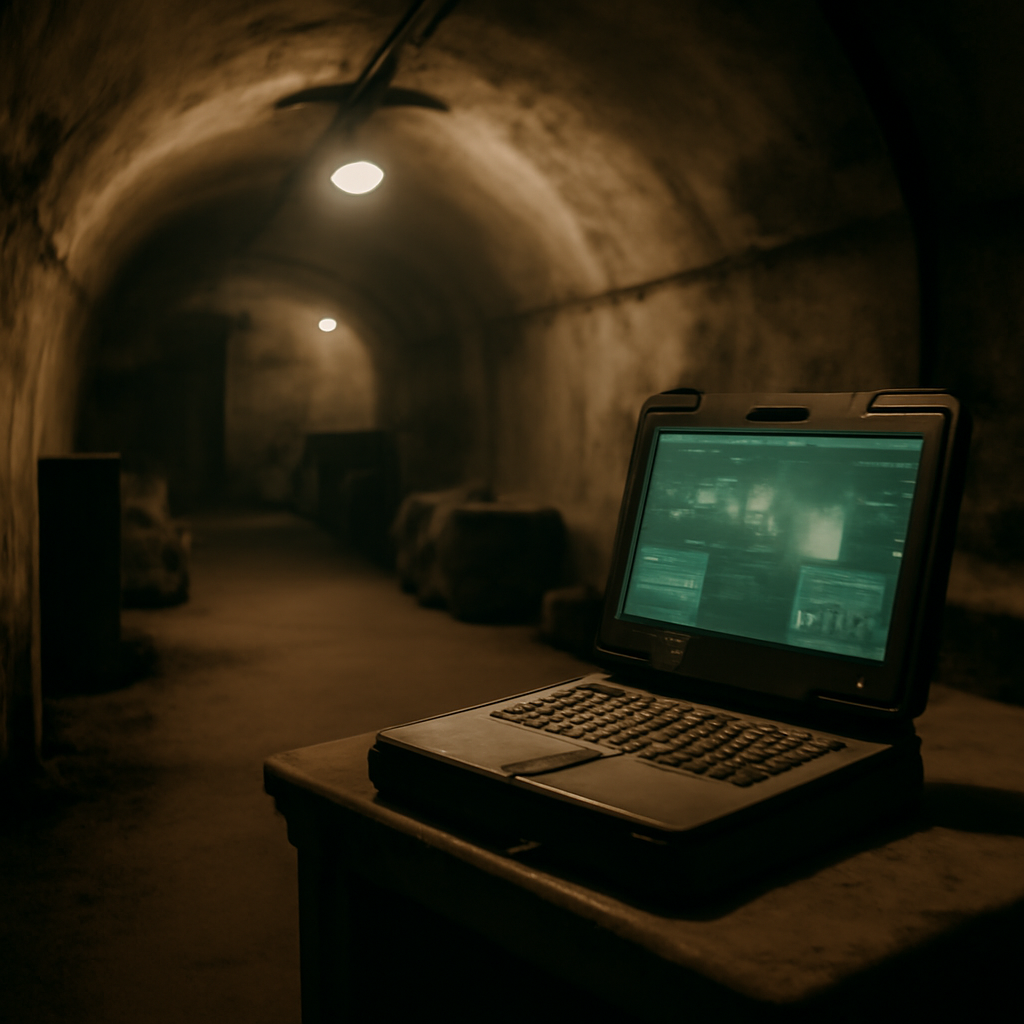
States and armed groups are responding by moving critical functions beneath the surface: command, logistics, production, communications and strike forces are being protected in tunnels, bunkers and caverns. These are not World War I-style trench lines or fixed World War II fortifications; contemporary subterranean facilities are intended to preserve capabilities at national or regional scale. The defender, operating on territory they control, can prepare and harden these positions; the attacker must expose forces and equipment while advancing, making the attacker’s movements more vulnerable to observation and precision strike. Underground sites remain difficult to neutralise and often require sustained surface operations to defeat — the very operations that have grown costlier and riskier.

This site is the portfolio.
OSINTSights runs on Cloudflare Workers, D1, R2, and Vectorize, with an AI pipeline on Hetzner ARM. Nubivance designed, built, and operates it. We do the same for clients.
See what we buildUkraine: dugouts, basements and the persistence of supply corridors
In Ukraine, front-line soldiers are dug into protective positions and command posts are likewise moved back into fortified, subsurface locations; urban factories are dispersed and hidden in basements. The Russian army, though much larger, has advanced slowly and at high cost, and — crucially — has failed to cut off supply flows entering Ukraine across its western borders. The article argues that when an attacker cannot seal every border, a defender’s underground system can be kept alive by surface resupply, undermining the prospect of a rapid, decisive victory and echoing the stalemate of the Western Front in World War I.
Iran: hardened facilities, concealed launch complexes and sudden strikes
Iran provides a stark example of deep burial of strategic assets. The article cites deeply buried command facilities, stores of strike missiles, and underground missile storage and launch complexes in Kermanshah and Isfahan, alongside hardened nuclear facilities such as Fordow and Natanz. Even the United States, the piece notes, faces challenges in “rooting all this out.” Iran retains the ability to wheel missiles or strike drones out from underground positions and launch them, meaning buried facilities can enable sudden offensive action against US and allied forces — and civilians — despite extensive aerial and intelligence capabilities held by opponents.
Gaza: constrained geography, underground networks and supply leverage
Underground facilities have similarly complicated military operations in Gaza. The article highlights a key difference: Gaza’s small, geographically confined territory has given Israel greater scope to restrict supplies to Hamas’s underground network than Russia has had to isolate Ukraine’s. In other words, the ability to control or constrict surface resupply routes — made easier by restrictive geography or effective border control — can determine whether subterranean systems can be neutralised or kept operational.
What this means for policymakers, defenders, and attackers
- Policymakers and military planners: Reassess expectations that overwhelming military superiority will yield rapid political outcomes. The central operational problem is now whether an attacker can deny the flow of food, ammunition, energy and spare parts that sustain an opponent’s subterranean system, not merely whether it can outfight defenders on the surface.
- Defenders (states and armed groups using underground infrastructure): Prepare for siege conditions by stocking underground facilities and secure supply lines from friendly neighbours — measures that cost money and depend on effective foreign diplomacy to keep resupply open.
- Attackers: If comprehensive isolation is impossible, superior force may not produce a quick defeat. The attacker must plan to interrupt the surface supply networks that keep the defender’s underground capabilities functioning — a task that can require prolonged, costly surface operations.
The central strategic takeaway is straightforward and stark: the ability to sustain underground capabilities — through stocks and secure resupply — may prove decisive in whether military superiority translates into a rapid victory. If defenders can go effectively subterranean and remain resupplied, the prospect of short, decisive wars diminishes and the operational burden of victory shifts from battlefield dominance to logistical and diplomatic isolation.