Beneath Kyiv’s Tower Blocks: Unveiling a Covert Hub of Military Technology
The narrow, cobbled streets on the east bank of Kyiv’s storied Dnieper river hide more than the remnants of Soviet-era architecture. In a discreet industrial complex encased between unremarkable grey towers, a secretive military technology supermarket operates like a well-guarded nerve center. Here, state-of-the-art defense systems mingle with time-tested strategic hardware, and behind its unassuming façade runs an intricate web of logistics, innovation, and national security imperatives.
For decades, Ukraine has been transforming its defense infrastructure in a bid to modernize its military arsenal and secure its sovereignty. This covert facility, located in a district known more for everyday commerce than clandestine operations, is emblematic of that sweeping change. Insiders recount a setup that emerged from a combination of wartime necessity and a long-term desire to recalibrate the nation’s security apparatus—a quiet but revolutionary reinvention far from the glare of international media.
Officials from the Ukrainian Ministry of Defense have, on rare occasions, acknowledged the existence of several “experimental” facilities dedicated to logistics and procurement. Although official details remain sparse, a series of documented transactions and procurement records suggest that the supermarket is more than a simple storage or distribution center. It operates as a centralized point where cutting-edge technological innovations converge with legacy systems inherited over decades of conflict and uncertain alliances. This melding, according to security analysts from the Atlantic Council, is designed to rapidly adapt to evolving battlefield conditions.
Historically, Ukraine’s strategic posture has been shaped by decades of geopolitical turbulence. Following its independence in 1991, the nation inherited a complex military-industrial base—one poised between obsolete Soviet designs and a future steeped in digital and cyber warfare. As territorial disputes and hybrid warfare tactics emerged, Ukrainian military planners sought to create a system that not only preserved critical capabilities but also advanced innovation. The secret military technology supermarket is now a tangible illustration of that evolution.
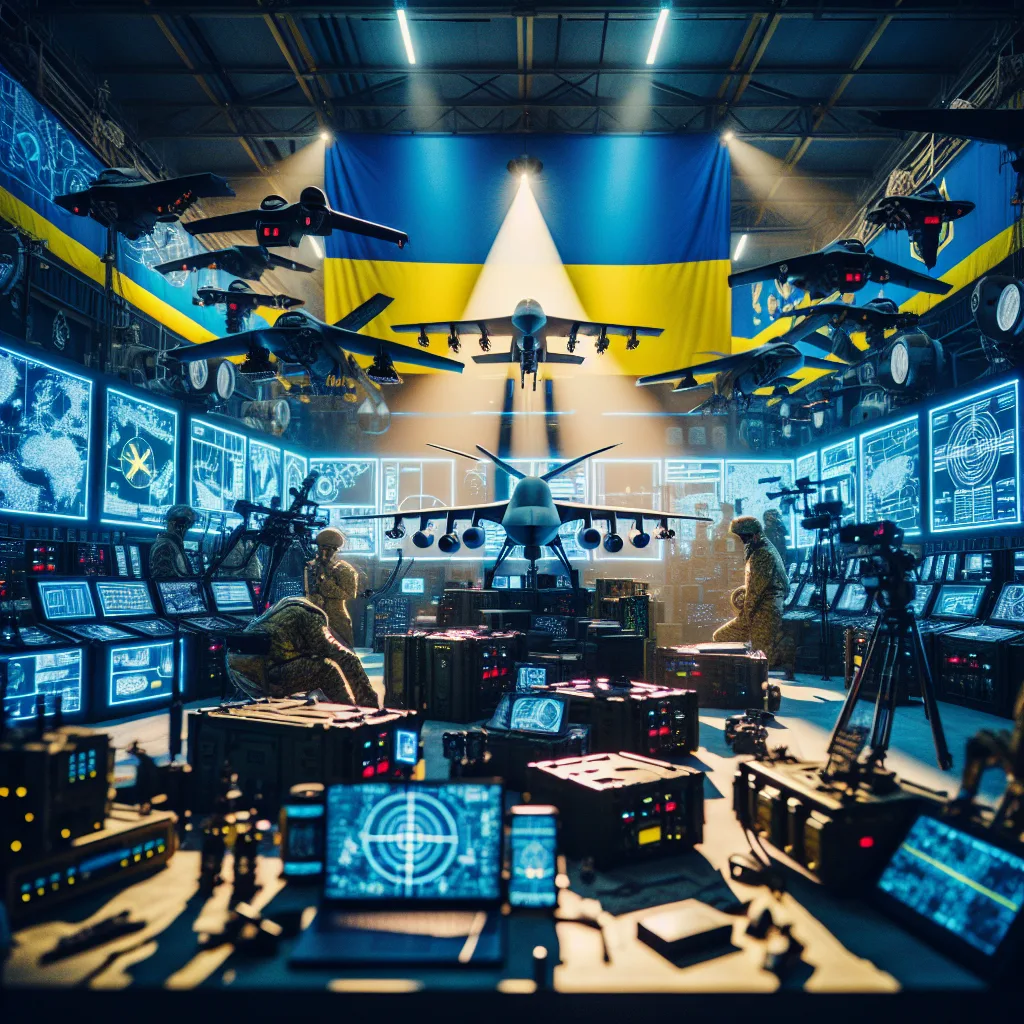
At its core, the facility functions as an integrated supply line for both domestic defense operations and potential international partnerships. Insiders, speaking under the condition of anonymity due to security concerns, describe an assortment of items ranging from advanced communication devices, unmanned aerial systems, and tactical countermeasures to sophisticated sensors and tracking equipment. Each piece of equipment is cataloged meticulously, reflecting an institutional commitment to transparency and accountability even within the bounds of secrecy.
Over the past year, military procurement experts, including officials cited by the International Institute for Strategic Studies (IISS), have noted a significant uptick in the modernization efforts among NATO’s eastern partners. In Ukraine’s case, the integration of diverse defense technologies managed under one roof is intended to streamline decision-making processes in the field—a critical factor as the country navigates a multifaceted theater of conflict. The retail, if one may call it that, is far from commercial in the everyday sense; it is a controlled, secure environment where operational efficiency is as prized as tactical effectiveness.
Why does this matter on the broader stage of global security? For one, the consolidation of military technologies into a single, discreet hub signifies a strategic pivot toward agility and innovation—a move that is seen by military strategists as essential when facing both conventional and hybrid threats. Experts at the Center for Strategic and International Studies (CSIS) have pointed out that such integration minimizes redundancy, accelerates deployment times, and fosters inter-operability among various defense systems. Moreover, the human element in this operation cannot be overstated. Behind each procurement decision lie countless hours of logistical planning, technical expertise, and the tireless efforts of Ukrainian defense personnel who work under challenging conditions.
Prominent defense analyst Colonel (Ret.) Michael Dunn, a recognized voice in military strategy, has commented on the phenomenon: “This secret hub isn’t just about the technology—it’s about cultivating a mindset in which innovation is directly tied to national security.” Although Colonel Dunn’s analysis, published in various defense journals, represents expert opinion, it underscores the pressing relevance of Ukraine’s evolving procurement strategy within a broader NATO-compatible framework.
Looking ahead, policy analysts believe that the supermarket model could influence how other nations approach military procurement and technology integration. Should the system prove effective under the pressures of modern warfare, it might serve as a template not only for Ukraine but also for other countries seeking to revitalize their defense infrastructures. Observers from the European Council on Foreign Relations (ECFR) speculate that, if the initiative yields demonstrable operational success, it could spur a regional shift toward more centralized, agile command structures in military logistics.
Yet, as with any large-scale transformation, questions persist. Can a facility that operates in the shadows of a vibrant capital truly balance operational secrecy with the necessary oversight demanded by modern democratic oversight? How will international partners reconcile the need for transparency with the imperative of security? And, most poignantly, what toll does the constant drive for modernization take on the dedicated individuals steering this course?
In the dim corridors beneath Kyiv’s towering remnants of the past, every piece of equipment on display and every logistical strategy in play underscores a singular truth: the future of warfare is being rewritten in real time. The secret military technology supermarket in Kyiv may be one unsung chapter in Ukraine’s storied defense history, but its ripple effects are poised to redefine how nations conceive and coordinate their security in an increasingly unpredictable world.
As tensions simmer across Eastern Europe and the global community watches with wary optimism, one is left to wonder: in the labyrinthine interplay between secrecy and necessity, how will the human spirit—which fuels innovation and resilience—guide Ukraine into its next era of defense and diplomacy?