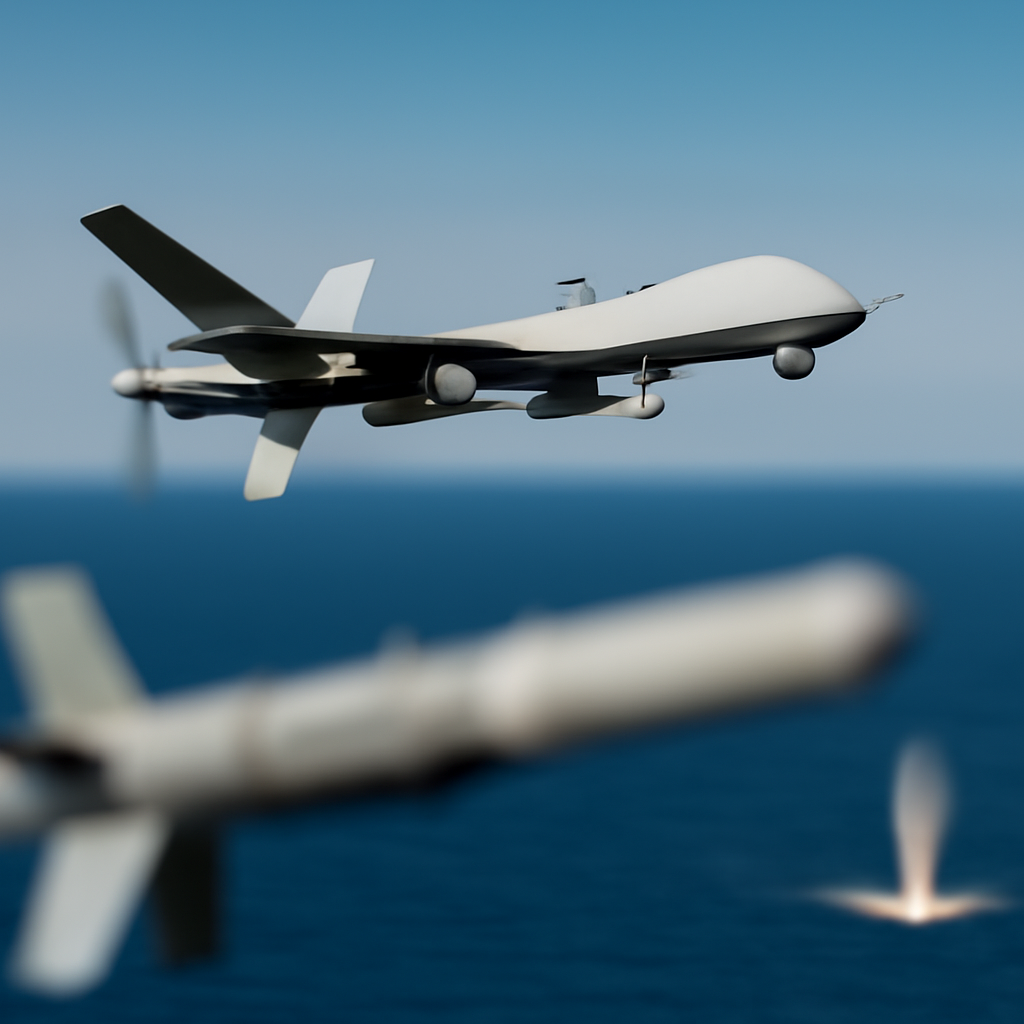
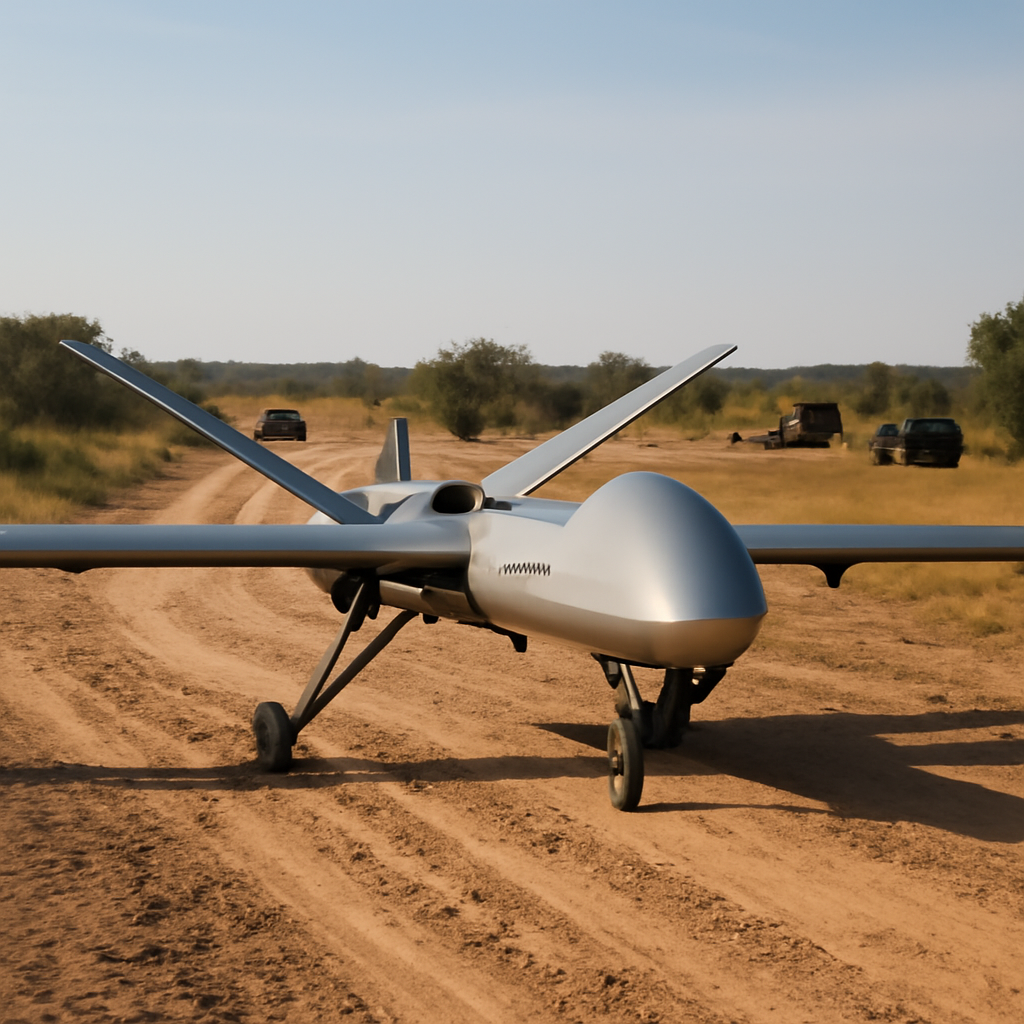
"We’ve contracted a record number of mid-range strike systems," said Mykhailo Fedorov, Ukraine’s defense minister.
Mid-range strikes (30–200 km): expanding the kill zone
What began as a shallow defensive "kill zone" roughly 5–10 km deep has been pushed outward. The mid-range zone most relevant to recent operations lies roughly 30–200 km from the front — the distance where forces mass, logistics networks operate and headquarters coordinate frontline activity. George Barros, director of innovation and open source tradecraft at the Institute for the Study of War, told the author that "Ukraine should seek to expand the kill zone to at least 45 to 50 km in order to deny Russian forces their main method of advancing with infiltration tactics." President Volodymyr Zelensky reinforced the intent in April when he wrote on X that "One of our priorities for the coming months is middle strikes, that is, targeting the enemy at a depth of up to 120–150 kilometers."
Targets, tempo and measured effects
Ukrainian mid-range drones are striking a broad set of rear-area targets: storage bases for drones and missiles, command posts, ammunition depots, locomotives, radar stations and missile launchers. The campaign has focused heavily on logistics, an enduring vulnerability: "Logistics has always been a problem for the Russians, and now Ukraine is actively attacking it," said Dmytro Putiata, a drone operator with Ukraine’s 20th Unmanned Systems Brigade. Open-source analysis cited in the reporting counts nearly 600 mid-range strikes using FP-1 and FP-2 drones into occupied territories since the start of the year.
Crimea has been a punctuated focus: roughly ten attacks on Russian missile launchers in occupied Crimea took place in just over two months. In late April, Ukrainian drone units reportedly struck Russian Mi-28 and Mi-17 helicopters at a field landing site in the Voronezh region — a strike roughly 150 km from the frontline. The cumulative effect is part tactical disruption, part strategic squeeze: Ukraine’s defense minister said Kyiv had "seized the initiative" in mid-range strikes, with goals to isolate the battlefield, target logistics and electromagnetic-warfare systems, neutralise officers and reduce Russian infantry presence on the front line.

Audit-ready is a season. It shouldn't be.
Evidence in spreadsheets, controls drifting between audits, frameworks multiplying on flat headcount. Nubivance runs continuous compliance on Rapid7 Cyber GRC - SOC 2, HIPAA, ISO 27001, PCI, CMMC.
End the scrambleTechnology choices: Starlink, AI and the Hornet
Both sides have tested the limits of satellite connectivity and autonomy. At the start of 2026 Russia had an advantage using satellite-connected drones that could operate in heavily jammed environments; that edge narrowed after Russian access to the Starlink satellite-communications system was disrupted, forcing Moscow to look for less effective alternatives. Ukraine, meanwhile, has leaned into satellite connectivity itself — including Starlink — to reach rear areas across occupied territory.
AI is increasingly central. Bryan Pickens, a former US Army Green Beret who has fought with Ukrainian special forces, said, "Looking ahead, AI will play an even larger role. Systems are becoming more capable, requiring fewer inputs from human operators." He added that "in advanced cases, operators simply define the target and general parameters, while the system handles execution." One drone drawing attention on the Russian side is the Hornet, described in the reporting as an AI-assisted targeting system "reportedly developed by a US-based company owned by former Google CEO Eric Schmidt." Recent footage reportedly showed the Hornet tested with a balloon-assisted launch system, a technique that could help drones avoid early detection and extend reach.
Adaptation velocity and battlefield tactics
Adaptation velocity — the ability to test, deploy and refine systems under fire — is credited as a key Ukrainian advantage. "Ukraine has modernised its drone tactics," Putiata said, noting that some systems previously used for deep strikes are "now also being redirected to medium-depth strikes" and that Ukraine "has also developed drones specifically for strikes at operational depth." Around Donetsk, the First Corps Azov reported maintaining surveillance and control over key Russian supply routes, including the Donetsk Ring Road. Around Mariupol, destroyed Russian logistical vehicles have become increasingly visible after strikes. Petro Andryushchenko, head of the Center for the Study of Occupation, wrote on X that "Russians are increasing efforts to disguise military transport as civilian vehicles."
What this means for technologists, policymakers and Russian forces
- Technologists and security teams: monitor rapid integration of AI into targeting workflows and the operational use of satellite links like Starlink; expect more semi-autonomous tasking and systems that require fewer manual inputs, as Bryan Pickens described.
- Policymakers and procurement leaders: the reporting underscores a surge in mid-range strike procurement and experimentation — from FP-1/FP-2 usage to Hornet trials — suggesting priority decisions about funding, export controls and support for satellite-enabled command-and-control will shape capability at operational depth.
- Russian forces: the geography is unforgiving. Russia "must prioritise where air defenses are placed," the author notes, even as Kyiv increasingly targets those systems; Russian units are also taking measures to disguise transport while Ukraine pursues logistics and command nodes further from the front.
In April 2025 the author wrote that a "new kind of no man’s land is forming, battlefields that will be increasingly saturated with semi-autonomous drones that seek and destroy anything that moves." The reporting shows that prediction beginning to materialise: mid-range, AI-enabled strikes are extending the kill zone, pressing on logistics and testing the limits of detection and defense. The immediate question is not whether the drone wall will deepen — it already has — but how far Kyiv can extend it and how Moscow will reallocate scarce defensive resources in response.