"The Combat Air Flying Demonstrator is not a Tempest prototype, particularly not 'in terms of shape or size,'" said Air Commodore Martin Lowe, the Future Combat Air System program director at the U.K. Ministry of Defense.
BAE Systems: production photographs from Samlesbury and Warton
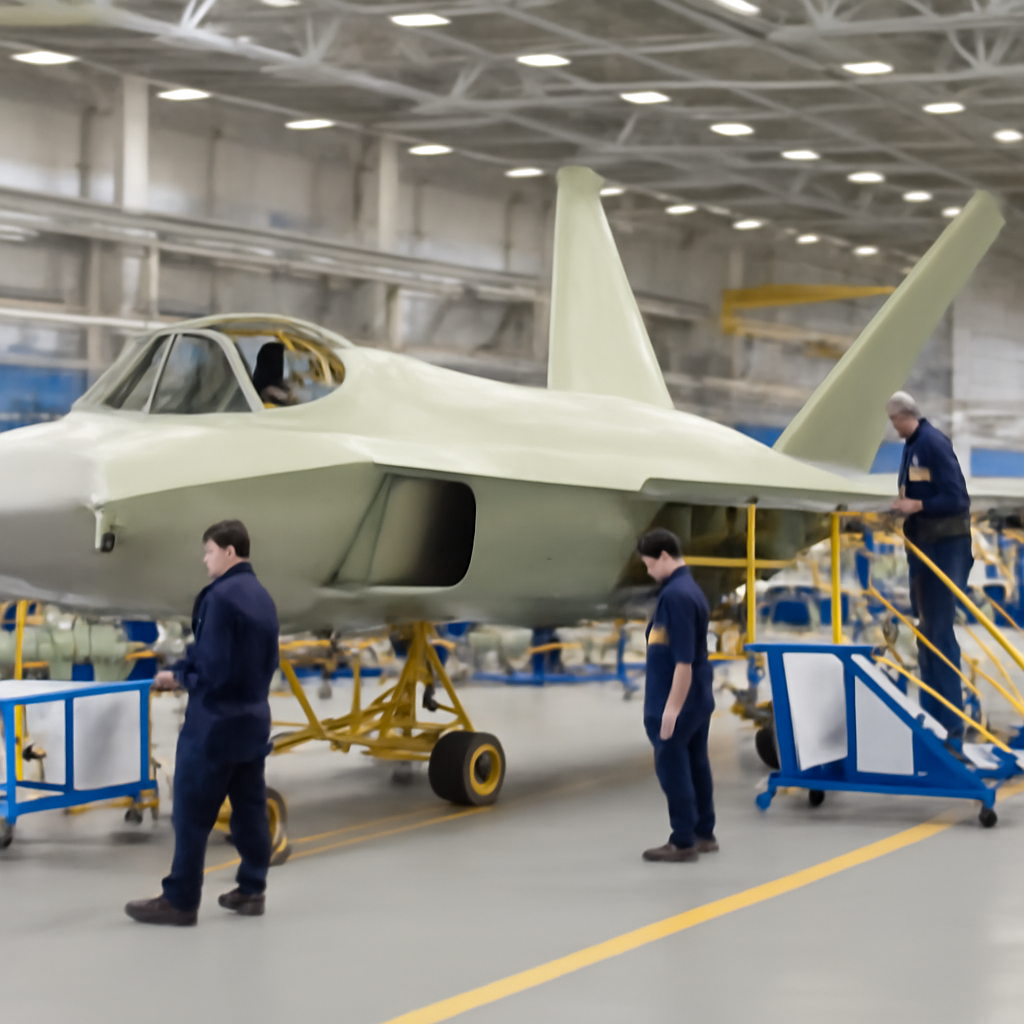
BAE Systems released what it calls its clearest official photograph yet of the Combat Air Flying Demonstrator under construction. The factory-floor image, taken at the Samlesbury facility, shows an exposed center fuselage section with technicians, assembly tooling, work platforms and production fixtures that provide visual reference points for scale. The report says wings and fins are being built at Warton, and the aircraft is due to fly from Warton before the end of 2027.
Design details: twin fins, no horizontal tails, DSI intakes and a broad centerbody
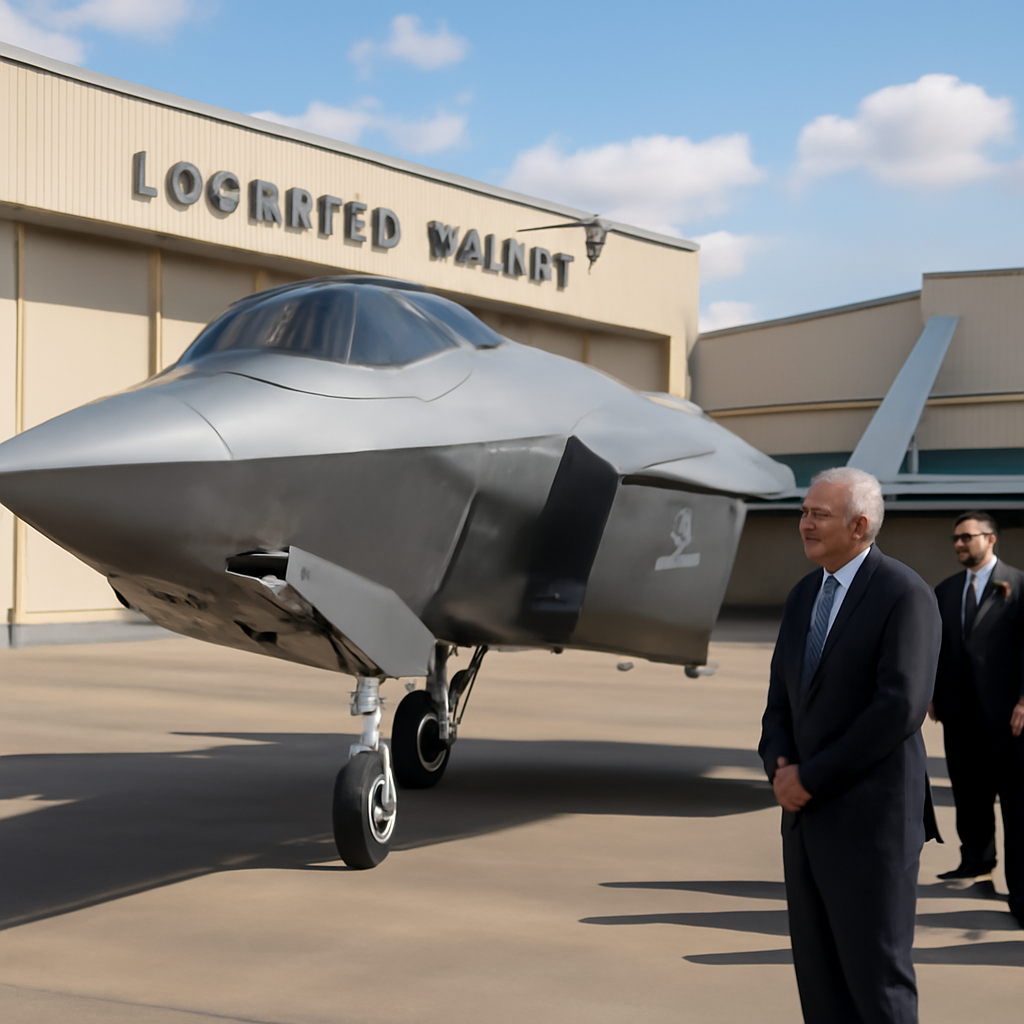
New photos and a scale model displayed at the Farnborough International Airshow confirm the demonstrator is a twin-engine, low-observable piloted experimental jet with outward‑canted twin fins and no horizontal tails. The model and images show forward‑swept diverterless supersonic inlet (DSI) intakes, a prominent "chine" on the forward fuselage, and what the reporting describes as an underside with area‑ruled, hour‑glass‑like contours.
The wing planform includes a slightly cranked inboard leading edge, some forward sweep on the trailing edge and severely cropped wingtips — yielding what the source calls a modified cropped‑delta wing rather than the lambda wing seen on earliest Tempest concepts. The canopy appears to offer limited rearward visibility. Tailfins on the demonstrator are trapezoidal and simpler than those shown on the latest Tempest mockups.

Audit-ready is a season. It shouldn't be.
Evidence in spreadsheets, controls drifting between audits, frameworks multiplying on flat headcount. Nubivance runs continuous compliance on Rapid7 Cyber GRC - SOC 2, HIPAA, ISO 27001, PCI, CMMC.
End the scramblePropulsion and handling: EJ200 engines for the demonstrator, a new powerplant for Tempest
The Combat Air Flying Demonstrator will use EJ200 turbofan engines — the same engines identified with an earlier fighter — while the production Tempest will feature an all‑new powerplant currently under development. Officials have said the demonstrator will be built to deliver fighter‑style handling despite its smaller size and the demonstrator's lesser thrust compared with the planned Tempest powerplant.
Tempest, GCAP partners, and scale implications for payload and range
The demonstrator is explicitly a technology demonstrator intended to prove concepts, manufacturing methods and systems integration rather than to become an operational weapon system. It will inform the sixth‑generation Tempest fighter, which is being developed under the Global Combat Air Program (GCAP) for the air forces of the United Kingdom, Italy and Japan, with service expected in the 2040s and beyond. Canada has been named the first GCAP Observer, according to a July 21, 2026 GCAP announcement, and there are reports Germany may be considering participation.
Reporting links the Tempest design to requirements for "really extreme range" and a payload approximately double that of the F‑35A. The source reproduces a manufacturer figure that places F‑35A internal and external ordnance at more than 18,000 pounds, and then states that this implies a Tempest internal payload of around 10,000 pounds compared to an internal‑weapons figure of 5,000 pounds for the F‑35A. Those requirements, the reporting notes, point toward a substantially larger aircraft with much greater internal volume for fuel and weapons bays, plus increased electrical power and cooling capacity to support advanced sensors, electronic warfare suites, communications, onboard computing and potential future capabilities.
What this means for the United Kingdom, Italy, Japan, and Canada
- United Kingdom: The demonstrator gives British industry an early flight testbed to validate low‑observable shaping (serpentine intakes, chines), manufacturing processes and systems integration ahead of a larger Tempest design intended for the 2040s.
- Italy and Japan: As partners in GCAP, both nations will receive data and technologies matured by the demonstrator that could inform national decisions on sensors, weapons‑bay sizing and powerplant choices for their Tempest variants.
- Canada (GCAP Observer): As the program’s first named observer, Canada gains early visibility into demonstrator progress and access to the joint statement rationale cited when it joined; observers typically benefit from insight rather than immediate program control.
The demonstrator's current form — broad, deep centerbody, DSI intakes, trapezoidal fins and the use of EJ200 engines — is built to test concepts rapidly rather than to define the final operational shape of Tempest. As Air Commodore Lowe stressed, the demonstrator is not a Tempest prototype “in terms of shape or size.” The next concrete milestones in the public record are continued assembly at Samlesbury and Warton and a planned first flight from Warton before the end of 2027; the Tempest itself, represented by a new full‑size mockup at Farnborough, is positioned in reporting as a still‑larger aircraft for service in the 2040s.
Original reporting: https://www.twz.com/air/more-of-the-uks-stealth-fighter-demonstrator-revealed-in-new-images