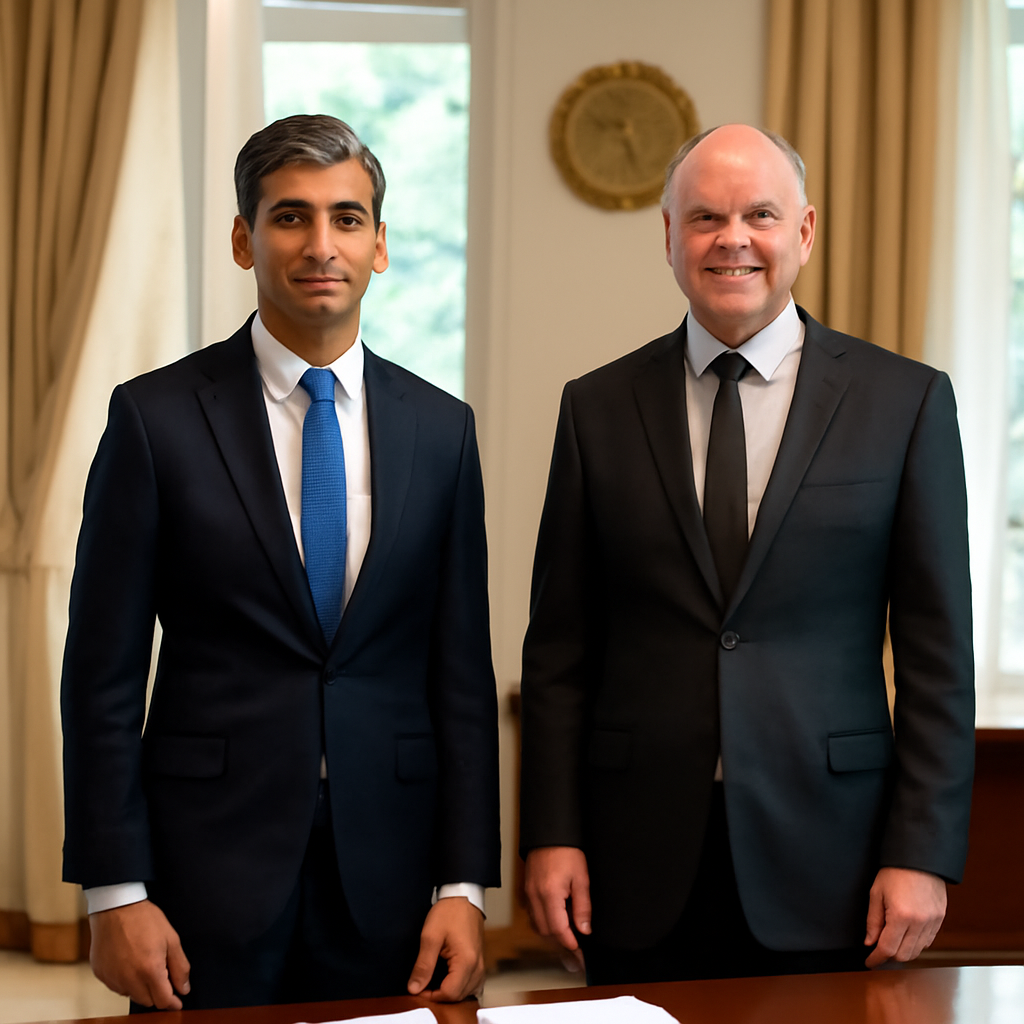
“During the meeting [in London], the Prime Ministers are expected to confirm their shared commitment to the Global Combat Air Programme, and discuss the launch of the next phase of the international programme, including through the international contract that will be signed by the end of the month,” the UK Prime Minister’s Office said in a Saturday statement.
Prime Minister’s Office and the MoD: a contract is imminent
Officials in London say a multi-national contract for a sixth‑generation fighter under the Global Combat Air Programme (GCAP) will be signed "by the end of the month," following bilateral talks between Prime Minister Keir Starmer and Japanese premier Sanae Takaichi. A UK Ministry of Defence spokesperson reiterated to Breaking Defense that "The Prime Minister’s Office said on June 13 that the [GCAP] international contract will be signed by the end of the month."
Budget standoff: Ministry of Defence, the Treasury and the Prime Minister
GCAP’s path to a contract has been complicated by a domestic budget fight. The flagship program — a joint effort between Italy, Japan and the UK — has been caught in infighting between the Ministry of Defence and the Treasury as the government, “in collaboration with Starmer,” has struggled to address a shortfall in defence funding. Reports say the Treasury intends to bring GCAP funding in‑house, removing this budgetary control from the MoD to keep tighter oversight.

Audit-ready is a season. It shouldn't be.
Evidence in spreadsheets, controls drifting between audits, frameworks multiplying on flat headcount. Nubivance runs continuous compliance on Rapid7 Cyber GRC - SOC 2, HIPAA, ISO 27001, PCI, CMMC.
End the scrambleResignations underline political strain
The political tension spilled into resignations. Former British defence secretary John Healey resigned last week, saying a lack of sufficient funding in the long‑delayed Defence Investment Plan (DIP) could endanger UK security. Hours later, Al Carns, the former UK armed forces minister, also resigned. Healey told colleagues he resigned after Prime Minister Starmer was prepared to offer £13.5 billion to prevent an £18 billion gap related to defence acquisitions; Healey had pushed the Prime Minister to commit to 3 percent of GDP for military spending by 2030 but was instead presented with a plan targeting 2.68 percent, according to the BBC. That figure sits well short of NATO’s cited 3.5 percent core defence spending push.
GCAP partners, timeline, and program scope
Italy, Japan and the UK remain committed to the GCAP effort, with the programme marked for a 2035 entry into service for the sixth‑generation type. The airframe is intended to replace British and Italian Eurofighter Typhoons and Japanese F‑2 multi‑role aircraft. Beyond a new fighter, GCAP is described as a "family‑of‑systems" initiative that includes unmanned platforms designed to act as drone wingmen alongside the crewed jet. Tokyo has reportedly “raised eyebrows” at the UK holding up funding for an existing £686 million design and development contract, a hiccup the imminent international contract signing could help to soothe among partners.
How Tokyo, the UK MoD, and procurement leaders are responding
- Tokyo: Japan has signalled concern about UK funding delays — specifically the held‑up £686 million design and development contract — and will be watching the international contract signing and whether it secures the programme’s near‑term finances.
- UK Ministry of Defence: The MoD has publicly pointed to the Prime Minister’s Office timeline for signing; the department will be attentive to whether Treasury moves to centralise GCAP funding, which reports say would reassign financial decision authority.
- Procurement leaders and defence planners: The forthcoming Defence Investment Plan, promised before the NATO Summit in Ankara next month, is expected to set out whether the UK will proceed with a proposal to acquire a fleet of F‑35A fifth‑generation fighters capable of carrying nuclear weapons alongside further GCAP details — a decision these officials will monitor closely.
The next few weeks will test whether a signed international contract is enough to quiet partner unease and to resolve the domestic funding debate. The Prime Minister’s Office has put a date on the paperwork; what remains less settled in public reporting is whether the Defence Investment Plan and Treasury moves on funding will reconcile the competing demands that prompted senior resignations and partner concern.