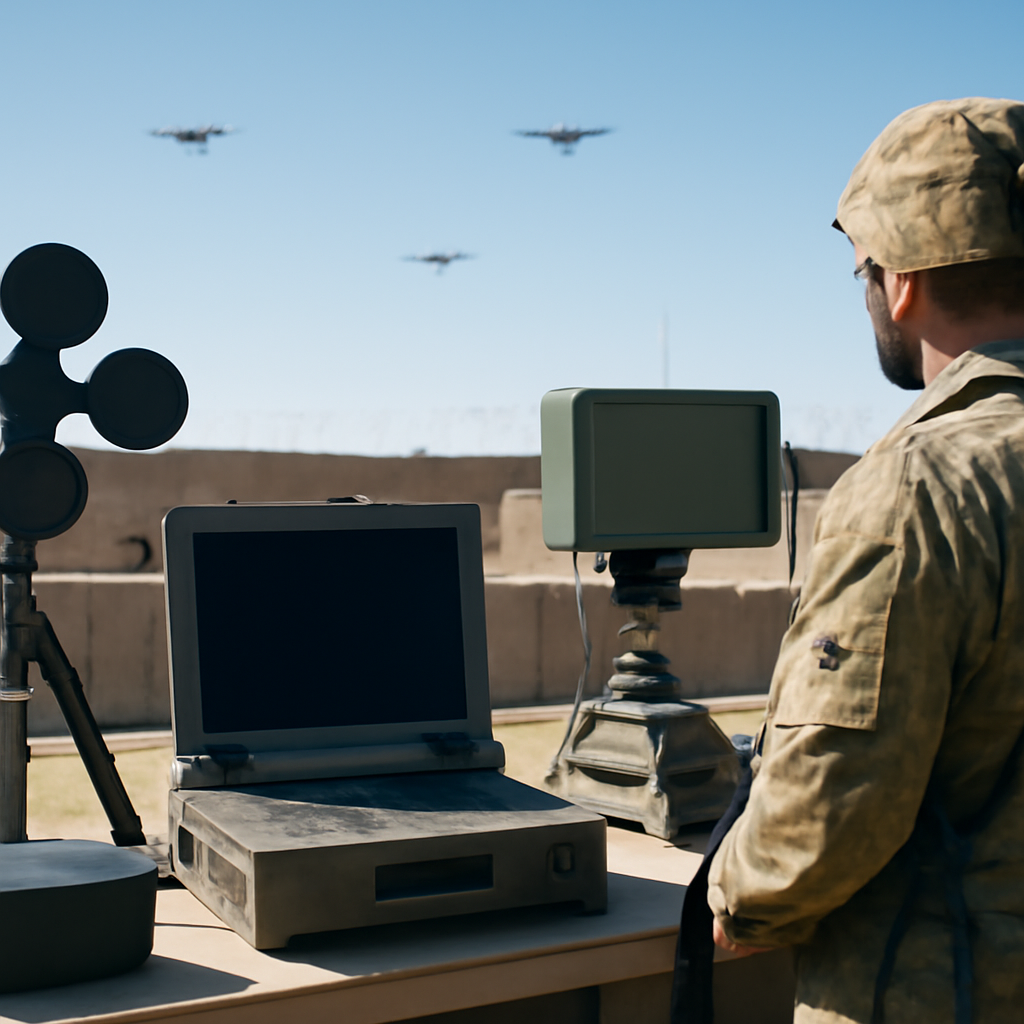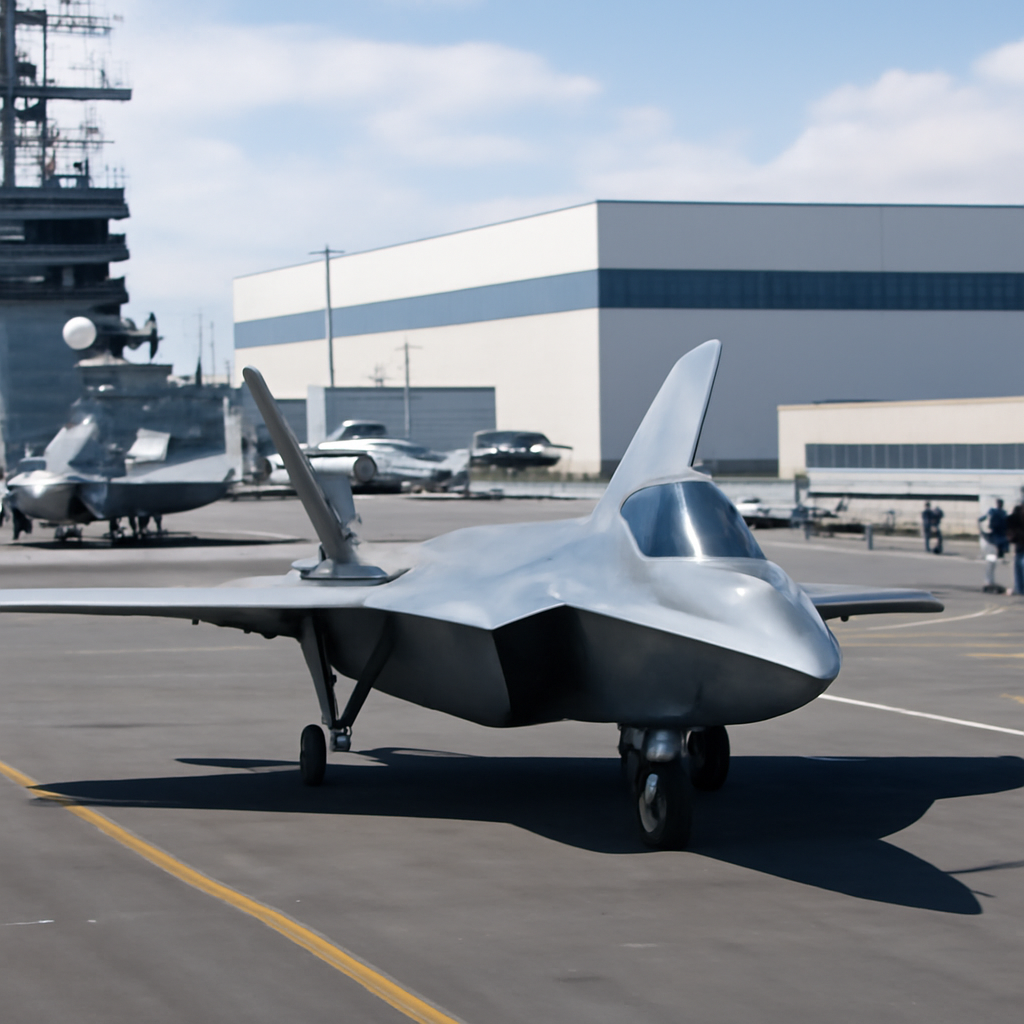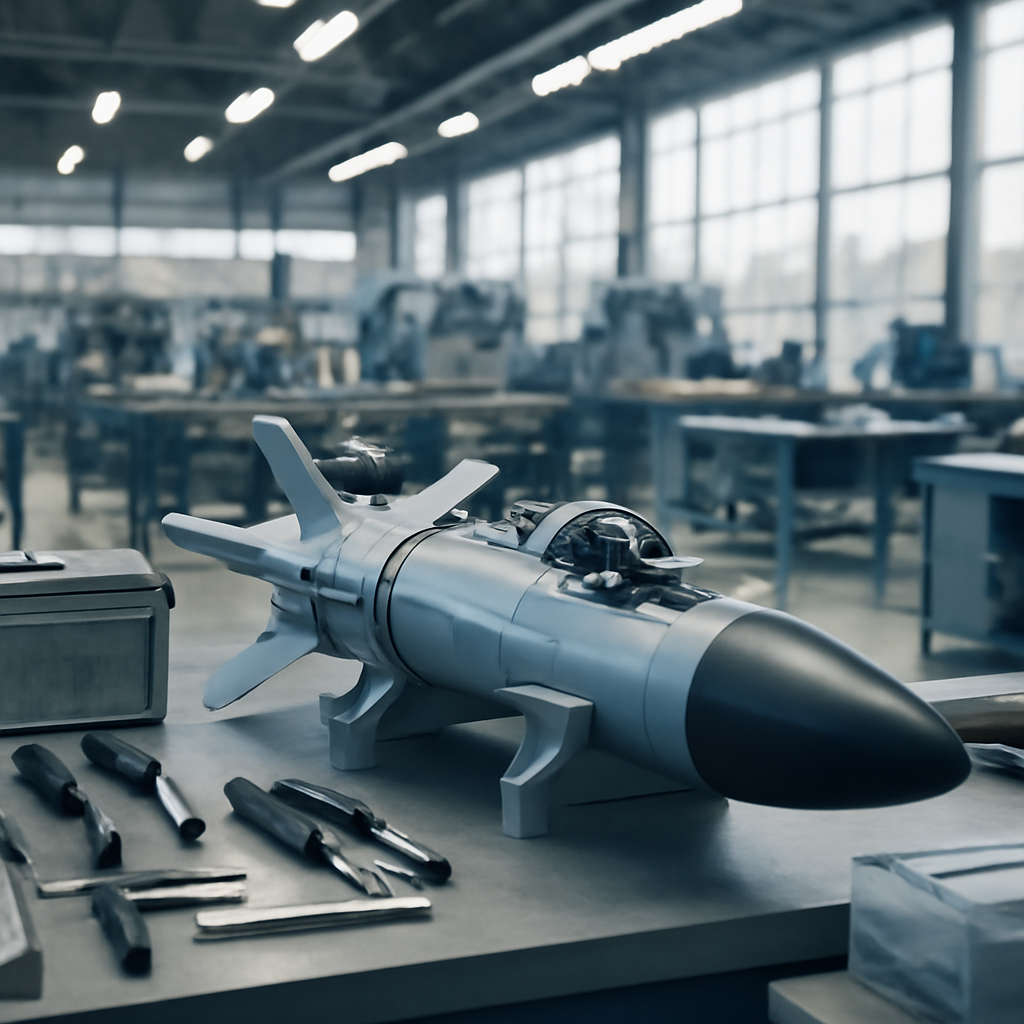
EDGE Group now counts 13 international acquisitions and strategic investments alongside 23 joint ventures — a deliberate network of foreign companies owned, but not moved, to build a defence supply chain that culminates in weapons integration and final assembly inside the United Arab Emirates.
EDGE’s ownership-first approach to control
EDGE treats ownership — rather than location — as the basis of control. Rather than importing entire production lines to the UAE, the group acquires controlling stakes in foreign companies and leaves them to operate in place. It then integrates those companies’ outputs at the corporate level and performs weapons integration and final assembly in the UAE through subsidiaries such as Halcon and ADASI. That approach departs from the standard route to a defence industry described in the source — indigenization — under which a state pulls design, production, and suppliers inside its borders over several decades.
Acquisitions that span continents and capability tiers
EDGE is buying into nearly every tier of the defence-industrial stack across Europe, the Middle East and Latin America. Notable holdings and agreements named in the source include:
- Estonia — a majority stake in Milrem Robotics, a developer of unmanned ground vehicles.
- Switzerland — 52% of ANAVIA, an autonomous helicopter company.
- Poland — 50% of FLARIS, a light jet platform developer.
- Brazil — 50% of SIATT (missile guidance, navigation, and control) and 51% of Condor (non-lethal systems); and, as of July 2026, a signed agreement for 100% of AKAER (aerostructures and electro‑optics engineering).
- Jordan — 80% of MARS Robotics, an unmanned aircraft engineering firm.
- Israel — minority stakes in ThirdEye Systems (electro‑optical recognition) and High Lander (drone traffic management).
- Italy — a May 2026 agreement for a controlling stake in CMD, an engine-maker in Atella; the announced terms include no plan to relocate production to the UAE and convey the technology stack and the engineering team where they already sit.

Audit-ready is a season. It shouldn't be.
Evidence in spreadsheets, controls drifting between audits, frameworks multiplying on flat headcount. Nubivance runs continuous compliance on Rapid7 Cyber GRC - SOC 2, HIPAA, ISO 27001, PCI, CMMC.
End the scrambleExtending the model into propulsion and systems engineering
EDGE has pushed its ownership-first pattern into propulsion by signing terms for Italy’s CMD in May 2026. The source emphasises that the CMD agreement gives EDGE the engine-maker’s technology stack and engineering team where they already sit, and that the announced terms contain no plan to relocate production to the UAE. The same method applies elsewhere in EDGE’s portfolio: acquire the capability and integrate outputs centrally, while leaving design and production footprints largely undisturbed in their home countries.
What this means for foreign suppliers, the UAE defence establishment, and partner companies
- Foreign suppliers: companies such as Milrem Robotics, ANAVIA, AKAER and others remain operating in their home countries under EDGE ownership — the source explicitly notes that EDGE leaves acquired companies to operate in place.
- The UAE defence establishment: integration, weapons assembly and final production steps are carried out inside the UAE through subsidiaries like Halcon and ADASI, which centralises final systems integration domestically even as component production remains distributed abroad.
- Partner companies and engineering teams: several agreements preserve local engineering and production where they sit — the CMD deal is cited as containing no plan to move production, and the AKAER agreement (signed as of July 2026) demonstrates EDGE’s readiness to acquire full ownership across borders.
Conclusion
EDGE’s model rewrites a familiar industrial playbook: instead of trying to coerce an entire supply chain into new factories on home soil, it buys the chain and stitches it together at the corporate level, bringing final assembly—and with it, a degree of sovereign control—into the UAE. The group’s recent moves into propulsion with CMD and the full acquisition agreement for AKAER as of July 2026 show that this is not a narrow experiment but a deliberate strategy. The facts recorded by the source leave a clear question: will EDGE continue to substitute ownership for relocation as it seeks technologies deeper in the stack?