“Delivering two advanced fighters in parallel was always our plan, and we invested accordingly,” Boeing defense chief Steve Parker said after the company won the Navy’s competition for the sixth‑generation strike fighter — a contract industry sources describe as worth more than $20 billion.
Boeing’s strategic victory and what it buys
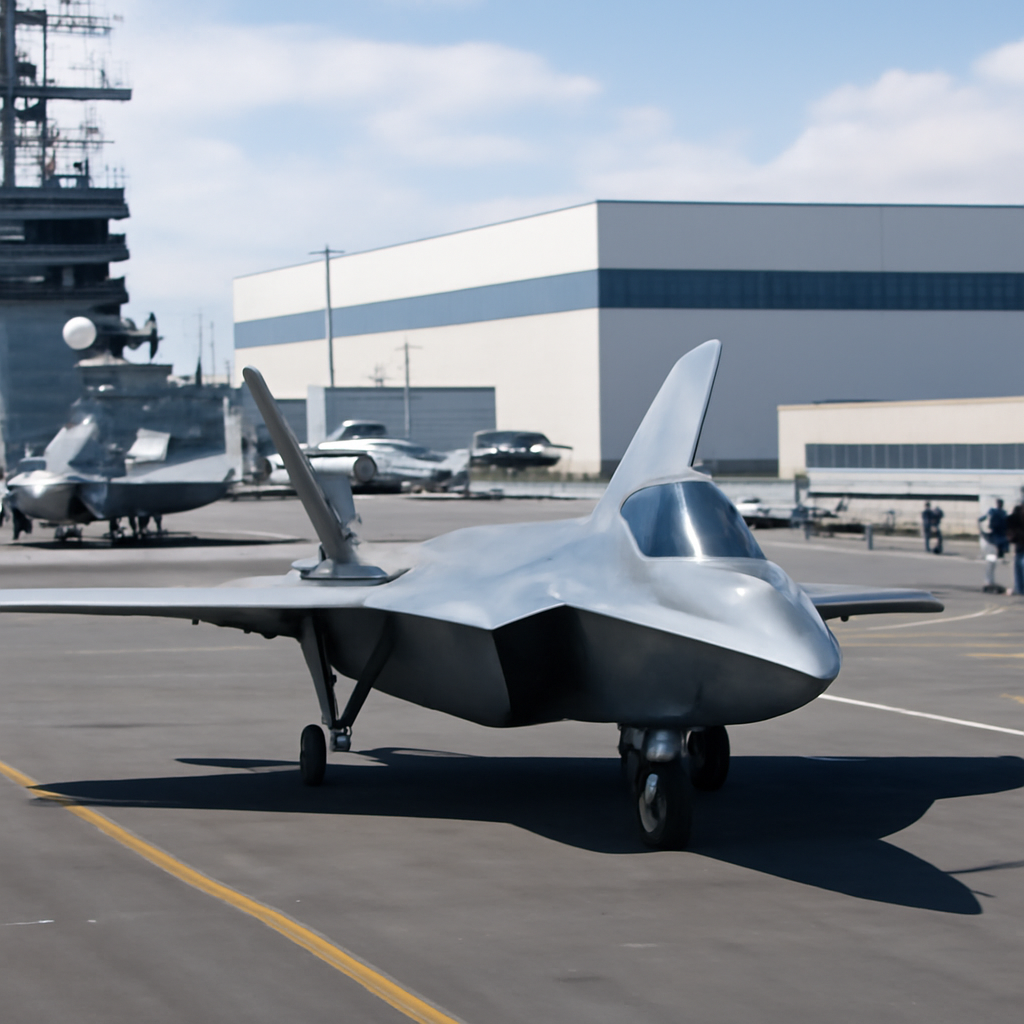
Boeing has been chosen to build the Navy’s sixth‑generation strike fighter, a program the service calls F/A‑XX, which will replace the F/A‑18 Super Hornet and EA‑18G Growler. The Pentagon’s announcement says the award covers the full‑scale development phase and “procures multiple test aircraft for ground, airworthiness, systems, and weapons integration testing.” Breaking Defense reports the prize is worth more than $20 billion and hands Boeing control of the future of two U.S. manned sixth‑generation fighter lines.
Execution risk: production, design commonality, and workforce in St. Louis
Analysts cautioned the size of the award shifts the spotlight from winning to delivering. Jeremiah Gertler of AeroDynamic Advisory framed the key technical unknown as whether the F/A‑XX shares much in common with Boeing’s Air Force F‑47 design, awarded in March 2025. “If the two designs have a lot in common or were actually co‑developed, we could see an F/A‑XX fly a lot sooner than one might expect,” he said. If not, pace and complexity rise sharply.
Gertler and Doug Birkey of the Mitchell Institute singled out the company’s St. Louis production complex and workforce as the operational pinch point. Boeing already holds F‑47 and T‑7A Red Hawk production work and plans a “significant planned increase in F‑15EX rates.” Gertler asked bluntly whether Boeing can find “the people needed to keep those production lines all working at a high rate simultaneously.” Birkey called balancing the early program workforce between F‑47 and F/A‑XX “a challenge that can be stewarded.”

The cyber insurance questionnaire just landed. Now what?
SOC 2, HIPAA, insurance renewals - someone has to own security strategy. Nubivance provides fractional CISO leadership without the full-time salary.
Get a security leadInvestor questions: pricing and contract structure
Market analysts will be watching how Boeing priced its winning bid and the structure of the Navy contract — factors that have complicated previous Boeing programs. Roman Schweizer of TD Cowen emphasized that the Navy “placed significant weight on Boeing’s manufacturing capacity and ability to deliver at scale,” noting Boeing’s recent investments in facilities and digital engineering in St. Louis. Schweizer also cautioned that the way the deal is priced and constituted will be important for investors to scrutinize going forward.
Northrop Grumman’s loss, broader program buffers, and the prospect of protest
Northrop Grumman was the competing prime and lost the F/A‑XX competition. The defeat is a setback for Northrop — which had not been a prime on a fighter since the F‑14 Tomcat era — but analysts described the company as sufficiently cushioned by other major programs. Gertler noted that both firms “already have tentpole defense programs” and that “whoever doesn’t win this contract will still be fine.” Aboulafia echoed that the loss “would not mean very much” for Northrop overall.
That said, the source expects Northrop is “almost certain to look into options to protest the decision.” Schweizer observed that “historically protests of major classified aircraft competitions have had a low success rate.”
How the Navy, Boeing, and carrier air wings are affected
The Navy’s award advances a manned fighter that will sit at the center of future carrier air wings while the service develops Collaborative Combat Aircraft (CCA) — uncrewed systems intended to operate alongside manned jets. Chief of Naval Operations Adm. Daryl Caudle confirmed in April that the CCA concept and F/A‑XX are linked to the Navy’s “air wing of the future” concept, USNI News reported.
Stacie Pettyjohn of the Center for a New American Security stressed the importance of retaining a crewed fighter at the heart of the air wing, and raised operational questions the procurement will help answer: “It’s going to be interesting to see how many they’re planning to buy, and how they’re going to mix in the different uncrewed systems along with that, and what type of weapons they put on the F/A‑XX, which will give a hint as to the missions that they’re prioritizing and how they really plan to be able to project power offensively — especially In the Pacific, when you’re looking at those great distances and Chinese forces with very long‑range weapons...”
Separately, the Navy also awarded Boeing a contract to support the shuttering of F/A‑18 E/F Super Hornet and EA‑18G Growler production lines, reflecting the transition from legacy platforms to the new fleet architecture.
What remains immediate and material: Boeing has the program and the financial headline, but success will hinge on whether the firm can translate investments into parallel, high‑rate production across F/A‑XX, F‑47, T‑7A Red Hawk and increased F‑15EX output — while the Navy integrates manned fighters and uncrewed CCAs into carrier air wings. Investors, competitors, and the Navy will all be watching the near‑term program cadence, contract milestones, and any protest filings that follow.