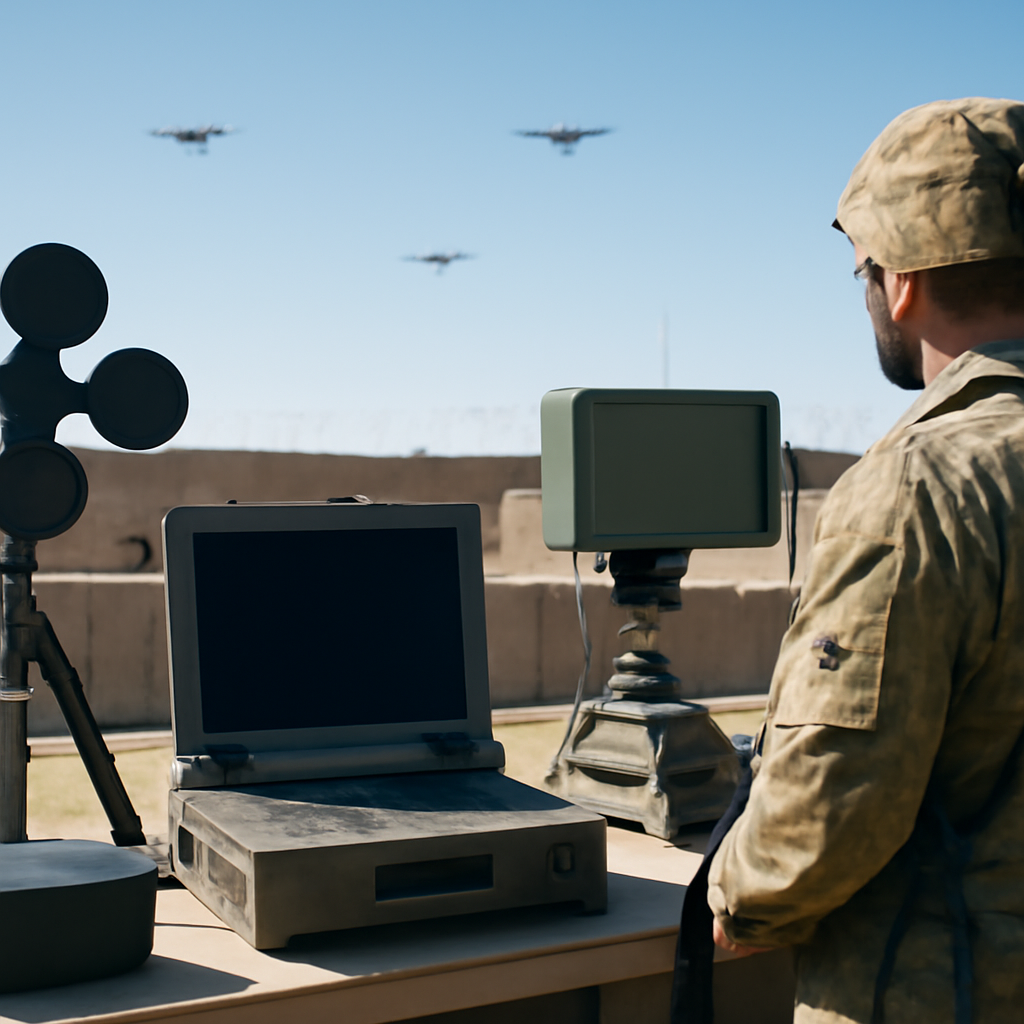
"Over 80-85 percent of the [drones] interceptions were actually intercepted by local grown solutions, not necessarily EDGE," Hamad Al Marar told Breaking Defense, framing how the United Arab Emirates relied on homegrown systems during the recent flareup tied to Tehran's unmanned aerial vehicles.
EDGE’s contribution to UAE air defenses in the recent conflict
EDGE Group’s CEO and managing director, Hamad Al Marar, said the UAE deployed a layered, multinational defense that relied heavily on domestically produced "soft-kill" capabilities — jammers, spoofers and geofencing support — to counter incoming UAVs. According to Al Marar, those national systems operated from "T‑zero," giving the UAE the ability to respond immediately without waiting weeks for imported kit.
SKYSHIELD, NAVCONTROL and the role of soft-kill systems
Al Marar identified specific systems contributing to the UAE’s response: the Sign4l SKYSHIELD counter-unmanned aerial system, noted for high-power radio frequency and Global Navigation Satellite Systems (GNSS) jamming, and the NAVCONTROL GNSS system for jamming and spoofing. He emphasized that these technologies are controllable and programmable by the UAE, allowing the operator to adapt tactics and modify the systems in real time.

This site is the portfolio.
OSINTSights runs on Cloudflare Workers, D1, R2, and Vectorize, with an AI pipeline on Hetzner ARM. Nubivance designed, built, and operates it. We do the same for clients.
See what we buildSkyknight, Bayratktar TB2, AKINCI and "fleet embodiment"
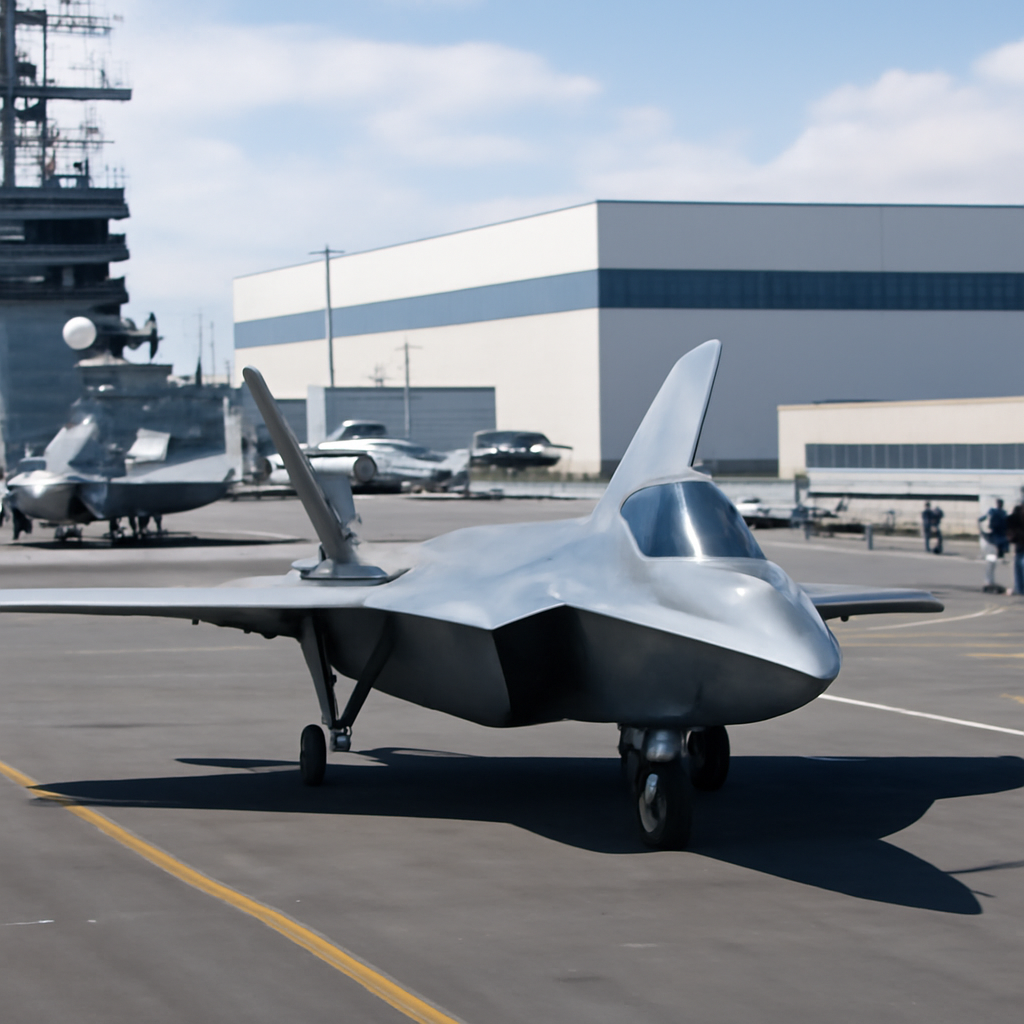
Addressing other platforms, Al Marar said Skyknight "wasn’t in service" during the operations and is "going into production" with service expected soon. On weapons integration, he reported EDGE successfully integrated its missiles on the "Turkish-made Bayratktar TB2 armed UAV" and is working on integration with the AKINCI. EDGE describes the current phase as "fleet embodiment," meaning deployment to service for both UAE use and export markets.
Partnership approaches with Turkish firms and Barzan joint venture
Al Marar outlined several cooperation models with Turkish industry — platform-level, system-level and subsystem-level work — and said Turkey’s industrial speed and maturity make it attractive for rapid development. He said the arrangements can take the form of joint programs, joint ventures, or contract/subcontract relationships depending on program duration and sophistication.
On regional ties, he described the February agreement with Qatari defense firm Barzan, reached at DIMDEX in Qatar, as a way to avoid duplication and combine complementary capabilities. EDGE expects Barzan’s system-integration experience to pair with EDGE-developed sensors, producing combined offerings and national products for both countries.
Agentic AI: EDGE’s envisioned role
Following a UAE leadership announcement that within two years 50 percent of government-sector services and operations will run on agentic AI, Al Marar discussed EDGE’s perspective. He said agentic AI will improve administrative efficiency and accelerate design cycles, and in application contexts — notably mission planning — AI can yield "better deployment of assets" and offer novel operational options. He highlighted adaptability: moving from a feedback loop to redeployment reduces time an asset is out of service. Al Marar called EDGE "an excellent source of use cases for AI" and said many UAE companies are "well positioned to develop agents and tools."
What this means for the UAE armed forces, Turkish firms, and Qatari partner Barzan
- UAE armed forces: Expect continued reliance on domestically controlled soft-kill tools that the armed forces can program and modify at speed, alongside progressive fielding of systems entering production such as Skyknight.
- Turkish firms: Stand to gain new market openings through rapid integration opportunities on widely exported platforms like the Bayratktar TB2 and AKINCI, using flexible partnership models from joint ventures to subcontracting.
- Qatari firm Barzan: The Barzan-EDGE agreement positions Barzan to combine its system-integration work with EDGE sensors and offerings, enabling catalog expansion and nationalized products across shared regional markets.
EDGE’s public account paints a picture of rapid, layered defenses driven by software-driven soft-kill systems, accelerating integration of weapons onto Turkish unmanned platforms, and an openness to a variety of partnership structures — all tied to a broader push to harness agentic AI across government and defense tools. Near-term markers to watch, based on Al Marar’s statements, are Skyknight's transition into production and the "fleet embodiment" deployments for Bayratktar TB2- and AKINCI-integrated weapons aimed at UAE service and export.