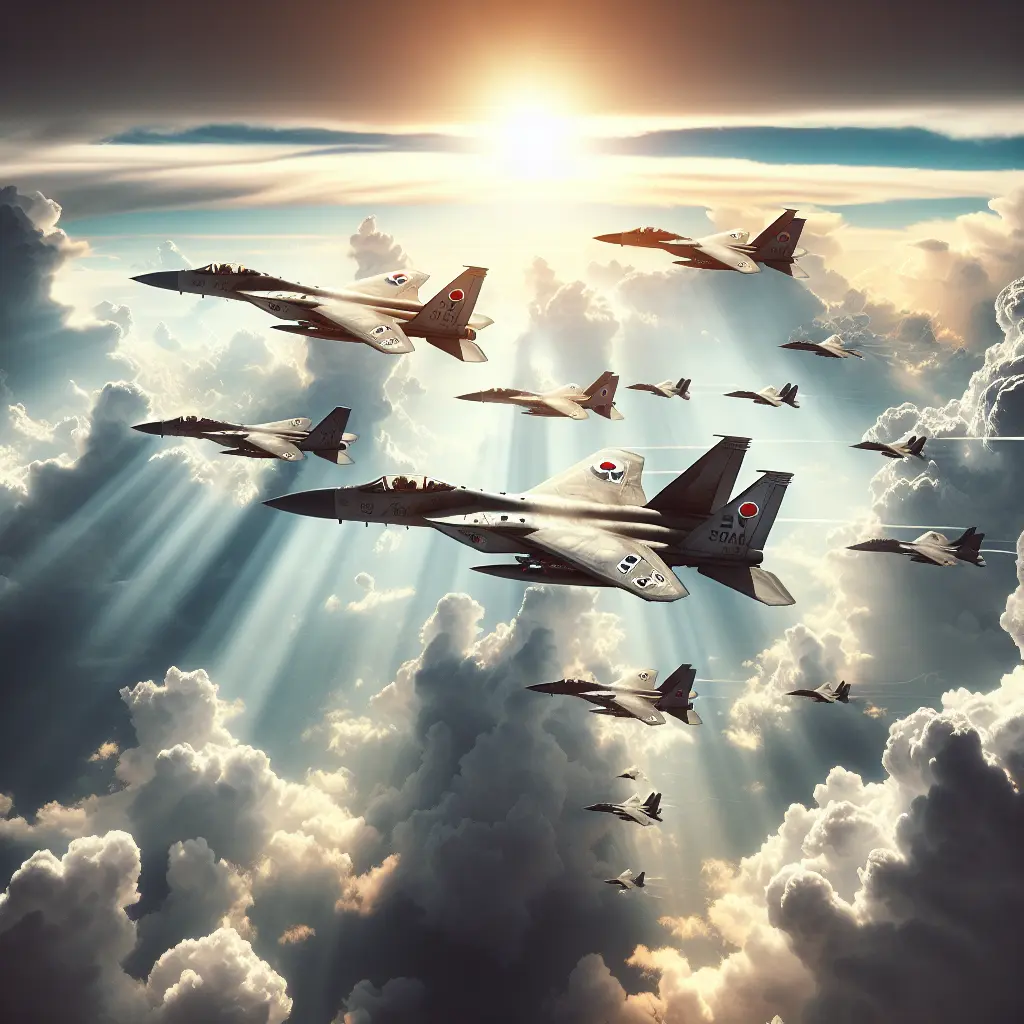
Strengthening Alliances: The U.S. Delivers Advanced F-16s to South Korea
As tensions simmer in the Pacific, a new chapter in U.S.-South Korean military collaboration is unfolding with the recent delivery of upgraded F-16 Fighting Falcons. The aircraft, which arrived at Osan Air Base on June 26 and 27, symbolize not just an enhancement in firepower but a robust commitment to regional security amid increasingly assertive actions from North Korea. But what does this mean for the geopolitical landscape and the balance of power on the Korean Peninsula?
The decision to transfer these aircraft, originating from the 35th Fighter Wing at Misawa Air Base in Japan, underscores a long-standing strategic partnership between Washington and Seoul. These F-16s are equipped with advanced avionics and other enhancements designed to improve their combat effectiveness and survivability in complex threat environments. This upgrade comes at a time when South Korea is grappling with both conventional military threats from the North as well as evolving cyber and hybrid warfare tactics.
The historical backdrop of U.S.-South Korean military relations is essential for understanding this latest move. Since the end of the Korean War in 1953, America has maintained a military presence in South Korea as part of its commitment to deter aggression from North Korea. Over the decades, this alliance has adapted to changing geopolitical dynamics, reflecting shifts not only in technology but also in regional security challenges.
Today’s delivery is more than merely a transfer of equipment; it represents a strategic recalibration aimed at countering North Korean missile tests and nuclear ambitions. In recent years, North Korea has conducted a series of provocative tests that demonstrate advancing capabilities, prompting concern not just within South Korea but across the broader international community. The improved capabilities of the F-16s could play a crucial role in potential contingency operations, providing a deterrent signal as well as immediate response capability should tensions escalate.
This development matters deeply for several reasons. First, it reinforces U.S. commitment to defending its allies in Asia—a cornerstone of American foreign policy since World War II. Moreover, it bolsters South Korea’s own defense posture at a time when domestic debates about military readiness and national security continue to dominate public discourse. Enhanced aircraft capabilities can result in greater confidence among South Korean forces and may act as a stabilizing force within an increasingly volatile region.
Experts view this delivery through various lenses. According to former Pentagon official Mark Cancian, “The arrival of these upgraded F-16s enhances not only operational readiness but also serves as a clear signal to adversaries regarding American resolve.” Meanwhile, analysts point out that while militarily advantageous, such actions could also provoke further escalatory responses from North Korea—an essential factor policymakers must weigh.
As we look ahead, several key questions emerge regarding how these enhanced capabilities will affect regional dynamics. Will North Korea respond with further missile tests or provocations? How will China perceive this strengthening of U.S.-South Korean ties? Observers should monitor upcoming joint military exercises between the U.S. and South Korea that may test these new assets in practice and provide insights into their operational integration.
The delivery of upgraded F-16s is both a milestone and a signal—a testament to enduring alliances forged through decades of shared sacrifice and strategic foresight. In this intricate chess game on the Korean Peninsula, every move counts; ensuring stability while addressing emerging threats remains crucial. As global citizens interested in peace and security unfold their narratives around defense cooperation, one must ask: Is it enough to merely enhance military might when true peace hinges on diplomatic engagement?