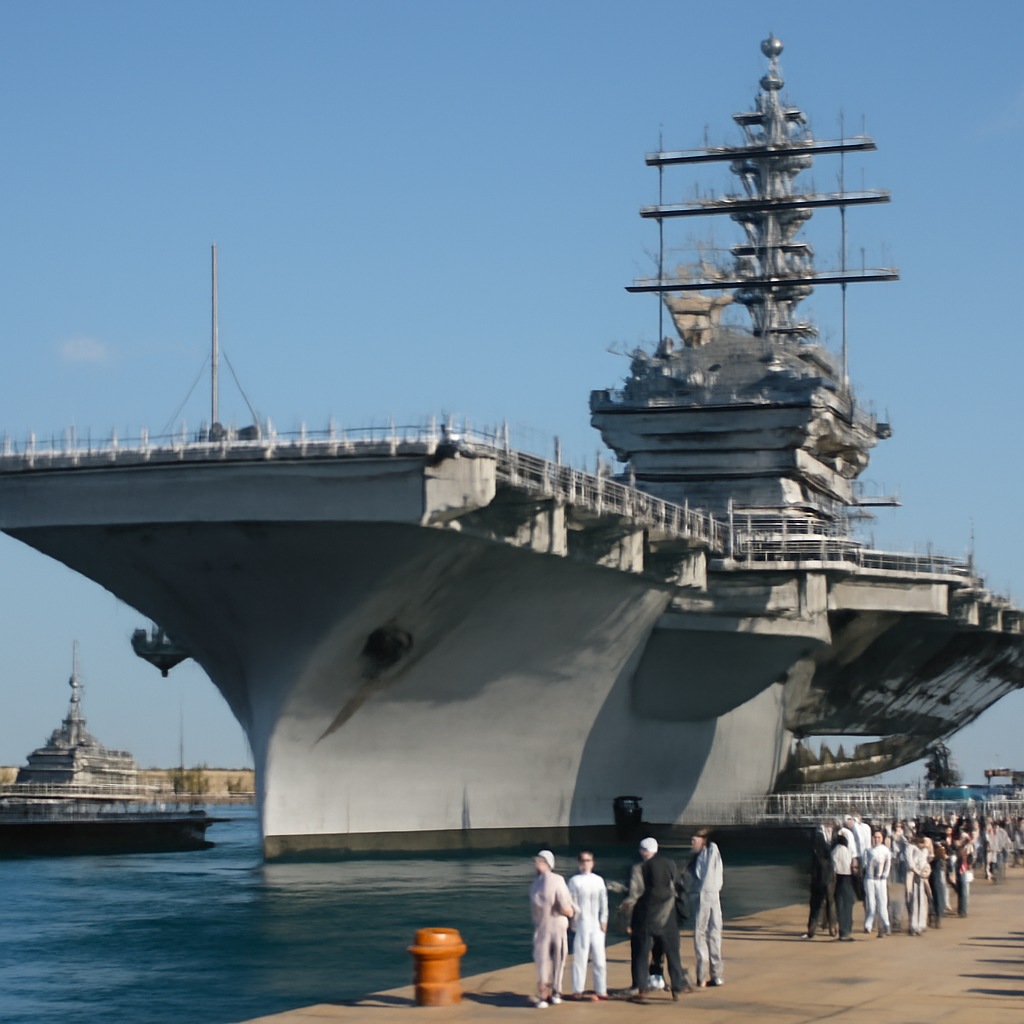
“Is the long-standing U.S. military presence in South Korea due for a strategic overhaul?” This question reverberates through defense circles as a prominent American think tank advocates for a significant reduction in troops stationed on the Korean Peninsula. The Washington-based Defense Priorities, in their recent report titled “Aligning Global Military Posture With U.S. Interests,” has recommended scaling back the number of U.S. forces from approximately 28,500 to around 10,000.
This call for troop cuts invites scrutiny into the evolving nature of U.S. defense commitments in East Asia and the broader implications for regional security and deterrence, particularly vis-à-vis North Korea and China.
Since the Korean War armistice in 1953, the United States has maintained a substantial military footprint in South Korea. This presence has served as a deterrent against aggression from the North and as a cornerstone of the U.S.-South Korean alliance. The 28,500-strong contingent, comprising combat troops, support personnel, and specialized units, embodies a commitment to stability on the peninsula.
However, the Defense Priorities report contends that current U.S. force posture may be “disproportionate to the actual threats” and not fully aligned with contemporary strategic interests. The think tank argues for reallocating resources to focus more on emerging challenges, such as the competition with China and modernization efforts of the U.S. military, while reducing conventional troop deployments in static positions.
“Our military posture needs to reflect not just yesterday’s wars, but tomorrow’s realities,” stated Mackenzie Eaglen, a defense policy expert not affiliated with the report. “The proposal to cut troops in South Korea aligns with a broader trend of questioning forward-deployed forces’ utility in an era of technological warfare and shifting geopolitical priorities.”
The report’s suggestions resonate within a complex matrix of perspectives. From a policymaker’s standpoint, the troop reduction could be a cost-saving measure, reallocating defense budgets to cyber capabilities, space defense, or naval presence in the Indo-Pacific. Technologists and military strategists might favor leaner forces supported by advanced surveillance, missile defense, and rapid deployment capabilities rather than large permanent garrisons.
On the other hand, some analysts warn that shrinking the U.S. presence could embolden North Korea or embitter South Korean allies who view American troops as a tangible reassurance against Pyongyang’s unpredictable provocations. Ambassador Harry Harris, former U.S. commander of Pacific forces, once underscored, “The U.S. force in South Korea is not just about deterrence—it is a symbol of unwavering commitment.”
Moreover, any adjustment must consider China’s rising influence. Beijing observes U.S. troop movements keenly, interpreting them through the lens of its own regional ambitions. A reduction might be seen either as a de-escalation signal or as a weakening of U.S. resolve, potentially destabilizing the delicate balance of power.
The current proposal does not advocate an immediate withdrawal but rather a recalibration aligned with new defense priorities and emerging technologies. It raises questions about how best to maintain deterrence while adapting to 21st-century warfare’s demands.
Ultimately, the debate over troop levels in South Korea encapsulates a broader dilemma facing U.S. global military strategy: how to balance commitments with agility, presence with innovation, and deterrence with diplomacy. As Defense Priorities frames it, the objective is to “ensure the U.S. military posture supports national interests sustainably and effectively.”
In an era where geopolitical threats evolve rapidly, and warfare increasingly transcends traditional battlefields, the U.S. must ask itself whether maintaining a large conventional force in South Korea remains indispensable—or if a leaner, more flexible approach better serves American and allied interests.
Will reducing troops enhance U.S. strategic agility, or will it create a vacuum that invites instability? The answer may well shape the future of security on the Korean Peninsula and beyond.