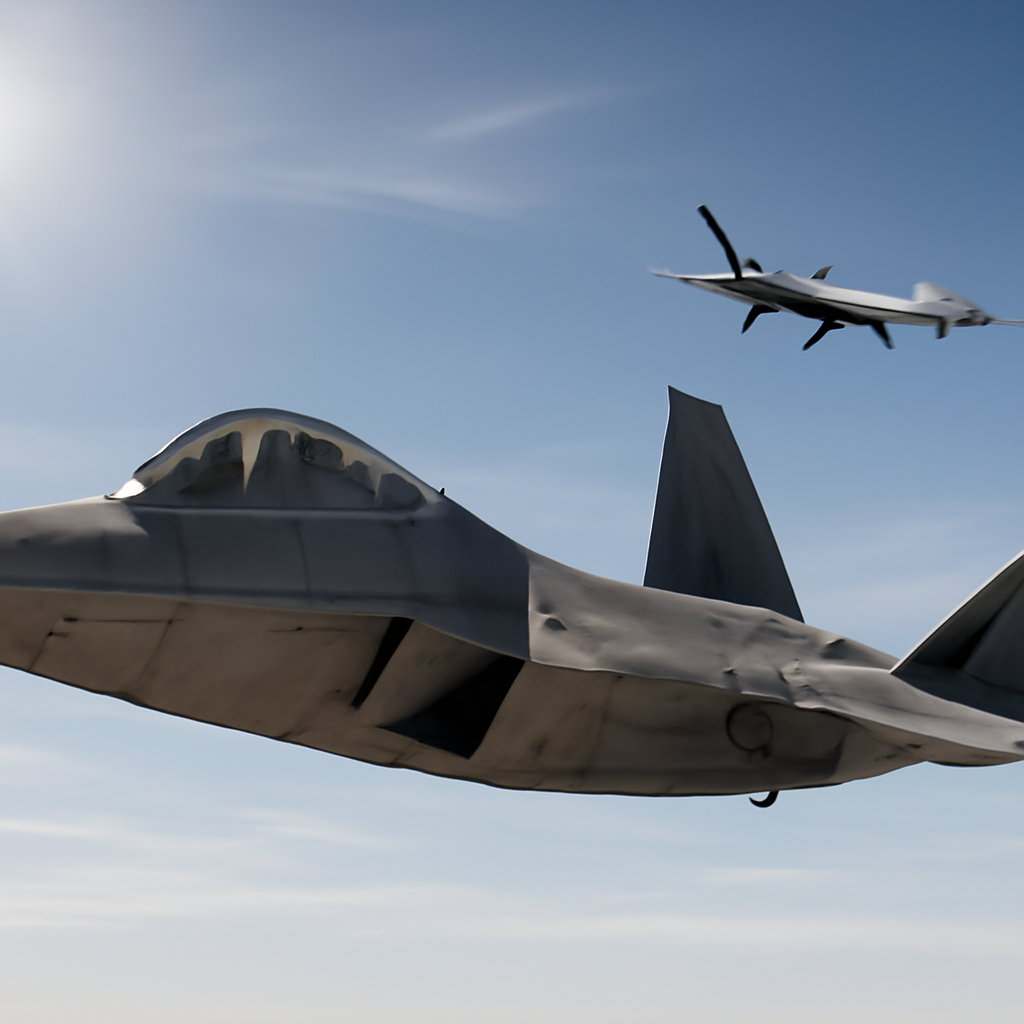
F-15EX Expansion: A Strategic Move in the U.S. Air Force’s Modernization Efforts
The Pentagon’s recent announcement of a $3.1 billion budget request for the Fiscal Year 2026 signals a significant step forward in the U.S. Air Force’s modernization strategy. As military capabilities evolve and adversarial threats increase, one question looms large: how will the acquisition of additional F-15EX Eagle II fighter jets reshape America’s air power landscape? With current geopolitical tensions and technological advancements at play, this decision comes laden with both promise and potential controversy.
To fully appreciate the implications of this procurement plan, it is essential to grasp its historical context. The F-15EX Eagle II, developed by Boeing, is the latest iteration of a long lineage of F-15 aircraft that have served as stalwarts of U.S. air dominance since the late 1970s. Originally designed for air superiority during the Cold War, the F-15’s adaptability has allowed it to evolve into a multi-role platform capable of engaging in both air-to-air and air-to-ground missions. The introduction of the F-15EX represents a leap forward in integrating advanced avionics and weapon systems that enhance its combat effectiveness against modern threats.
What’s happening now is a decisive pivot within the Department of Defense (DoD) as it addresses pressing operational needs while navigating budgetary constraints. The June 26 briefing at the Pentagon highlighted plans to bolster F-15EX production amid ongoing discussions about its role alongside fifth-generation fighters like the F-35 Lightning II. According to Air Force Secretary Frank Kendall, the F-15EX is not merely an upgrade but rather a crucial component for maintaining air superiority in an increasingly contested domain.
This procurement push underscores why it matters: enhancing the fleet size of a proven platform like the F-15EX is not just about numbers; it’s about capability integration and operational readiness. In scenarios involving state adversaries such as China or Russia, having an advanced fleet that can operate seamlessly in conjunction with other aircraft enhances strategic deterrence. Analysts at think tanks such as RAND Corporation stress that maintaining qualitative and quantitative edge over adversaries is fundamental to U.S. defense strategy.
Adding depth to this perspective are insights from military experts who argue that while advancing technologies are crucial, they cannot replace the benefits offered by established platforms like the F-15EX. For instance, Dr. Mark Gunzinger from the Mitchell Institute highlights that “the multirole capabilities and reduced operating costs associated with older aircraft can be effectively complemented by more modern systems.” Such a view emphasizes that the F-15EX isn’t an endpoint but rather part of an integrated approach to defense.
Looking ahead, stakeholders will likely observe critical decisions regarding fleet composition and resource allocation as Congress debates this budget request. The evolving nature of warfare dictates that not only will policymakers be focused on traditional threats but also on hybrid warfare tactics where electronic warfare and cyber capabilities play pivotal roles. How effectively can older platforms like the F-15EX be adapted to counter such emerging threats? That question remains open-ended.
The potential outcomes of expanding F-15EX acquisitions also hinge on broader geopolitical dynamics—especially if tensions escalate with China over Taiwan or with Russia regarding Eastern Europe. Observers should watch closely how these developments influence both domestic defense manufacturing capabilities and international alliances.
In conclusion, as America invests billions into sustaining its aerial prowess through platforms like the F-15EX Eagle II, one must ponder: Is it merely nostalgia for older designs, or does this strategy reflect a calculated understanding of future combat demands? With intricate layers of history and technological evolution at play, this decision could redefine how we view military readiness for decades to come.