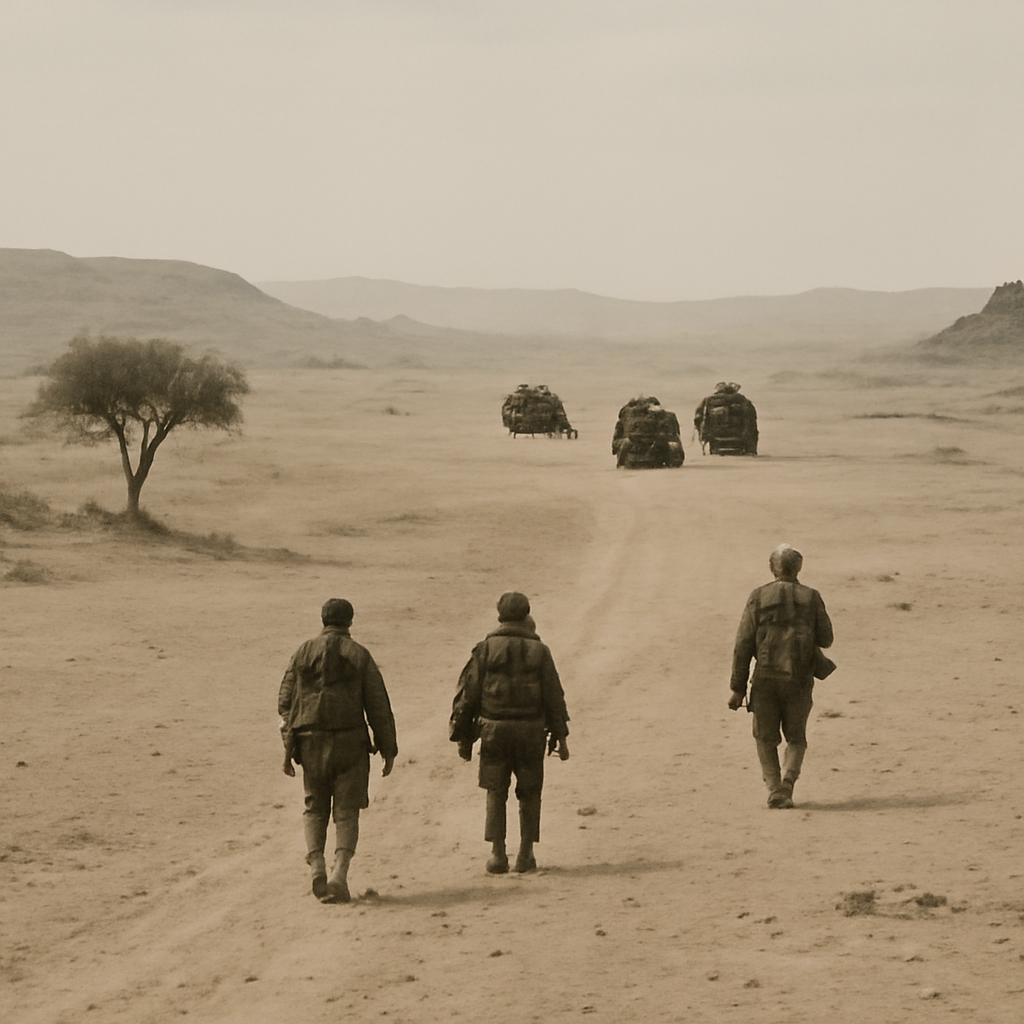
“How do you win a war that doesn’t look like any war we’ve fought before?” This question underscores the modern challenges facing the U.S. Air Force as it grapples with evolving threats, rapid technological advancements, and shifting geopolitical dynamics. In response, the Air Force introduced the Agile Combat Employment (ACE) concept in 2021—a doctrinal shift designed to enhance aircraft survivability, operational flexibility, and mission effectiveness under contested conditions.
At its core, ACE is about redefining how air power is projected. Traditional paradigms favored centralized bases with vast infrastructure. However, rising threats from sophisticated anti-access/area denial (A2/AD) systems and peer competitors such as China and Russia have rendered fixed, large-scale installations vulnerable. The ACE concept seeks to disperse forces, enabling rapid, unpredictable, and resilient operations. This doctrine allows aircraft to operate from austere locations, smaller airfields, and even expeditionary sites with reduced logistical footprints.
According to the Department of the Air Force’s 2022 publication on ACE, “the concept relies on operational agility, increased force resilience, and rapid adaptability to degrade adversaries’ targeting capabilities.” Under this framework, aircraft are not only upgraded with new hardware and software but also integrated into a networked environment that prioritizes speed, stealth, and survivability. The modernization efforts accompanying ACE include improved electronic warfare systems, hardened communication links, and enhanced autonomous capabilities that facilitate seamless mission execution despite contested environments.
Technologists emphasize that ACE represents more than just a new way of thinking; it embodies the nexus of innovation and operational necessity. Dr. Rebecca Grant, aerospace analyst and president of IRIS Independent Research, explains, “ACE demands aircraft be outfitted to survive and thrive in an electromagnetic spectrum heavily contested by advanced adversaries. It’s about making planes smarter, more agile, and better connected while operating from locations that previously might have been deemed too risky.” The infusion of artificial intelligence and cyber-defense measures into ACE-aligned platforms aims to reduce pilot workload and increase the speed of decision-making—key advantages in modern combat scenarios.
From the policymaker’s perspective, ACE aligns with broader Department of Defense strategies emphasizing multi-domain operations and joint force integration. General Charles Brown Jr., former Chief of Staff of the Air Force, remarked in 2021 that “agility and adaptability will dictate success on future battlefields. ACE ensures we maintain operational unpredictability, complicating any adversary’s calculus.” The concept also serves as a strategic message to competitors, signaling that U.S. forces will not be pinned down by fixed infrastructure or predictable deployment patterns.
Operational users—pilots, maintainers, and commanders—have already begun testing ACE principles in exercises across the Indo-Pacific and Europe. These exercises demonstrate the ability to rapidly reconfigure air wings, move aircraft quickly between dispersed locations, and maintain a high operational tempo even when logistics support is limited. However, challenges remain. The logistical complexity of supporting multiple small bases, ensuring secure communications, and maintaining aircraft readiness outside well-established facilities requires continuous refinement and resource investment.
Adversaries have taken note. Chinese military strategists, for example, have highlighted the importance of denying the U.S. the ability to employ such dispersed operations effectively. As noted in a 2023 report by the RAND Corporation, “counter-ACE measures could involve targeting the networks and logistics chains critical to agile operations, making the U.S. reliance on dispersal a double-edged sword.” This insight suggests a dynamic contest: as the U.S. Air Force adapts to modern threats with concepts like ACE, adversaries are simultaneously developing strategies to undermine those very adaptations.
Why does ACE matter? Because it reframes the battlefield where dominance is no longer guaranteed by raw power alone but by innovation, adaptability, and the ability to operate fluidly in complex environments. It moves the U.S. Air Force away from static warfighting mindsets and toward a resilient posture ready for the ambiguities of 21st-century conflict.
As the ACE concept continues to mature, a critical question persists: in a world where technology and threat landscapes evolve at breakneck speed, can the U.S. Air Force maintain the agility to stay one step ahead? The answer may well determine not just how wars are fought, but how peace is preserved in an increasingly uncertain world.