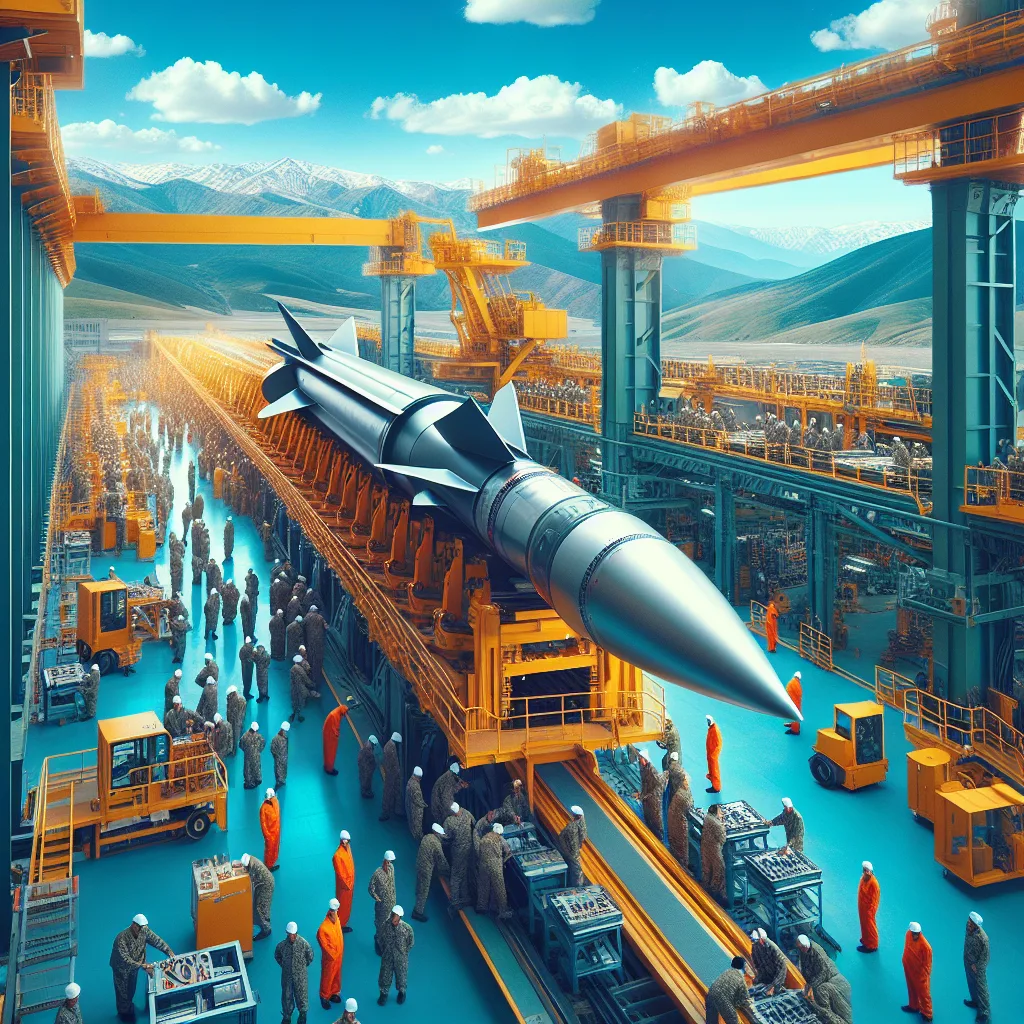
Turkey’s Defense Sector Sets Sights on Missile Expansion Amid Regional Tensions
In an unmistakable move signaling Turkey’s ambition to amplify its military capabilities, President Recep Tayyip Erdogan has ordered a substantial increase in the production of medium- and long-range missiles. This directive comes at a time when geopolitical frictions, particularly between Israel and Iran, are intensifying. As Ankara embarks on this ambitious expansion, one must ponder: what are the broader implications of Turkey’s defense escalation for regional stability and international relations?
The roots of Turkey’s defense industry expansion can be traced back to a confluence of historical, strategic, and political factors. Since the late 20th century, Turkey has sought to reduce its dependency on foreign arms suppliers while enhancing its domestic production capabilities. The successful development of indigenous platforms like the Bayraktar TB2 drone has showcased both technological prowess and tactical innovation. However, tensions in the region—especially following conflicts involving neighboring countries—have accelerated this push towards self-sufficiency in missile technology.
As of now, President Erdogan’s directives are not merely administrative; they represent a strategic pivot aimed at reinforcing Turkey’s deterrence posture. Recent statements from military officials highlight that these enhanced missile capabilities will not only bolster national security but also elevate Turkey’s status as a formidable military player in the region. Official communications indicate an urgency in this endeavor, suggesting that increased missile production is seen as critical for responding to perceived threats from Iran and other adversaries.
This shift carries significant implications for various stakeholders. For Turkish defense contractors like Roketsan and Aselsan, it offers opportunities for growth and innovation while creating jobs within the domestic economy. Conversely, neighboring countries may view this move with trepidation. The proliferation of advanced missile systems could alter the balance of power in the region and prompt an arms race among nations already wary of each other’s intentions.
An expert perspective provided by Dr. Ismail Demir, head of Turkey’s Defense Industries Directorate, emphasizes that “our aim is not only to meet our own defense needs but also to create a deterrent capability that ensures our sovereignty.” This sentiment reflects a broader understanding within Turkish leadership that military advancements serve dual purposes: enhancing defense readiness while solidifying national pride.
Looking ahead, several scenarios could emerge from this strategic shift in Turkey’s missile manufacturing capabilities. Firstly, if successful, these advancements may lead to further integration of Turkish-made systems into NATO frameworks—a complex possibility given the alliance’s ongoing tensions with Ankara over various issues, including its purchase of Russian S-400 systems. Secondly, escalating capabilities may provoke neighboring states to enhance their arsenals or seek defensive alliances that could further destabilize existing frameworks.
Ultimately, as President Erdogan strives to elevate Turkey’s military stature amid regional upheavals, the stakes extend beyond mere weaponry. They encompass national security interests intertwined with international diplomacy and economic considerations. In an era marked by unpredictability, one must ask: how will these developments shape not only Turkey’s future but also the geopolitical landscape at large? In the quest for deterrence through enhanced missile capabilities, what risks might arise that we have yet to reckon with?



