Turkish defence firms finalized approximately $8 billion in export contracts within the first three days of SAHA 2026, organizers announced — up from $6.2 billion at SAHA 2024.
The show by the numbers and the strategic framing
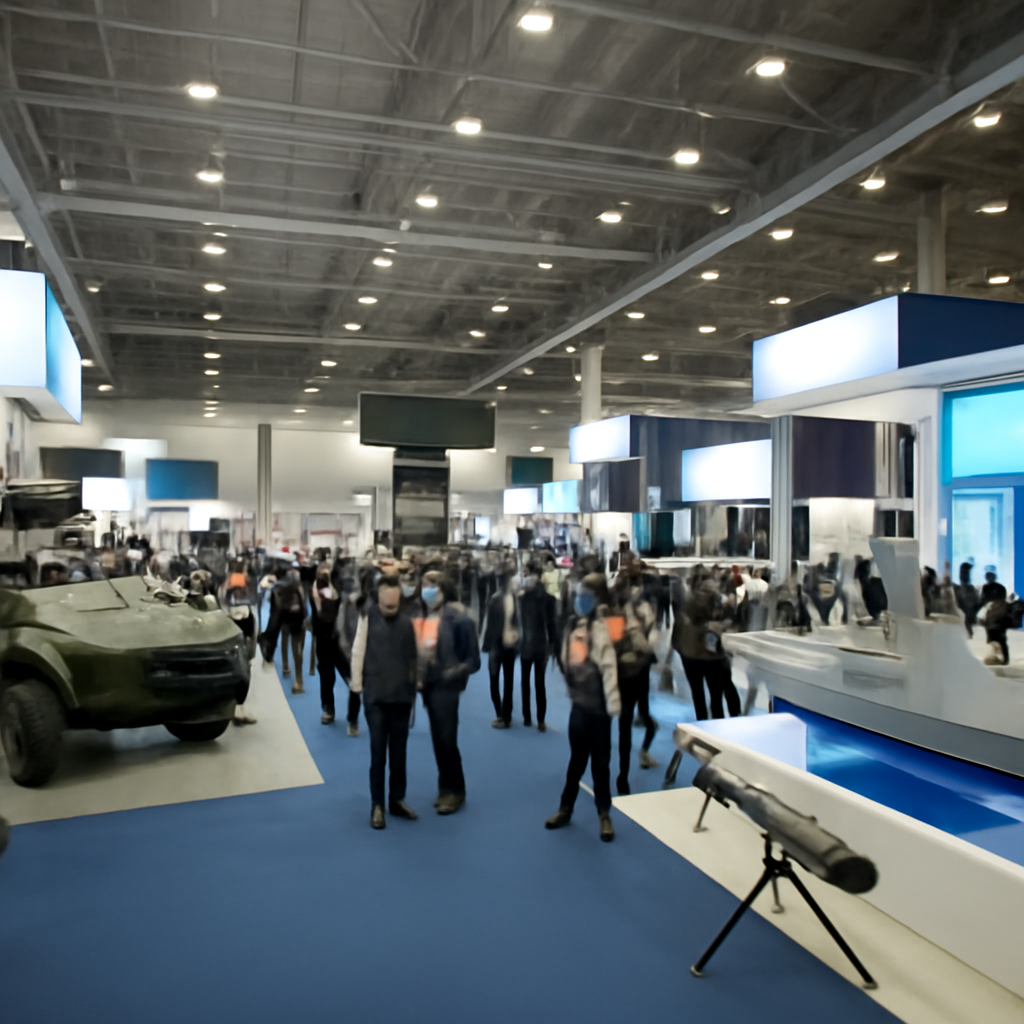
SAHA 2026 ran 5–9 May at the Istanbul Expo Center, drawing 1,700 companies — 263 international — from over 120 countries across 400,000 square metres of exhibition space. More than 30,000 industry professionals, 140 official delegations, and 200 trade procurement representatives attended, and organizers planned 203 new product launches and 164 signing ceremonies. Defence Minister Yaşar Güler set the tone at the opening: “Until the 1980s, our country was largely dependent on foreign suppliers… Today, Türkiye designs, produces and exports its own systems.”
Deep strike: three firms clear the 1,000 km threshold
SAHA 2026’s most significant technical milestone was the simultaneous public debut of loitering munitions with reported ranges at or exceeding 1,000 km from multiple Turkish firms. Baykar Technology unveiled the Mızrak — described as an AI-assisted autonomous strike system with a range exceeding 1,000 km, endurance over seven hours, and a payload capacity exceeding 40 kg, designed for GPS-denied navigation — plus the K2 Kamikaze UAV (200 kg payload, 2,000 km range reported in show materials) and the tube-launched Sivrisinek. STM Savunma Teknolojileri displayed the Kuzgun, characterized in promotional material as a long-range loitering munition with over 1,000 km range, 6+ hours endurance, roughly 200 kg weight, rocket-assisted take-off, and navigation hardened against electronic warfare. Roketsan presented a set of new munitions including the Neşter bladed-warhead precision munition, a mini cruise missile (heavier warhead, longer ranges), the Cida beyond-line-of-sight anti-tank missile, and a Cirit C-UAS variant.

Audit-ready is a season. It shouldn't be.
Evidence in spreadsheets, controls drifting between audits, frameworks multiplying on flat headcount. Nubivance runs continuous compliance on Rapid7 Cyber GRC - SOC 2, HIPAA, ISO 27001, PCI, CMMC.
End the scrambleAutonomous naval systems: expendable sea-denial on display
Several Turkish firms showed expendable naval autonomy across surface and subsurface domains. Aselsan’s Kılıç family includes the Kılıç 10 (120 cm length, 10 nm range, optional fibre-optic control) and the Kılıç 200 (350 cm length, 100–200 nm range), both described as kamikaze UUVs with integrated warheads, thermal/IR and subsea cameras, dual-GNSS, satellite/RF/acoustic communications, and AI-supported target detection for swarm use. Aselsan also displayed the Tufan kamikaze USV — a torpedo-class warhead in a surface vessel expected to enter Turkish inventory in 2027 — and CEO Ahmet Akyol called these “cost-effective deterrence capabilities for both Türkiye and allied navies.” STM exhibited the YAKTU KUSV (5.8 m, 50+ knots, 200+ nm) and an extra-large UUV, while Pasifik Teknoloji and Özata Shipyard signed an MoU to co-develop unmanned surface vehicles.
Industrial self-sufficiency: closing supply-chain chokepoints
Beyond platforms, SAHA 2026 emphasized upstream industrial closure. Miilux OY — presented as Türkiye’s sole domestic armoured steel producer and an OYAK subsidiary — displayed Protection 560T and Protection 650T ballistic steels, with an end-to-end supply chain fed by Erdemir flat steel and heat treatment in Manisa. OYAK General Manager Yalçıntaş stated, “The initial raw material, meaning the first steel, again comes from our own facilities, Erdemir.” Miilux GM Yeldan asserted there is “no longer any foreign dependency in either land vehicles or naval vehicles” for armoured steel. TR Mekatronik showed the Kaan six-barrel 20 mm cannon with over 95% domestic content and no export-restricted components; Havelsan promoted the KOVAN digital backbone for TAI’s 16,000 staff; Roketsan and FNSS demonstrated a laser C-UAS; and other exhibitors showed sensors, propellants, and production-capable subsystems intended to reduce reliance on third-party export controls.
What this means for Gulf procurement authorities, Pakistan’s defence industry, and Turkish defence manufacturers
- Gulf procurement authorities: The simultaneous appearance of 1,000 km+ loitering munitions and runway-independent launch architectures positions Türkiye as a supplier of long-range, saturation-style expendable strike options that, the show argued, offer an alternative to Iranian systems while promising improved ECM resistance.
- Pakistan’s defence industry: SAHA materials and subsequent analysis frame a path from platform purchase to industrial partnership — with steel, propellant chemistry, composite panels, and test infrastructure named as practical entry points for joint ventures that would localize production and lower per-unit costs for munitions and vehicles.
- Turkish defence manufacturers: The display of multiple firms meeting strategic-range thresholds, paired with upstream capabilities such as Miilux’s steel chain and TR Mekatronik’s exportable cannon, signals a deliberate bid to offer export-unrestricted systems to buyers constrained by sanctions risk or third-party transfer rules.
Conclusion
SAHA 2026 combined scale — 1,700 exhibitors, hundreds of delegations, and $8 billion in early deals — with a deliberate narrative: strategic-range loitering munitions, expendable naval autonomy, and closing industrial dependencies. The simultaneous industrial push to 1,000 km+ strike, the near-term fielding timetable for naval kamikaze systems, and the emphasis on domestic inputs together reframe Türkiye’s export offer as a package of platforms plus supply-chain independence. The display of a Yıldırımhan ICBM was included in exhibit reporting, though the source material urges treating specifications with caution pending government confirmation; that caveat underscores a broader fact visible across the show: technical claims and strategic signalling increasingly run in parallel at SAHA, and both are intended for export buyers as much as for domestic audiences.