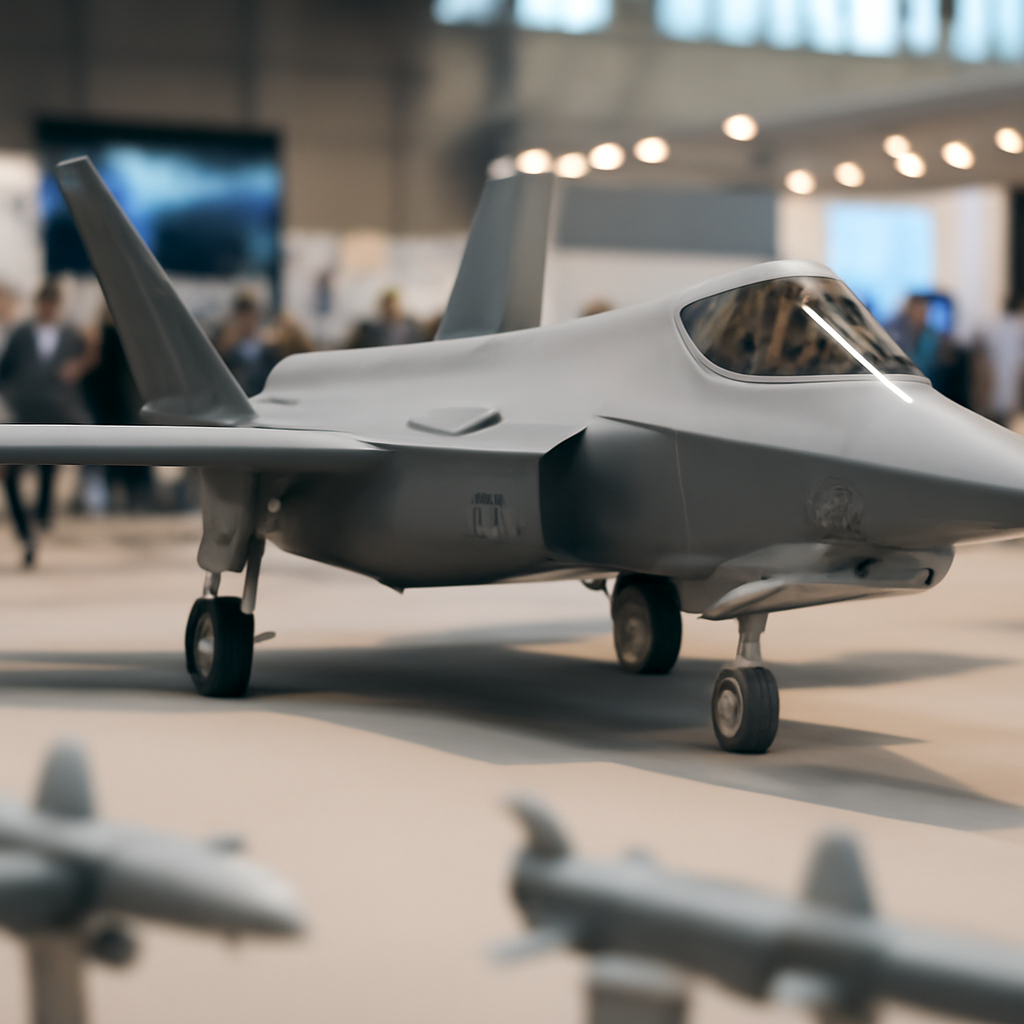
“The initial sale was made for the first batch of 20 Block 10 aircraft. This is the first order. Over time, we expect the numbers to increase,” TA CEO Mehmet Demiroglu told Breaking Defense after the contract signing at the SAHA defense expo.
The contract: 20 Block 10 KAAN jets for the Turkish air force
The Turkish air force and Turkish Aerospace (TA) have formalized a national procurement for 20 fifth‑generation KAAN fighters — the first production order for the program. The deal was signed at the SAHA defense expo between TA and Turkey’s Defense Industries Secretariat, the state‑run Anadolu Agency reported. Secretariat chief Haluk Gorgun described the acquisition in national terms, saying, “We are proud to develop the products listed here locally and nationally, and to deliver them to our heroic security forces.”
TA framed the purchase as the initial sale of Block 10 aircraft with scope for growth: the company’s chief executive said the 20 jets are “the first order” and that the number is expected to increase over time. The KAAN program already has an international customer: Indonesia contracted 48 fighters last June, and TA is actively courting other potential export partners, including Saudi Arabia.
Engines and timelines: GE now, TF35000 later
Prototype KAAN aircraft and test articles currently fly with GE Aviation F110 engines. TA has said it aims to replace those with domestically made TF35000 turbofan engines produced by Turkish Engine Industries (TEI) by 2032. At SAHA, TEI displayed a concept of the TF35000 and said the engine is still in the design phase, with prototype production expected to start in 2027.
The question of domestic propulsion has become a visible program constraint. The report notes that Turkish officials have previously said U.S. lawmakers were holding up transfer of additional U.S.‑made engines — a factor that has surfaced in public explanations for pursuing an indigenous powerplant.

This site is the portfolio.
OSINTSights runs on Cloudflare Workers, D1, R2, and Vectorize, with an AI pipeline on Hetzner ARM. Nubivance designed, built, and operates it. We do the same for clients.
See what we buildSAHA expo: industrial depth and parallel projects on display
TA used the SAHA exhibition to show off components and completed systems tied to the KAAN and other platforms. Company displays included small models of the aircraft it develops as well as a model of the ANKA 3 unmanned combat aerial vehicle and the Gokbey helicopter. TA also announced a separate agreement with General Electric to procure GE Aerospace F404 engines to power its HÜRJET trainer and light‑attack aircraft.
Observers at the expo noted an effort by Turkish suppliers to demonstrate full supply‑chain readiness. Sascha Bruchmann, research fellow for defence and military analysis at IISS, told Breaking Defense that second and third layers of suppliers were present and ready to show parts, products and even manufacturing insights — “a good indication how far the Turkish industry has come in the last decade,” he said, while noting some doubts remain until a production jet flies.
Manned‑unmanned teaming: KAAN and HÜRJET roadmaps
TA is pursuing manned‑unmanned teaming concepts for both KAAN and HÜRJET, aiming to operate collaborative combat aircraft or drone wingmen alongside manned fighters. On the timeline for those capabilities, Mehmet Demiroglu told Breaking Defense: “As for the manned‑unmanned teaming concept, work is ongoing. For KAAN, testing has not started yet. For HÜRJET, only the initial tests have begun. We will gradually intensify these tests over time.”
The statement places autonomous teaming as a parallel development priority rather than a near‑term capability for the KAAN; HÜRJET is slightly ahead in initial trials but still in early stages.
What this means for Turkish Aerospace (TA), TEI, and Indonesia
- Turkish Aerospace (TA): TA will transition from prototype demonstrators to initial production deliveries for the domestic air force while continuing to court exports such as Saudi Arabia and servicing existing international customers like Indonesia. The company is also aligning propulsion and systems supply chains to support scaled production.
- Turkish Engine Industries (TEI): TEI is responsible for the TF35000 design and plans to move from design to prototype production by 2027 with an aspirational goal of powering KAANs by 2032. TEI’s schedule will be central to reducing reliance on imported engines and to meeting TA’s production runway.
- Indonesia (export customer): Having contracted 48 KAAN fighters last June, Indonesia remains a reference customer that validates TA’s export pitch. Deliveries under that contract and any timeline shifts tied to engine or production readiness will be important signals for other prospective buyers.
The deal formalizes the KAAN’s transition from prototype program to the start of serial orders: 20 Block 10 aircraft for the Turkish air force, with the company and state officials signaling an expectation that the program will expand. Key campaign milestones to watch inside the program are the TF35000 prototype schedule beginning in 2027, the hoped‑for in‑service use of TF35000 by 2032, and the start of manned‑unmanned teaming tests beyond the initial HÜRJET trials. Until a production KAAN takes to the air, commentators at SAHA and officials in Ankara alike stressed that industrial depth matters — and that the work of turning prototype promise into operational jets will be measured not just in contracts but in engines, suppliers and flight tests.