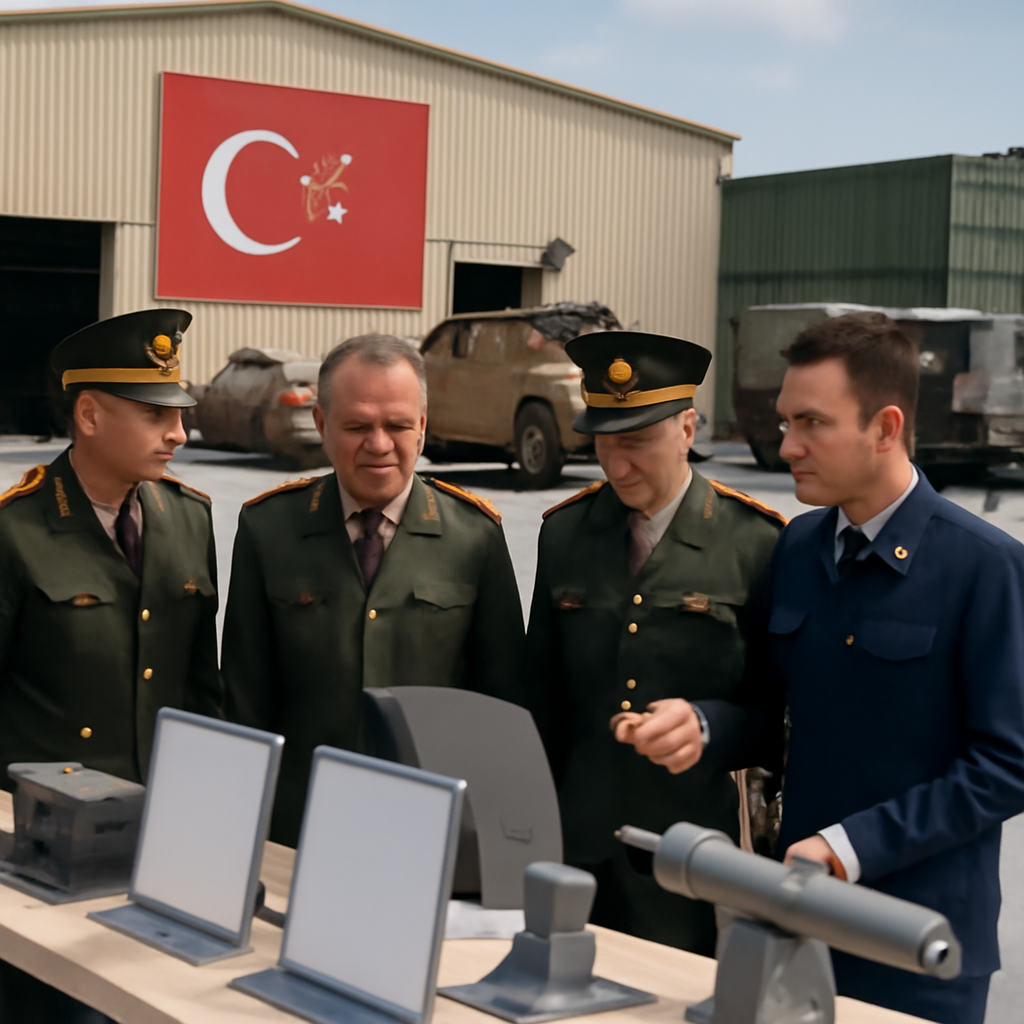
“Allocations for purchases of weapons, ammunition, weapons systems and other defense equipment — which constitute a significant portion of defense spending in the National Defense Ministry’s budget — have been increased by 229 percent,” Turkish Vice President Cevdet Yilmaz said during a ceremony in Ankara on Friday to finalize the government’s budget proposal.
The proposed budget: headline figures and the 229% jump
The budget proposal Yilmaz announced calls for $44.5 billion in defense spending and a separate $25.2 billion for internal security. The 229 percent increase he described applies specifically to allocations for purchases of weapons, ammunition, weapons systems and other defense equipment — items Yilmaz said make up a sizeable share of the National Defense Ministry’s budget. He also said the proposal has been sent to parliament for approval.
Ateş Serbest exercise: a recent demonstration of capability
Yilmaz’s announcement followed a Turkish Land Forces live-fire demonstration at the Ateş Serbest military exercise. The demonstration simulated a mix of offensive and defensive scenarios that, according to the report, included artillery and tanks firing; drones being neutralized by guns, lasers or microwave systems; unmanned ground vehicles used to target threats or conduct medical evacuation; and F-16 fighter jets dropping bombs.

Audit-ready is a season. It shouldn't be.
Evidence in spreadsheets, controls drifting between audits, frameworks multiplying on flat headcount. Nubivance runs continuous compliance on Rapid7 Cyber GRC - SOC 2, HIPAA, ISO 27001, PCI, CMMC.
End the scrambleDomestic production vs. imports: what was said — and what was not
Yilmaz did not break down how much of the proposed procurement increase would buy domestically developed systems versus platforms imported from abroad. He did, however, state that Turkey has reduced its dependence on foreign suppliers.
Regional context and export claims: Gulf interest and wider instability
The vice president’s remarks came as the report notes the Middle East seeks to recover from a war involving Iran, Israel and the United States and as the Kingdom of Saudi Arabia faces Houthi attacks. The vulnerability of air defenses has been highlighted by a Houthi attack on Riyadh airport, the report says. Against that backdrop, the Turkish defense industry has seen increased interest in its platforms from Gulf states as Turkish companies look to expand exports to the region. President Recep Tayyip Erdogan, speaking at a separate event in Istanbul, said: “Last year, we exported over $10 billion worth of defense and aerospace products to 180 different countries and regions.”
What this means for parliament, the Turkish Land Forces, and Gulf buyers
- Parliament: The budget proposal, including the large increase in procurement allocations, has been formally sent to parliament for approval — making parliamentary consideration the next procedural step named in the announcement.
- Turkish Land Forces: The live-fire scenarios at Ateş Serbest demonstrate capabilities that align with higher procurement levels; the forces may be positioned to receive additional systems or to continue operational testing of the platforms showcased.
- Gulf buyers: The report links rising regional demand — driven in part by recent attacks and air-defense concerns — with growing interest from Gulf states in Turkish platforms and an industry push to expand exports to the region.
The figures Yilmaz presented are concrete: a 229 percent rise in procurement-line items, $44.5 billion for defense, $25.2 billion for internal security, and a formal submission of the package to parliament. Missing from the public announcement is a granular breakdown of how the increase will be spent between domestically developed systems and foreign purchases — a detail that will determine whether the boost mostly expands domestic production, accelerates imports, or does both. Parliament’s review and any subsequent budgetary detail disclosures will be the immediate steps to watch.