"For more than a decade, we’ve leveraged our expertise in cutting-edge semiconductors and our secure US boundaries to pioneer leading quantum computing technologies," Warden told investors during an earnings call this morning.
Kathy Warden frames strategic alternatives for microelectronics
Northrop CEO Kathy Warden used the company’s earnings call to announce a formal review of its microelectronics business that could lead to a spinoff or outside investment, including a direct Pentagon stake. Warden said the company is “actively evaluating strategic alternatives” and that options under consideration include continuing to fund the unit internally, broadening the investor base, or separating the business. She emphasized that no final decisions have been made and that the company intends to share more details “in the coming months.”
Northrop Grumman Microelectronics Center: facilities and market focus
The microelectronics organization — named the Northrop Grumman Microelectronics Center — comprises three government-accredited production facilities: two semiconductor foundries in California and Maryland, and an advanced packaging facility in Florida. Warden said the majority of current work is geared toward U.S. government customers, though she described those customers as “very open” to Northrop selling some products on the commercial market and to the company treating those items as commercial items when sold back to government buyers.

Audit-ready is a season. It shouldn't be.
Evidence in spreadsheets, controls drifting between audits, frameworks multiplying on flat headcount. Nubivance runs continuous compliance on Rapid7 Cyber GRC - SOC 2, HIPAA, ISO 27001, PCI, CMMC.
End the scrambleFortitude chip: a specific product pitched for commercial use
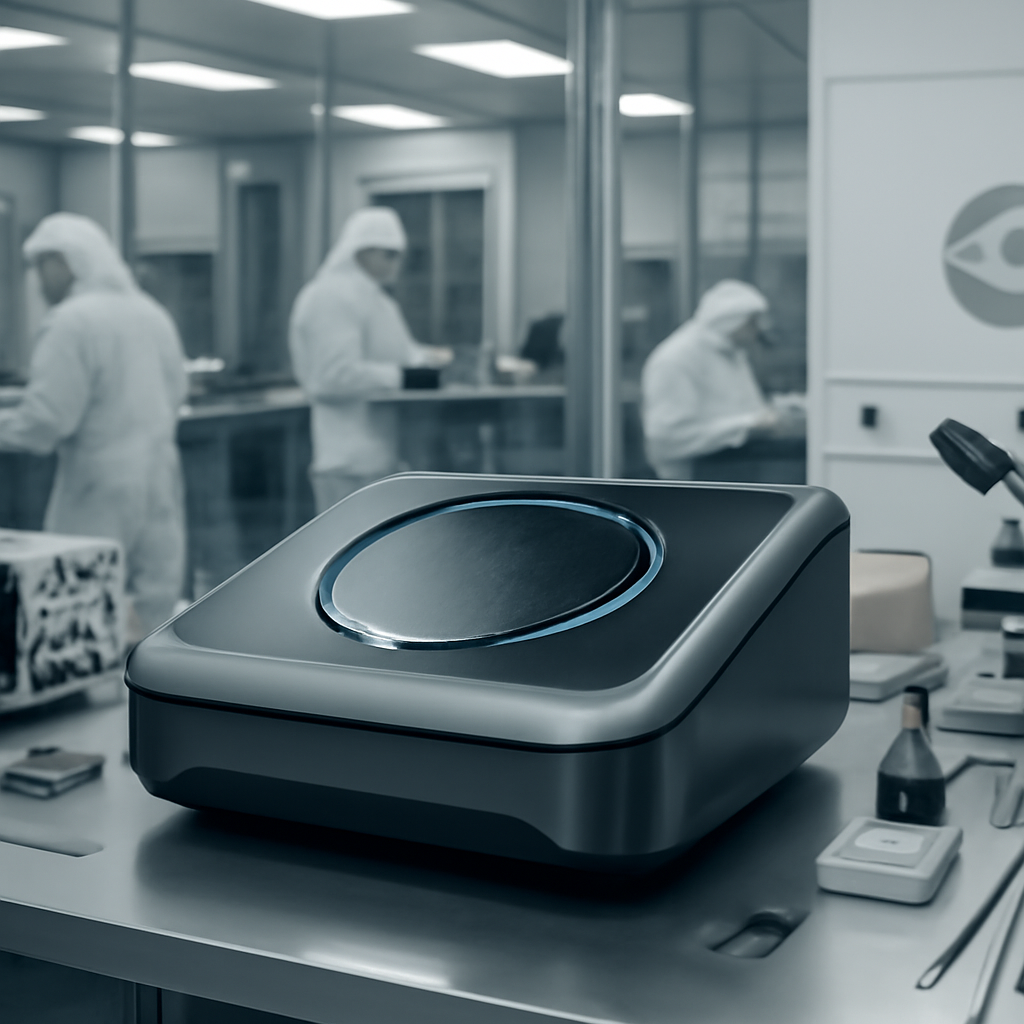
One technology Warden singled out as having commercial potential is the Fortitude chip, which Northrop unveiled earlier this month. The company describes Fortitude as a gallium nitride chip the size of a grain of rice, designed to deliver three times more power and 20 times better signal quality than current chips. Warden mentioned applications that include radar, GPs and future 6G networks.
Pentagon investment is an option; industry precedent noted
Warden did not rule out a Pentagon equity stake as part of the company’s strategic path. She pointed to the department’s announced $1 billion equity stake in L3Harris’s missile solutions spin-off as precedent, and the report noted that the L3Harris split has been postponed until mid-2027. Warden said Northrop believes the microelectronics technology has such strong commercial applications that the company “is not wanting to be overly dependent on any government, particularly the US government in this case. But all options are on the table.”
From merchant supplier shift to broader commercial ambitions
Last fall, Northrop signaled a change in posture by opening to selling dozens of microelectronics components — made in government-certified U.S. facilities — to other aerospace and defense companies as a merchant supplier. That represented a break from a previous stance of manufacturing components only for Northrop-made products. Warden framed the possible expansion into commercial markets as a partnership with government customers that would also “open up access to commercial markets that before we did not have as strong an opportunity to pursue because of the restricted nature of the work we were doing.”
How technologists, policymakers, and procurement leaders are likely to respond
- Technologists and security teams: Those responsible for integration and testing will watch claims about Fortitude’s power and signal improvements and evaluate how gallium nitride components from government-accredited fabs might be certified or qualified for commercial systems.
- Policymakers and regulators: Officials considering industrial base policy will note that a government equity stake is a possible outcome and that Northrop is emphasizing both commercial scale and retained U.S. production in government-certified facilities.
- Procurement leaders at defense and aerospace firms: Buyers will track Northrop’s merchant-supplier moves and strategic review for new sourcing options and timing, especially if a spinoff or broadened investor base changes pricing, availability, or contractual terms.
Northrop’s announcement comes amid a period of public recalibration for the company — Warden made the remarks in the company’s first major public statement since Northrop lost the Navy’s F/A-XX sixth‑generation fighter competition — and signals a bid to convert government-grade microelectronics capabilities into broader commercial opportunity. The company has left several concrete questions open: whether the business will be separated, how any outside investment would be structured, and precisely which products will move into commercial channels. Warden said more detail would come “in the coming months,” leaving markets, customers, and competitors to wait and watch.
Read the original reporting: https://breakingdefense.com/2026/10/northrop-sees-growing-commercial-market-for-microelectronics-products/