“regularly experience violent landing loads and need forgiving low-speed handling,” TurDef warned — a compact way of saying that converting a land trainer into a true carrier fighter is an engineering project, not a bolt-on job. That warning frames Türkiye’s freshly announced effort: in mid-May 2026 Turkish Aerospace Industries (TAI) officially began work on a carrier-capable Hürjet for the MUGEM indigenous aircraft carrier, Naval News reported citing TRT Haber.
Mid‑May 2026: TAI launches the Naval Hürjet programme
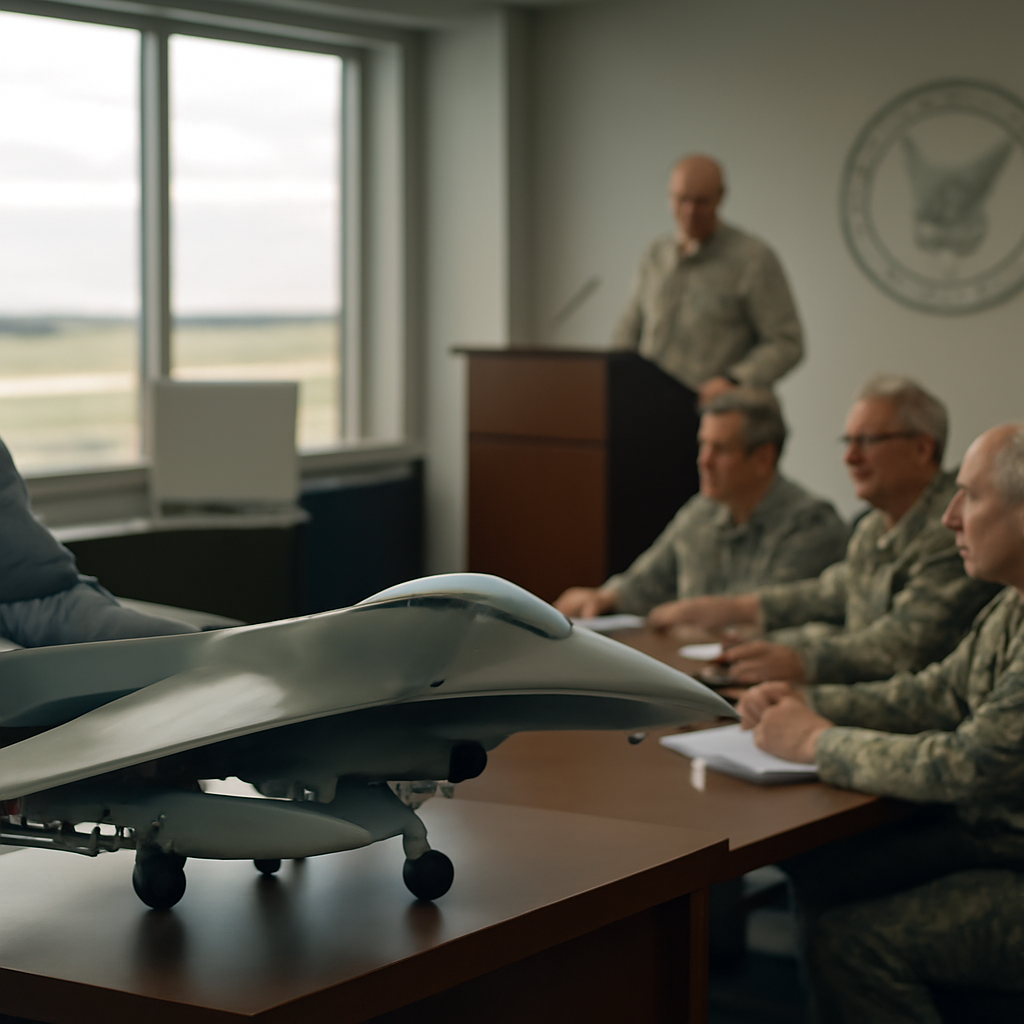
TAI’s carrier variant of the Hürjet entered development in mid‑May 2026, with the aircraft explicitly intended to operate from MUGEM, a 60,000‑tonne STOBAR carrier under construction at the Istanbul Naval Shipyard. MUGEM’s projected launch window is between 2027 and 2028. TAI presented the Naval Hürjet concept at an interactive panel during SAHA 2026, describing the effort as a maritime adaptation of an already‑established advanced jet trainer and light combat aircraft programme.
Engineering changes: beyond a hook
TAI’s material plan for the Naval Hürjet goes well beyond fitting an arrestor hook. According to TAI’s SAHA 2026 panel, the navalised Hürjet will feature STOBAR compatibility to match MUGEM’s operating principle, while CATOBAR capability is being preserved as a shelf upgrade should carrier catapult technology become available later.
Key structural and systems changes listed include:
- a purpose‑built arrestor hook system for deck recoveries;
- reinforced, shock‑absorbing landing gear designed for the high‑impact loads of carrier recovery;
- increased wing area to offset shorter deck runs and higher base weight from structural reinforcements;
- full marinization of components to protect against saltwater corrosion and humidity.
Reporting and commentary cited TurDef’s comparison to the F‑35A/F‑35C difference, underscoring that recurring violent landing loads and forgiving low‑speed handling demand substantial redesign rather than simple retrofits.

Audit-ready is a season. It shouldn't be.
Evidence in spreadsheets, controls drifting between audits, frameworks multiplying on flat headcount. Nubivance runs continuous compliance on Rapid7 Cyber GRC - SOC 2, HIPAA, ISO 27001, PCI, CMMC.
End the scrambleMUGEM’s air wing concept and ship specifications
MUGEM is being planned to carry a mixed, layered air wing of up to 50 aircraft — 20 on the flight deck and 30 in the hangar — built around both manned and unmanned platforms. The announced mix includes the Bayraktar TB‑3 UCAV, TAI Anka‑3 unmanned combat aircraft, the Baykar Kızılelma jet‑powered unmanned fighter, and the Naval Hürjet as the sole manned fixed‑wing type currently under active development for MUGEM.
SAHA 2026 technical updates put MUGEM at 285 metres in length, 72 metres beam, and over 60,000 tonnes displacement. Two propulsion architectures are under evaluation: a CODAG layout with four gas turbines and controllable‑pitch propellers, or a CODLAG option pairing two gas turbines with four electric motors and two controllable‑pitch propellers. Maximum speed is projected to exceed 25 knots with an operational range above 10,000 nautical miles. Construction commenced 2 January 2025 at the Istanbul Naval Shipyard, and programme staff expect experience from the TCG Anadolu amphibious programme to reduce technical risk and help keep the timeline accelerated.
Spain watches: SAETA II links industrial ties and interest
Spanish media and defence analyses have already taken notice. Defensa y Seguridad examined the Naval Hürjet as a potential option for Spain’s future carrier aviation plans, a conversation made logical by existing procurement ties: the Hürjet/SAETA II trainer deal signed on 28 April (30 aircraft for €2.6 billion) names Airbus as prime contractor with 60% Spanish industrial participation. That SAETA II arrangement established an institutional and industrial bridge between Madrid and Ankara, and Spanish outlets are framing the Naval Hürjet as a “light to medium combat capacity” platform suited to “instant action” rather than the deep‑penetration strike role of a fifth‑generation naval fighter. The KAAN fifth‑generation fighter is not currently part of the MUGEM air wing plan, though the source material notes some references to a potential navalised KAAN as a longer‑term possibility.
What this means for TAI, Spanish naval planners, and the Turkish Navy
- TAI and the Turkish defence industrial base: will repurpose existing Hürjet development infrastructure, production tooling, and workforce toward navalisation, accepting that carrier certification requires materially different engineering and testing regimes.
- Spanish naval planners and Airbus: now have a concrete navalised derivative to watch, tied to the SAETA II trainer deal and Spanish industrial participation; Defensa y Seguridad’s analysis positions the Naval Hürjet as an option for lighter carrier roles rather than as a stealth front‑line substitute.
- The Turkish Navy and MUGEM programme managers: are pursuing a pragmatic mixed air wing that prioritises a light manned platform supported by multiple unmanned tiers — a concept designed to deliver capability sooner and at lower programme risk than a decades‑long fifth‑generation naval fighter effort.
TAI’s mid‑May 2026 start is a clear, concrete step: the serviceable timeline now dovetails with a carrier whose construction began in January 2025 and whose launch is expected in 2027–2028. The Naval Hürjet approach highlights a strategic choice to leverage an existing trainer/ light‑combat airframe and industrial links rather than pursue a bespoke carrier fighter. Whether CATOBAR technology, a navalised KAAN, or broader export wins follow will depend on technical testing, shipboard trials and the continuing industrial relationship with partners such as Spain.
Source: Quwa — Türkiye Begins Development of Naval Hürjet for MUGEM Aircraft Carrier