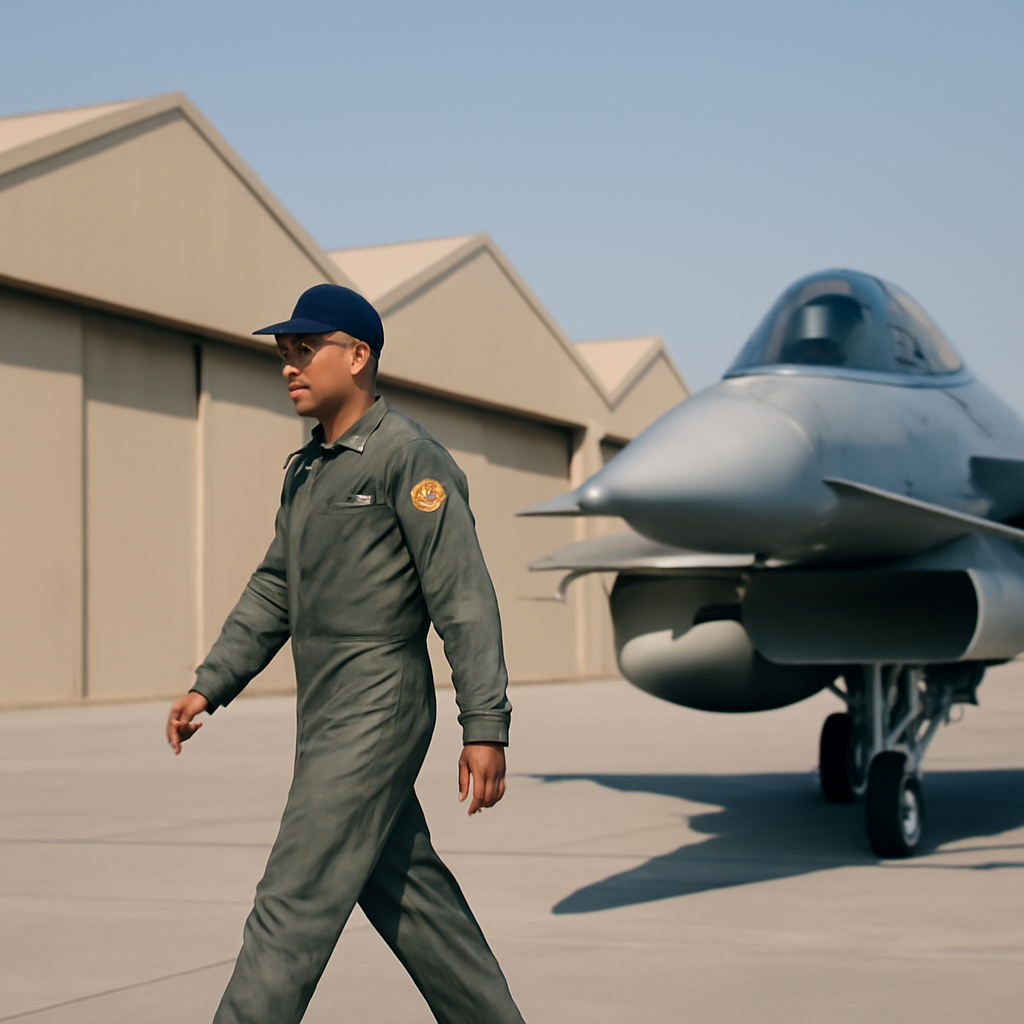
"The only place Americans belonged in the Persian Gulf is 'at the bottom of its waters,'" Ayatollah Mojtaba Khamenei, Iran’s supreme leader, said in a written statement read on state television, The Associated Press reported.
War Powers deadline: what the clock requires and the options on the table
Tomorrow marks the 60th day since U.S. President Donald Trump formally notified Congress of hostilities against Iran — the statutory limit set by the War Powers Resolution of 1973 for deploying forces without Congressional authorization, the source explains. The law permits a 30‑day extension only if the president seeks and obtains Congressional approval; otherwise the president may withdraw forces. The White House has been "in active conversations with [Congress] on this topic," a senior White House official told the Washington Examiner, and the president's team is reportedly talking to legislators about an extension.
Some lawmakers urged a different path. Sen. Lindsey Graham (R‑SC) told the Washington Examiner, "If I were them, I’d completely ignore" the deadline, calling the resolution unconstitutional. Recent Senate action shows the dilemma: a War Powers Resolution aimed at stopping the conflict failed in the Senate, 51–46, with Sen. John Fetterman voting with Republicans and Sen. Rand Paul voting with Democrats, according to Fox News.
CENTCOM’s three operational options and imminent briefings
CENTCOM has prepared three distinct options for renewed military action, Axios reported, and President Trump was slated to receive a briefing on them from CENTCOM Commander Adm. Brad Cooper. Axios described the options as: "short and powerful" waves of strikes likely targeting infrastructure; an operation to take over part of the Strait of Hormuz — which "could include ground forces"; and a "special forces operation to secure Iran’s stockpile of highly enriched uranium." The briefing, Axios suggested, "signals that Trump is seriously considering resuming major combat operations."

The cyber insurance questionnaire just landed. Now what?
SOC 2, HIPAA, insurance renewals - someone has to own security strategy. Nubivance provides fractional CISO leadership without the full-time salary.
Get a security leadCosts, force posture, and key weapons under consideration
Operation Epic Fury has cost taxpayers $25 billion so far, and "most of that is in munitions," Pentagon acting comptroller Jules Hurst told the House, the source reports. CENTCOM said it has turned away 42 ships during the blockade, representing 69 million barrels of oil worth about $6 billion, per a CENTCOM statement. Naval deployments remain significant: imagery shows the Wasp‑class USS Boxer and the USS Comstock steaming toward the Middle East, while three carrier strike groups — the USS Gerald R. Ford, USS George H.W. Bush and USS Abraham Lincoln — have been operating in the region. Combined, those groups bring roughly 200 aircraft, nine Arleigh Burke class destroyers, and 15,000 sailors and Marines.
Separately, CENTCOM requested to send the Army’s long‑range Dark Eagle hypersonic boost‑glide vehicle to the Middle East, Bloomberg reported, seeking a longer‑range option to hit launchers moved out of range of the Precision Strike Missile. The reporting noted Dark Eagle is available in "just a tiny handful" — "likely single digits" — and that military planners consider such weapons valuable for near‑peer contingencies in the Pacific and Europe. Critics quoted in the source questioned the utility of using a scarce hypersonic round to strike single missile launchers.
Iranian leadership, messaging, and regional responses
Iran’s leadership has presented a hard line. The supreme leader, Ayatollah Mojtaba Khamenei, insisted Iran will protect its "nuclear and missile capabilities" as a national asset, and said Americans belong "at the bottom" of the Persian Gulf’s waters, the AP reported. Iranian President Masoud Pezeshkian wrote that "any attempt to impose a naval blockade and restriction on Iran is doomed to failure," and Iran’s Navy Commander, Commodore Shahram Irani, said the Islamic Republic will "soon unveil a new weapon that would 'deeply terrify the enemy,'" according to IRNA.
Regionally and internationally, responses are mixed: Pakistan opened six overland transit routes for goods destined for Iran, Al Jazeera reported, a move that could partially mitigate the effects of the U.S. maritime blockade. Israel’s Defense Minister Israel Katz said Israel may "soon be required to act again" against Iran, the Times of Israel reported. And, via the Russian ambassador Mikhail Ulyanov, President Vladimir Putin told President Trump that renewed U.S. or Israeli military operations would bring "extremely adverse consequences" and that a ground operation on Iranian territory would be "particularly unacceptable and dangerous," Ulyanov wrote on X.
What this means for CENTCOM, Congress, and Iran’s economy
- CENTCOM: faces operational choices that include strikes, maritime seizures and a possible special‑forces raid on enriched uranium — all of which carry differing risk profiles and resource demands, including rare weapons such as Dark Eagle.
- Congress: must decide whether to approve a 30‑day extension, decline and force a withdrawal, or take alternative action; past War Powers attempts have not compelled administrations to stop kinetic operations, per the reporting.
- Iran’s economy and energy export options: Tehran is betting it can blunt the blockade — officials point to domestic refining, empty tankers, and new overland corridors through Pakistan — while global oil prices and U.S. gasoline prices have risen, underscoring the economic stakes named in the source.
Given the legal deadline, the president’s scheduled briefings, CENTCOM’s operational requests and Iran’s uncompromising rhetoric, the next 48 hours will be a decisive interval. "The next two days could tell us a lot about the future of this conflict," the source concluded — a narrow window that will determine whether the paused war is renewed, reshaped, or further constrained.