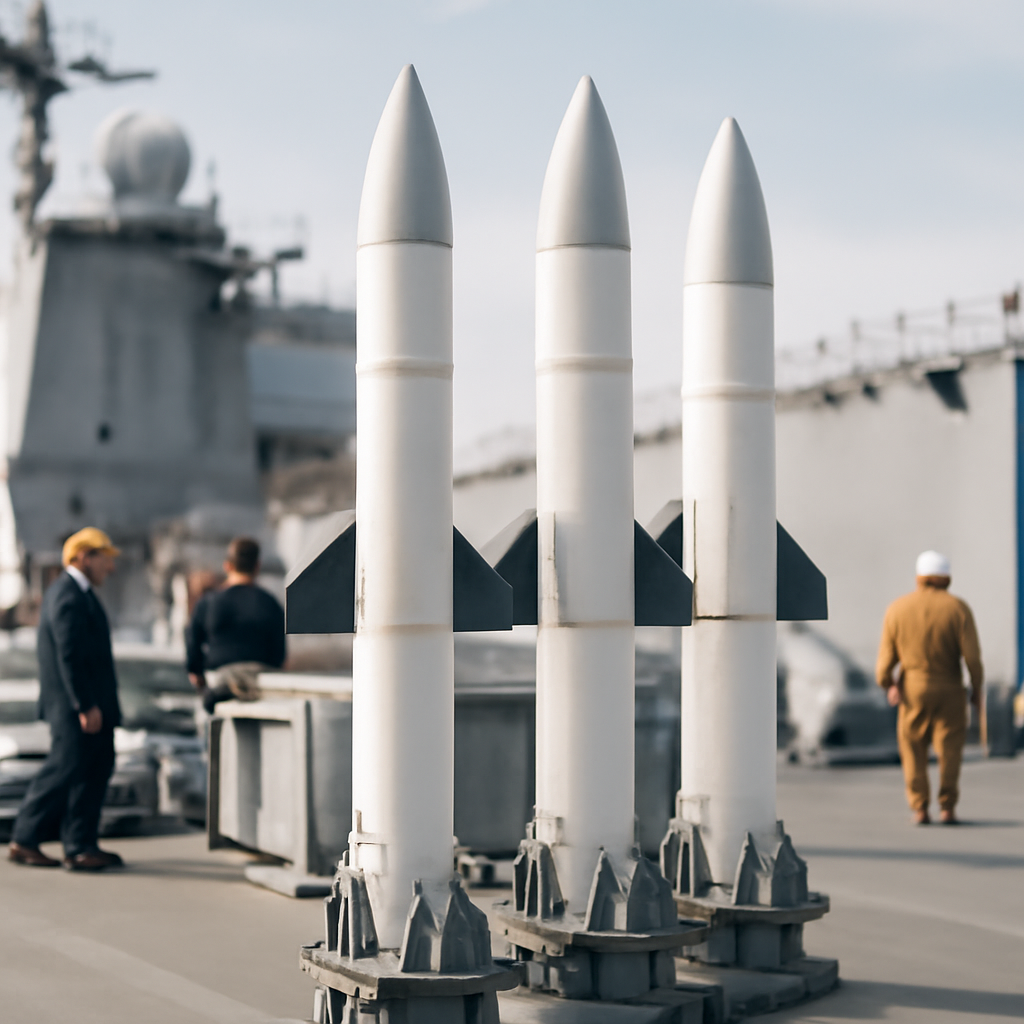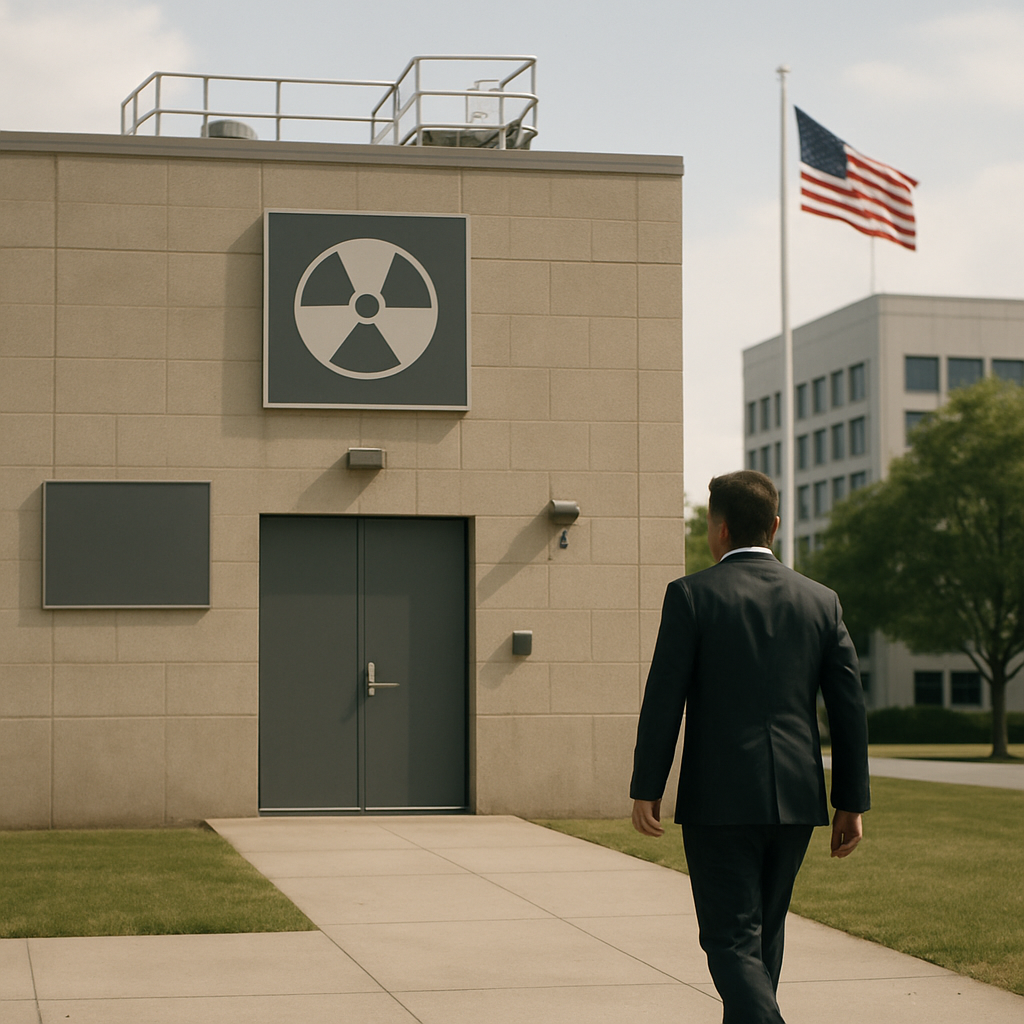
"Nuclear deterrence is not a regulatory exercise. It is not a social program." Those are the blunt opening words Franklin C. Miller and Frank A. Rose use to frame a single, concrete recommendation: remove the National Nuclear Security Administration from the Department of Energy and make it an independent agency reporting directly to the president. In a piece arguing for institutional redesign, the two former national-security officials say the change is necessary to restore clarity, speed, and accountability to U.S. nuclear weapons stewardship.
Move NNSA out of the Department of Energy
Miller and Rose call for Congress and the president to act together to "remove NNSA from the Department of Energy and establish it as a stand-alone agency reporting directly to the president, with one mission: delivering a safe, secure, and effective U.S. nuclear deterrent." They argue that this shift would strengthen presidential accountability for nuclear developments and restore a mission focus that, in their view, has been diluted inside DOE.
DOE's mixed mission and the "76 percent" fiscal 2027 figure
The authors point to what they describe as a troubling imbalance inside DOE: "76 percent of the fiscal 2027 budget request for DOE [is] dedicated to defense." Despite that, public discussion about DOE tends to center on climate policy, domestic energy programs, and environmental cleanup. Miller and Rose say that conflating defense responsibilities with a broad civilian agenda creates competition for attention and funding and leaves nuclear deterrence structurally disadvantaged.

This site is the portfolio.
OSINTSights runs on Cloudflare Workers, D1, R2, and Vectorize, with an AI pipeline on Hetzner ARM. Nubivance designed, built, and operates it. We do the same for clients.
See what we build1977 consolidation and the 2000 creation of NNSA
They trace the institutional problem to 1977, when nuclear weapons stewardship was folded into DOE. For most of the Cold War, Miller and Rose write, the nuclear mission was housed in independent agencies — first the Atomic Energy Commission, then the Energy Research and Development Administration — whose "sole mission was the design, production, and sustainment of the nuclear arsenal." While the creation of the National Nuclear Security Administration in 2000 "helped — but only partially," the authors contend NNSA was configured to maintain a stockpile, not to execute the "large-scale modernization now urgently required."
Brandon Williams and an evolving NNSA culture
The piece credits current leadership with initiating change: "Under the leadership of current NNSA Administrator Brandon Williams, that culture is beginning to change." Still, the authors argue the agency's broader constraints — a culture they describe as "risk avoidance and compliance, not speed, production, and delivery" — stem from its place inside DOE and the surrounding oversight architecture.
Congressional funding and oversight: Armed Services versus Appropriations
Miller and Rose highlight a procedural mismatch in Congress: NNSA is authorized by the Armed Services Committees, where deterrence strategy and force posture are debated, but is funded through the Energy and Water Development Appropriations Subcommittees alongside civilian energy and environmental programs. They endorse the recommendation of the Commission on the Strategic Posture of the United States that "NNSA should be funded through the Defense Appropriations Subcommittees," an alignment the authors say would place NNSA funding alongside other defense and national-security programs.
What this means for the president, Congress, and the NNSA workforce
- The president: Miller and Rose frame the proposal as a presidential opportunity. They write that a decisive reorganization would "strengthen presidential accountability" and could be a defining national-security act in a fraught era of competition with Russia and China.
- Congress: Lawmakers would face a choice over oversight and appropriations lines — shifting NNSA funding into defense appropriations and clarifying which committees oversee operational and budgetary questions.
- The NNSA workforce: The authors argue that removing NNSA from DOE could free the agency to focus on "speed, production, and delivery" for the large-scale modernization they say is urgently required, reversing a culture they describe as centered on compliance and risk avoidance.
Miller and Rose frame the proposal against a stark security backdrop: they write that Russia and China are "modernizing and expanding" their arsenals and that "arms-control guardrails have collapsed," making deterrence central to U.S. security. They conclude with an appeal to presidential leadership: "the moment to act is now." Whether Congress, the White House, and NNSA leaders will accept the institutional redesign the authors propose is the concrete next step left on the table.