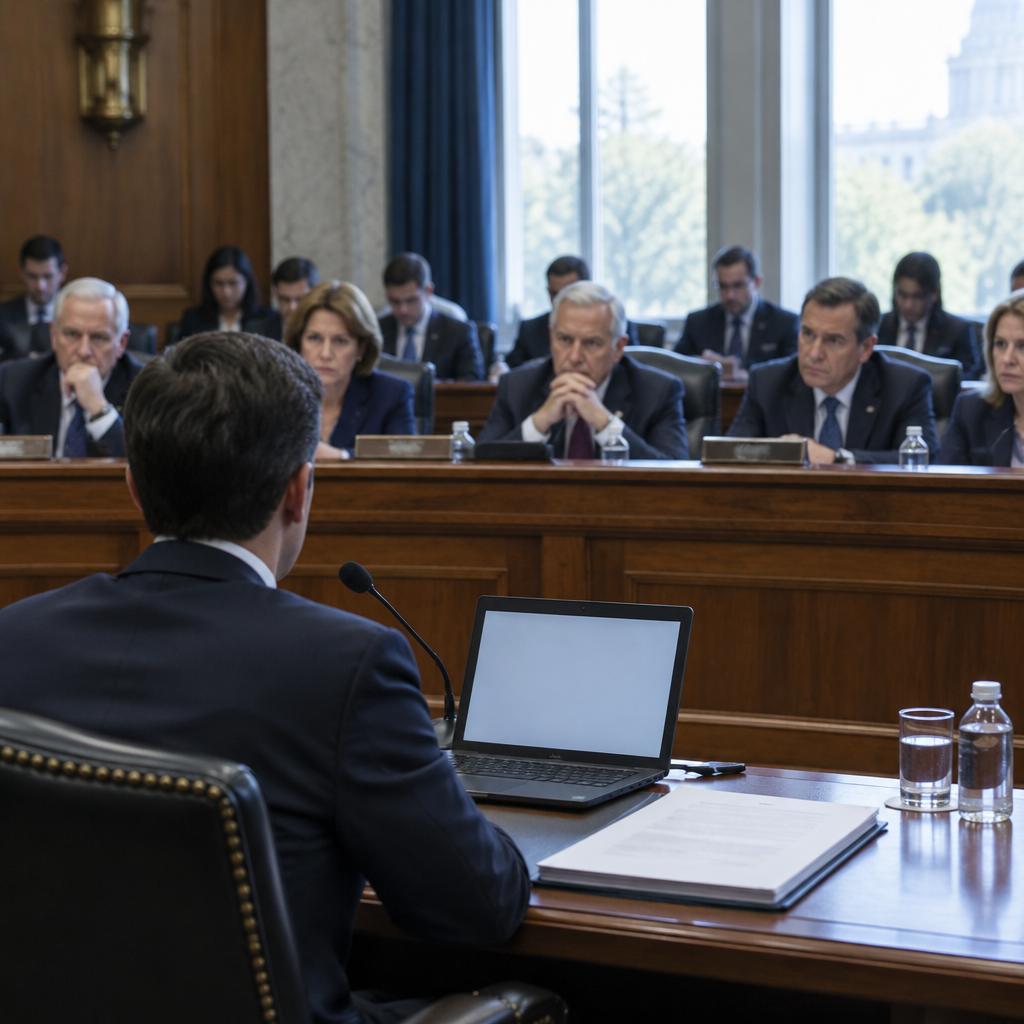
“Our nation stands in the crossroad of analog, digital, and quantum technologies, our American way of living increasingly interconnected,” Kirsten Davies wrote on X after being tapped to the White House office, calling for modernization, resilience and "supercharged" technology under President Trump’s leadership.
Sean Cairncross exits the Office of the National Cyber Director
Sean Cairncross is leaving his post as national cyber director, CyberScoop reported. Cairncross led the Office of the National Cyber Director (ONCD), the White House office charged with coordinating cybersecurity policy and strategy across the federal government. CyberScoop said a source close to the White House told the outlet that President Donald Trump “fully supported firing Cairncross” on the grounds that he “lacked the strong cyber credentials to perform the job.”
Kirsten Davies moves into an acting role in the White House office
Department of Defense Chief Information Officer Kirsten Davies will move into an acting role in the White House office, CyberScoop wrote. Davies publicly thanked President Trump and White House Chief of Staff Stephen Miller for the appointment in a post on X, and framed the transition as a chance to “dominate the cyber landscape for generations to come” by modernizing defenses and building cyber talent.

Audit-ready is a season. It shouldn't be.
Evidence in spreadsheets, controls drifting between audits, frameworks multiplying on flat headcount. Nubivance runs continuous compliance on Rapid7 Cyber GRC - SOC 2, HIPAA, ISO 27001, PCI, CMMC.
End the scrambleONCD’s portfolio under Cairncross: AI testing, nonbinding commitments, and critical infrastructure pilots
Under Cairncross, ONCD played a role in several high-profile policy efforts. The office helped shape a June executive order that asked leading AI firms to submit new models for voluntary government testing before public release. Cairncross was also assigned to co-lead a working group tracking a nonbinding AI security commitment signed by major labs. He met with technology company leaders and argued that government-industry collaboration should not slow AI development.
The office’s work extended into critical infrastructure protection: it launched a program offering cybersecurity resources to water utilities in Texas after attacks on water systems, and ran a six-month pilot in South Carolina aimed at rural hospitals. Project Lifeline 250 — described as a program that connects companies, state agencies and local governments — is intended to help hospitals strengthen network defenses, keep critical care operating after an incident and replace vulnerable or aging equipment.
Staff turnover, contested confirmations, and the wider administration debate on AI and outages
Cairncross’s departure follows a period of staff turnover at ONCD. His policy chief and senior adviser, Thomas Lind, joined OpenAI in October, and CyberScoop said other senior staff left after the administration released its AI executive order, including an adviser involved in early policy negotiations. The outlet reported that turnover is occurring as the administration attempts to fill other cyber leadership posts: Michael LoSapio, President Trump’s nominee to lead the Cybersecurity and Infrastructure Security Agency (CISA), faced a contentious confirmation hearing on Thursday. CISA helps protect federal civilian networks and critical infrastructure.
CyberScoop also noted that Cairncross’s departure comes after administration officials blamed a spate of recent tech outages on a “race to close vulnerabilities uncovered by artificial intelligence,” signaling ongoing internal debate over how to manage AI-related risks. The report added that while the administration has sought to deploy AI in critical infrastructure as a way to strengthen defenses, lawmakers and some executives have called for stronger government guardrails, and President Trump has rejected new regulation.
What this means for technology companies, rural hospitals, and water utilities
- Technology companies: Firms asked to submit models under the June executive order and those that signed the nonbinding AI security commitment will watch the ONCD transition closely for continuity in voluntary testing practices and the working group tracking those commitments.
- Rural hospitals: Participants in the six-month South Carolina pilot and Project Lifeline 250 partners will need to monitor leadership continuity as ONCD implements efforts to strengthen network defenses, maintain critical care after incidents, and replace aging equipment.
- Water utilities in Texas: Utilities that were provided cybersecurity resources after attacks will be attentive to whether the new acting leadership sustains programs targeted at operators with limited technology resources.
The immediate facts are straightforward: Sean Cairncross is leaving ONCD; Kirsten Davies will step into an acting role; and the office’s agenda spans voluntary AI model testing, a nonbinding industry commitment, and programs aimed at healthcare and water systems. The unanswered operational questions are also concrete — whether the office can maintain momentum on the June executive order, the working group tracking AI commitments, and Project Lifeline 250 during a period of turnover and contested confirmations.
Source: CyberScoop — Sean Cairncross out as national cyber director