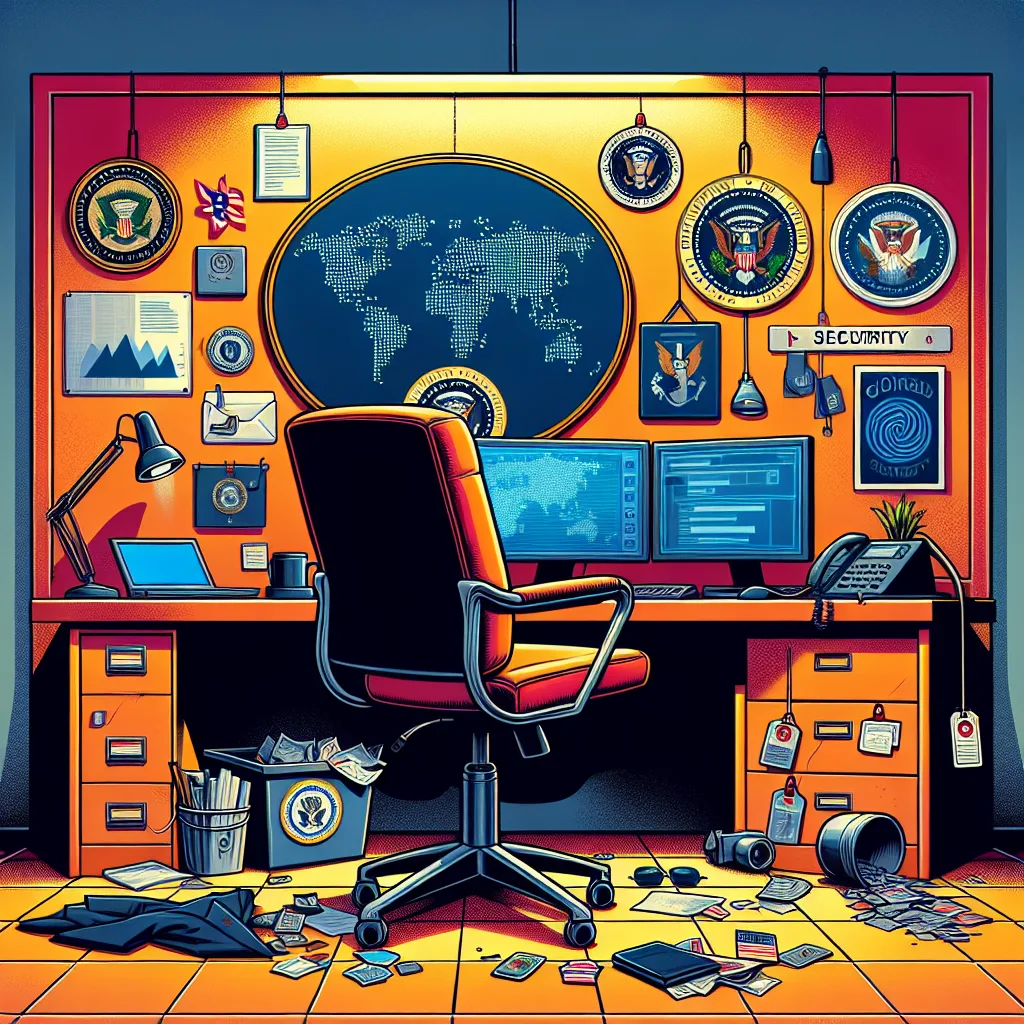
Trump Dismisses NSA and Cyber Command Leader, Heightening Security Concerns
Overview
The recent dismissal of General Timothy Haugh, the head of the National Security Agency (NSA) and Cyber Command, by President Donald Trump has sent shockwaves through the national security community. This abrupt decision raises significant concerns regarding the integrity of U.S. cyber defenses and military readiness. As cyber threats continue to evolve, the implications of such leadership changes are profound, affecting not only national security but also the broader geopolitical landscape.
Background & Context
The NSA, established in 1952, is tasked with signals intelligence and information assurance, while Cyber Command, created in 2010, focuses on defending U.S. interests in cyberspace. The convergence of these two entities under a single leader was intended to streamline operations and enhance the U.S. response to cyber threats. General Haugh, who took command in 2020, was seen as a stabilizing force in an era marked by increasing cyber aggression from state and non-state actors alike.
Trump’s decision to dismiss Haugh follows a pattern of controversial personnel changes that have characterized his administration. The timing of this dismissal, particularly after a meeting with far-right conspiracy theorist Laura Loomer, raises questions about the motivations behind such a significant leadership shake-up. With cyber threats from nations like Russia, China, and North Korea on the rise, the implications of this decision are particularly concerning.

Audit-ready is a season. It shouldn't be.
Evidence in spreadsheets, controls drifting between audits, frameworks multiplying on flat headcount. Nubivance runs continuous compliance on Rapid7 Cyber GRC - SOC 2, HIPAA, ISO 27001, PCI, CMMC.
End the scrambleCurrent Landscape
The current state of U.S. cybersecurity is precarious. Recent incidents, such as the SolarWinds hack and the Colonial Pipeline ransomware attack, have underscored vulnerabilities in critical infrastructure. The U.S. government has been working to bolster its cyber defenses through initiatives like the Cybersecurity and Infrastructure Security Agency (CISA) and the establishment of the Cyber Safety Review Board. However, the effectiveness of these measures is contingent upon strong leadership and a cohesive strategy.
General Haugh’s leadership was pivotal in fostering collaboration between various government agencies and private sector partners. His dismissal raises concerns about continuity in these efforts and the potential for a fragmented approach to cybersecurity. Experts warn that without a clear vision and experienced leadership, the U.S. may struggle to effectively counteract sophisticated cyber threats.
Strategic Implications
The implications of Haugh’s dismissal extend beyond immediate cybersecurity concerns. The U.S. military’s readiness to respond to cyber threats is now in question. Cyber Command plays a crucial role in not only defending U.S. networks but also in conducting offensive operations against adversaries. A leadership vacuum could hinder the military’s ability to execute its cyber strategy effectively.
Moreover, this decision may embolden adversaries who perceive a weakening of U.S. resolve in cyberspace. Countries like Russia and China are constantly probing U.S. defenses, and any indication of instability within U.S. leadership could be interpreted as an opportunity to escalate their cyber operations. The geopolitical ramifications of this dismissal could thus be far-reaching, potentially altering the balance of power in cyberspace.
Expert Analysis
From an analytical perspective, the dismissal of General Haugh can be viewed through multiple lenses. Firstly, it reflects a troubling trend of politicization within national security institutions. The appointment and removal of leaders based on political alignment rather than expertise can undermine the effectiveness of these organizations. This is particularly concerning in the realm of cybersecurity, where technical knowledge and experience are paramount.
Secondly, the decision may signal a shift in U.S. cyber policy. If future appointments prioritize loyalty over competence, the U.S. could find itself ill-prepared to face emerging threats. Experts argue that a robust cybersecurity strategy requires a commitment to continuity and expertise, rather than a reactionary approach driven by political considerations.
In conclusion, the implications of Haugh’s dismissal are profound. The potential for increased cyber vulnerabilities, coupled with a lack of strategic direction, poses significant risks to national security. As the landscape of cyber threats continues to evolve, the U.S. must prioritize strong, experienced leadership to navigate these challenges effectively.
Recommendations or Outlook
In light of the current situation, several actionable steps can be taken to mitigate the risks associated with this leadership change:
- Immediate Appointment of a Successor: The administration should prioritize the appointment of a qualified successor to General Haugh, ideally someone with extensive experience in cybersecurity and military operations.
- Strengthening Interagency Collaboration: Efforts must be made to enhance collaboration between the NSA, Cyber Command, and other relevant agencies to ensure a unified approach to cybersecurity.
- Investment in Cybersecurity Infrastructure: Increased funding and resources should be allocated to bolster cybersecurity infrastructure, particularly in critical sectors such as energy, finance, and healthcare.
- Engagement with Private Sector Partners: The government should actively engage with private sector partners to share intelligence and best practices, fostering a collaborative environment for cybersecurity.
Looking ahead, the U.S. must remain vigilant in the face of evolving cyber threats. The potential for increased aggression from adversaries necessitates a proactive approach to cybersecurity, one that prioritizes expertise and strategic foresight.
Conclusion
The dismissal of General Timothy Haugh as head of the NSA and Cyber Command is a pivotal moment in U.S. cybersecurity policy. As the nation grapples with the implications of this decision, it is crucial to recognize the importance of strong, experienced leadership in navigating the complex landscape of cyber threats. The stakes are high, and the future of U.S. national security may depend on the actions taken in the wake of this leadership change. Will the U.S. rise to the challenge, or will it falter in the face of mounting cyber threats?