Mobile internet was deliberately slowed for 30 minutes to simulate wartime communications disruptions.
Exercises that moved into daily life
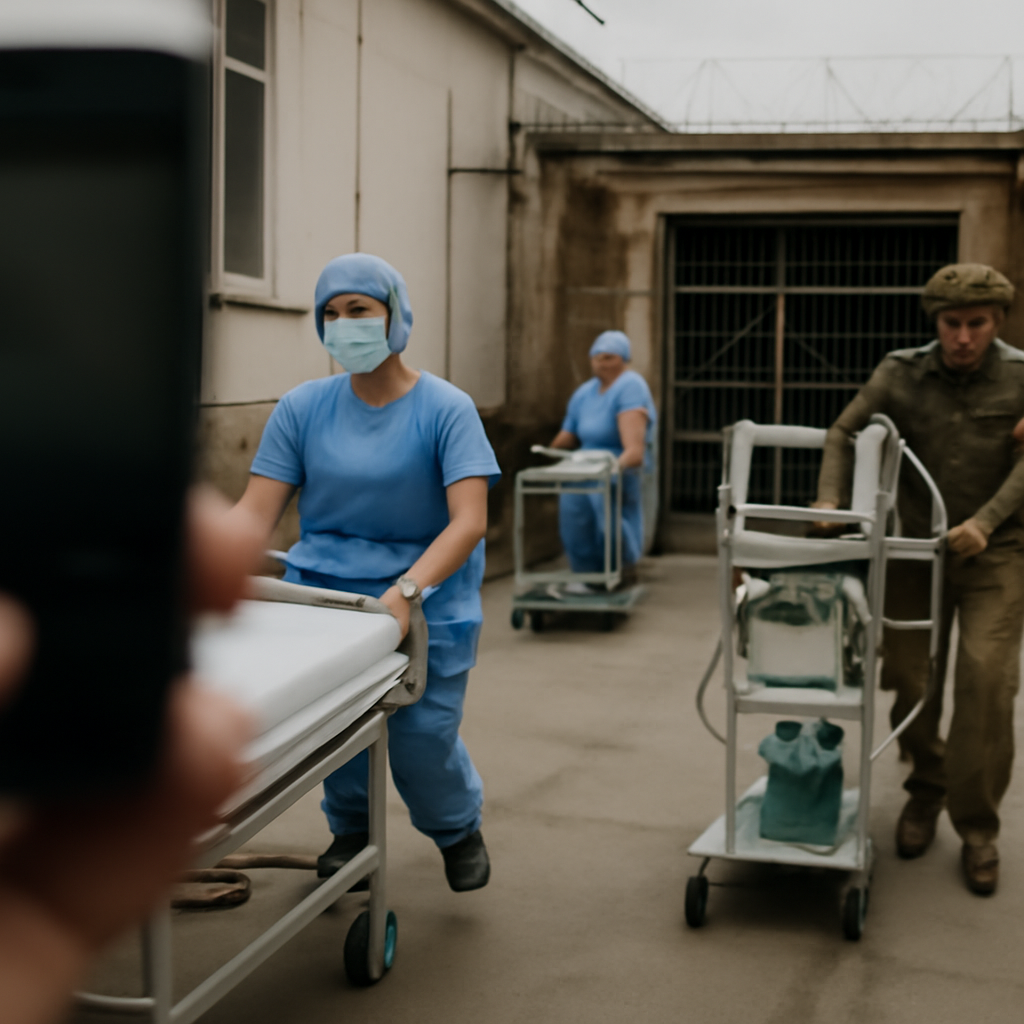
This year’s Han Kuang military exercises in Taiwan were hard to miss. Troops barricaded Guangfu Bridge — a vital link between New Taipei City and the capital — installing metal barriers and barbed wire as they practiced stopping an advancing force. Hospitals rehearsed moving medical operations underground. The deliberate throttling of mobile internet for a half hour simulated wartime communications disruption. Those scenes made clear that Han Kuang is no longer confined to firing ranges and parade grounds; the drills are increasingly staged inside the spaces where civilians live and work.
The survey: who was asked and how
To measure public reaction, the Institute for National Defense and Security Research (INDSR) commissioned a nationwide telephone survey conducted by National Chengchi University’s Election Study Center from August 20–24. The poll interviewed 1,215 adults across Taiwan to capture impressions shortly after this year’s exercises.

This site is the portfolio.
OSINTSights runs on Cloudflare Workers, D1, R2, and Vectorize, with an AI pipeline on Hetzner ARM. Nubivance designed, built, and operates it. We do the same for clients.
See what we buildSatisfaction climbed, but understanding did not
Public satisfaction with Han Kuang reached 60 percent in this year’s survey — the highest level recorded in the series. By contrast, satisfaction hovered near 50 percent in earlier waves: 51.9 percent in 2021, 53.6 percent in 2022, and it fell to 45.5 percent in 2023 before recovering to 51.3 percent in 2025 (there was no comparable survey in 2024). The share of respondents who did not offer a clear evaluation — either skipping the question or being unaware of the exercises — declined from 36.7 percent in 2021 to 25.3 percent in 2026, the lowest in the series.
Yet the poll also shows a striking gap between approval and comprehension. Only 2.3 percent said they understood the exercises very well and 22.6 percent somewhat well. Nearly three-quarters described their understanding as limited: 46.1 percent said they did not understand the exercises very well, and 26.4 percent said they did not understand them at all. The findings underline that many respondents can form an overall impression without grasping the drills’ specific purposes.
Why approval and understanding diverge
The survey findings point to a key distinction: satisfaction measures whether people approve of Han Kuang, while understanding measures whether they know what the exercises are intended to test. People can judge the drills positively on the basis of news coverage, social media, or the visible disruptions they encountered in daily life — without knowing the operational intent of particular drills. That leaves a risk: public legitimacy for the exercises may grow even as citizens lack the basic knowledge needed to respond during a crisis.
As the source puts it, Taiwan’s shift to whole-of-society defense means citizens are increasingly expected to understand how society would function under crisis conditions and how civilian preparedness ties into national defense. The survey suggests that support alone does not equate to readiness to interpret official instructions, comprehend disruptions during a crisis, or recognize individual responsibilities.
What this means for hospitals, local governments, and ordinary citizens
- Hospitals and medical services: Having practiced moving operations underground, hospitals will need to translate rehearsal experience into clearer public guidance so patients and staff know what to expect during similar contingencies.
- Local governments and reservists: With exercises that integrate urban resilience and civilian infrastructure, local authorities and reservists are likely to confront more frequent coordination tasks and should prioritize communicating the practical aims of drills to residents.
- Ordinary citizens and the general public: Many people encountered visible elements of Han Kuang — slowed internet, barricaded bridges, underground medical drills — yet nearly three-quarters reported limited understanding of the exercises. That gap suggests citizens will benefit from plain-language explanations of what drills are preparing for and why civilian participation matters.
Public satisfaction gives Han Kuang legitimacy, but legitimacy is only a first step. The organizers’ next challenge is not simply getting citizens to watch the exercises; it is helping them understand what they are watching and why it matters. For Taiwan, that translation — from spectacle to shared practical knowledge — will determine whether broader social preparedness keeps pace with the drills now unfolding in the city streets.
Source: The Diplomat — What Do Taiwan’s People Think About Its Annual Military Exercises?