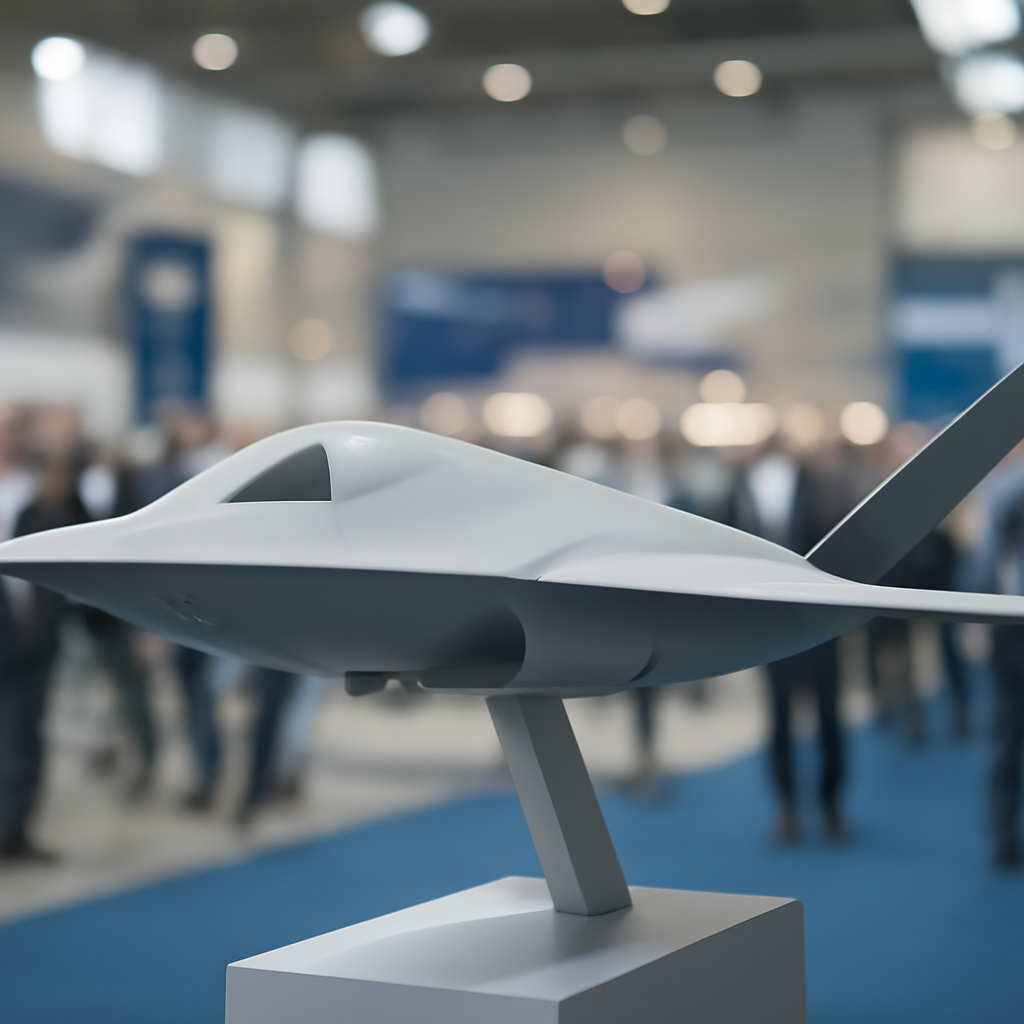
On the show floor at Air, Space & Cyber 2026, TWZ’s Jamie Hunter spoke with Mike Shortsleeve of General Atomics about two linked developments: the company’s newly-named FQ-42 Vengeance Collaborative Combat Aircraft and a second design, Wildfire, aimed at the lower-cost Massed Modular Aircraft program.
Where the USAF’s Collaborative Combat Aircraft program stands
The USAF’s Collaborative Combat Aircraft (CCA) program has become a central element in debates over the future shape of the Air Force, according to the reporting. Though "there is still much to prove regarding the concept," the program has moved from idea to procurement planning: the USAF now plans on buying 500 CCAs by 2032. Testing for the CCA concept is described as accelerating, a fact that frames the urgency both for vendors and for service acquisition timelines.
General Atomics and the FQ-42 Vengeance
General Atomics used the Air, Space & Cyber 2026 forum to put a name on its CCA entry: the FQ-42 Vengeance Collaborative Combat Aircraft. In the TWZ interview, Mike Shortsleeve discussed "the latest progress" for that program, signaling that the company is actively positioning the FQ-42 as part of the USAF’s broader push to field large numbers of collaborative drones.

This site is the portfolio.
OSINTSights runs on Cloudflare Workers, D1, R2, and Vectorize, with an AI pipeline on Hetzner ARM. Nubivance designed, built, and operates it. We do the same for clients.
See what we buildWildfire and the Massed Modular Aircraft effort to replace the MQ-9 Reaper
Alongside the FQ-42, General Atomics previewed the Wildfire platform. Wildfire is described as a response to the lower-cost Massed Modular Aircraft program — an initiative the source ties to the search for a successor to the MQ-9 Reaper. The USAF is "now hunting for a successor to the MQ-9 Reaper," and the service has plans "on procuring hundreds of those drones, as well, by early in the next decade." Wildfire is explicitly designed to address that lower-cost, massed model approach.
How procurement leaders, technologists and end users are responding
- Procurement leaders: Will be tracking the USAF’s stated ceilings — 500 CCAs by 2032 and "hundreds" of MQ-9 successors by early next decade — to align budgets, schedules, and contract vehicles to those timelines.
- Technologists and platform developers: Are moving to match two distinct demands at once — scalable, collaborative fighter-type drones in the FQ-42 class and lower-cost, massed designs like Wildfire for the Massed Modular Aircraft program — as the source highlights both streams advancing in parallel.
- End users (operators and planners): Face a coming mix of capabilities and platform classes, with testing accelerating for CCAs even as procurement plans for massed, lower-cost drones proceed toward large buys.
What the conversation at Air, Space & Cyber 2026 indicates
The interview itself, as reported, stitches together two program threads that the USAF is pursuing: an ambitious buy of hundreds of cooperative combat aircraft and a separate hunt for an MQ-9 Reaper successor under a massed, lower-cost model. That dual-track posture — accelerated testing for CCAs and large-scale procurement planning for both CCAs and MQ-9 successors — explains why industry actors such as General Atomics are advancing multiple designs at once and publicly naming them.
For readers who want to hear the full exchange, TWZ’s coverage makes the interview available on its site, and the post lists an editor contact at Tyler@twz.com for follow-up. The factual throughline is straightforward: testing is accelerating, the USAF has set sizable procurement targets, and vendors are responding with distinct platforms aimed at each program track.