Taiwan Advances Its Defensive Edge with Cutting-Edge Missile Technology
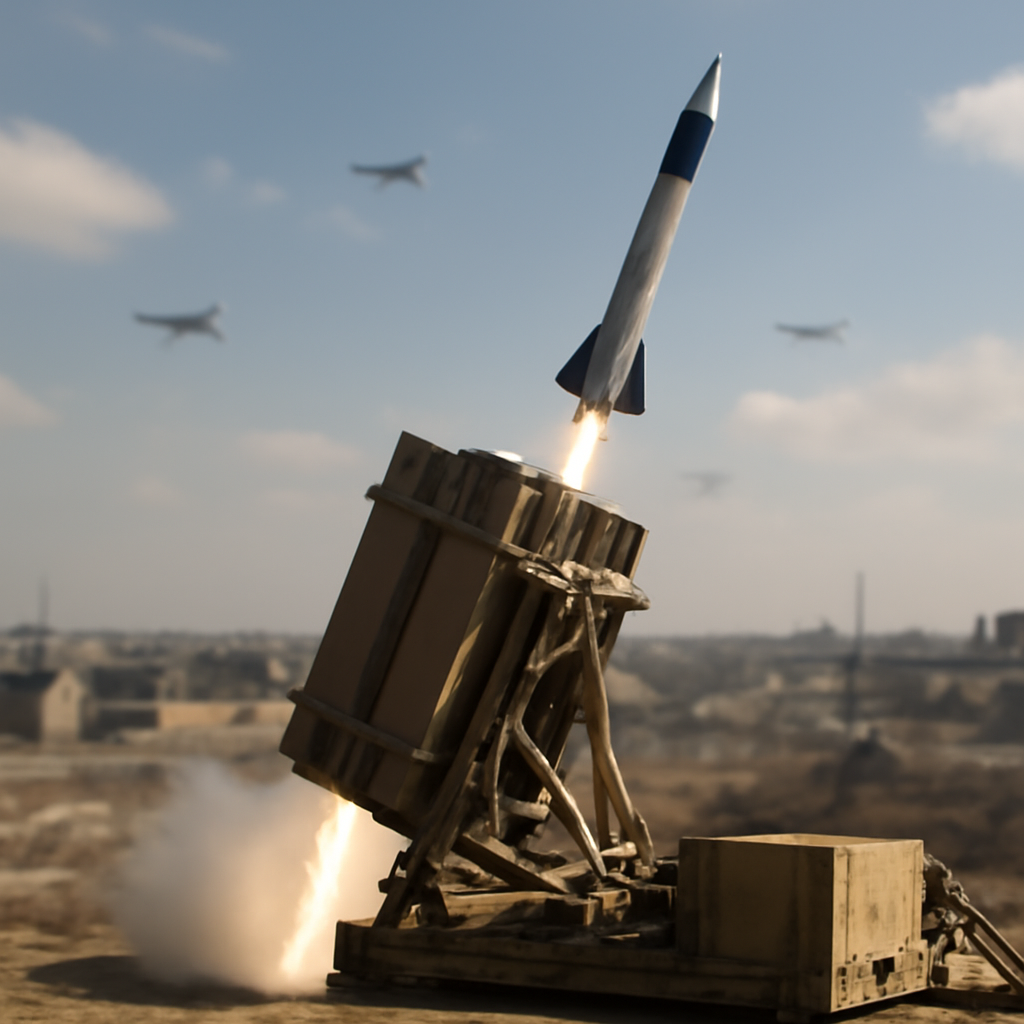
Taiwan’s Ministry of National Defense announced Tuesday that its domestically developed Land Sword II surface-to-air missile system—reverently known as the TC-2—has successfully completed a critical live-fire trial. The demonstration, conducted under the vigilant supervision of the Republic of China Army, stands as a watershed moment for Taiwan’s air defense capabilities amid an increasingly complex regional security environment.
In a trial that combined rapid deployment, accurate targeting, and swift interception of simulated aerial threats, the Land Sword II demonstrated a substantial enhancement over its predecessors. The live-fire exercise was designed not only to verify the platform’s technical prowess but also to bolster the confidence of Taiwanese defense forces and the public. Officials from the Ministry of National Defense confirmed that the missile system’s performance met and in some aspects exceeded stringent operational benchmarks.
Historically, Taiwan has invested significantly in domestic military industrial capabilities, with the Land Sword series evolving from earlier missile systems developed in response to persistent challenges posed by advanced aerial platforms. The TC-2, central to the Land Sword II program, is engineered to detect, track, and neutralize a range of airborne threats. This includes high-speed reconnaissance drones, fighter jets, and other potential hostile ordnance in a threat environment that has grown increasingly congested and unpredictable over recent years.
Given the geopolitical dynamics in the Taiwan Strait, the timing of this test is significant. With tensions between Taiwan and the People’s Republic of China simmering, and occasional escalatory maneuvers by adversarial forces, the demonstration serves as both a deterrence and a reassurance. Taiwan’s steadily advancing air defense infrastructure aims to counterbalance any aggressive posturing, emphasizing the nation’s readiness to secure its sovereign airspace. The effective performance of the Land Sword II underscores Taiwan’s determination to harness homegrown technological innovations as a bulwark against external pressures.
Beyond the direct military implications, the test carries considerable weight for domestic policy and international perception. Taiwan’s defense strategy has long been predicated on the idea that self-reliance in military technology not only enhances national security but also strengthens democratic resilience. The test signals a robust commitment to defensive modernization at a time when full-spectrum defense—encompassing cyber, electronic warfare, and traditional kinetic operations—is paramount.
Officials from the Ministry of National Defense provided additional context during a press briefing on Tuesday. While specific details regarding the missile’s range and altitude capabilities were classified, the ministry emphasized that the system is designed to integrate seamlessly with other air defense components and radar systems already in service. This integration is critical, as it enables a coordinated and rapid response, significantly reducing the risk of any aerial incursion going undetected or unchallenged.
Experts in military technology and defense strategy have noted that Taiwan’s efforts represent a broader trend among nations prioritizing defensive capabilities amid rapidly advancing aerospace technologies. As many argue, modern warfare is increasingly defined by precision and rapid-response systems rather than sheer numbers. In this regard, Taiwan’s Land Sword II is emblematic of a shift toward quality and technological sophistication in air defense, a shift that can influence how other nations prioritize resource allocation in military modernization.
One must consider how this matters beyond the immediate context of military preparedness. A robust air defense system has implications for public trust—both domestically and internationally. For the people of Taiwan, the successful test can be seen as a reaffirmation of their government’s ability to protect its territory and maintain stability. In an era of escalating misinformation and uncertainty, concrete demonstrations of technological capability play an essential role in cementing public confidence.
Security analysts have evaluated the broader implications of this live-fire test through a multi-dimensional lens. For instance, Defense News and other reputable platforms have noted that such successful tests send a clear message to potential adversaries while also carving a niche for Taiwan as a potential arms exporter for next-generation defense systems. This becomes relevant as regional partners observe Taiwan’s progress and reassess their own defense postures in response to mounting security challenges in the Indo-Pacific region.
Adding further depth, some experts highlight that Taiwan’s technological advances are not occurring in isolation. They are part of a larger cycle of continuous improvement that known military tacticians and strategists from countries like South Korea and Japan have similarly embraced. By emphasizing indigenous research and sustainable innovation, Taiwan has positioned itself not only as a regional military actor but also as a key player in the global narrative of defense modernization.
- Enhanced Responsiveness: The coordinated interface between the Land Sword II and other modern sensor systems enables faster threat detection and interception.
- Domestic Innovation: The missile system underlines Taiwan’s commitment to harnessing local expertise to reduce dependency on foreign technology.
- Strategic Messaging: The successful test sends a dual message of deterrence to adversaries and reassurance to allies and the local populace.
Looking ahead, the implications of this test are multifaceted. On the strategic front, the Land Sword II is poised to become a central element in Taiwan’s layered air defense strategy. Observers note that further enhancements in sensor fusion and networked operations are likely on the horizon. This system upgrade, coupled with a suite of complementary defense assets, could redefine the operational threshold required for effective area denial in a contested environment.
Critically, while the successful demonstration marks an important milestone, the continuous evolution of aerial threats demands a persistent commitment to innovation. Future tests and exercises will likely incorporate emerging technologies, including artificial intelligence for threat analysis and machine learning algorithms designed to optimize target discrimination under complex conditions. For policymakers and military planners alike, these developments underscore the necessity of sustained investment in defense research and development.
In conclusion, the live-fire test of Taiwan’s Land Sword II system reverberates far beyond a single exercise. It encapsulates a broader narrative—a narrative of technological prowess, national determination, and the intricate balance between deterrence and diplomacy in a region defined by its strategic volatility. As Taiwan and its global partners continue to navigate this challenging environment, one is left to wonder: in an era where technological innovation shapes the future of national defense, how will emerging trends redefine the art of war? The answer, while not immediate, promises to reshape strategic narratives for generations to come.