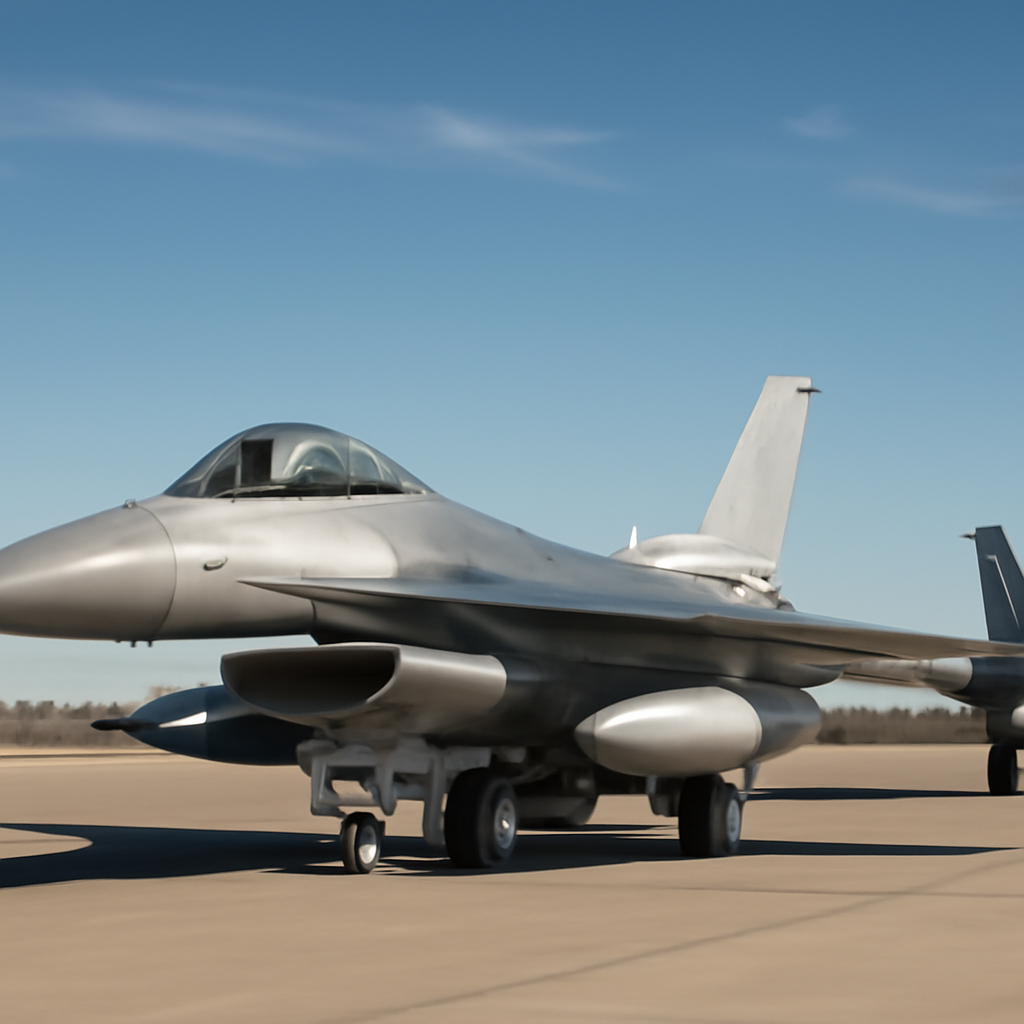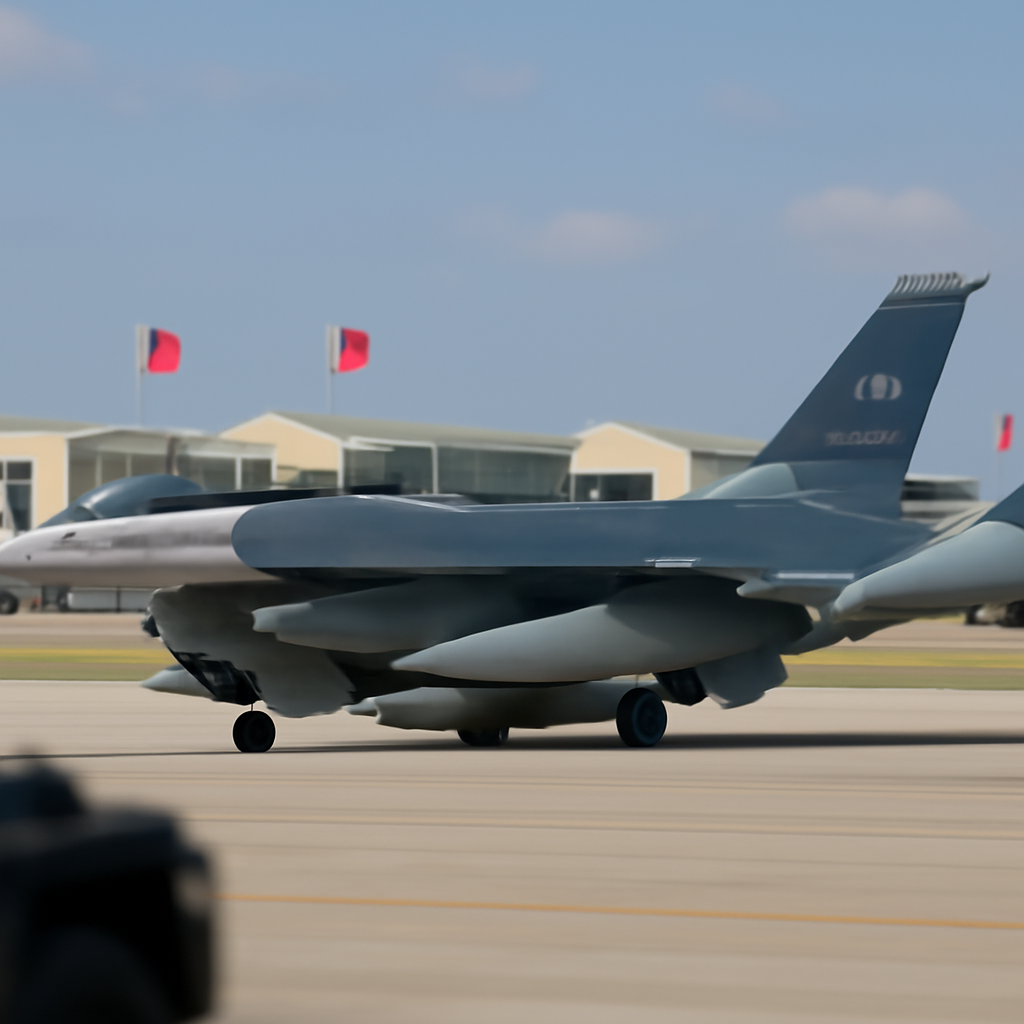
The arrival of the first pair of the 66 F-16C/D Block 70 aircraft on order to the Republic of China Air Force (ROCAF) has been a long time coming – and not just because of production delays.
The arrival of the first pair of the 66 F-16C/D Block 70 aircraft
After decades of fits and starts, Taiwan has begun to take delivery of the F-16 Block 70s it has sought in various forms since the 1970s. The sale itself was signed off in 2019 during the first term of President Donald Trump, but the request was blocked under President George W. Bush and remained unapproved under President Barack Obama. Production delays mean some promised capabilities—most notably the AN/ALQ-254 Viper Shield electronic warfare fit—have not yet been installed.
A procurement history shaped by U.S.-China diplomacy
Taiwan’s F-16 pursuit has been repeatedly calibrated against the wider U.S.-China relationship. In the late 1970s, requests for F-16s were dismissed as Washington shifted diplomatic recognition to Beijing and allowed the U.S.-ROC Mutual Defense Treaty to lapse. The Reagan years continued to limit major new fighter sales amid a pledge in the Third Communiqué in 1982 to keep arms sales at or below recent levels, even as the U.S. offered Six Assurances to Taipei. A major sale was approved in 1992 when George W. Bush signed off on 150 F-16A/Bs; later administrations shifted toward upgrades and then, in 2019, a new-build Block 70 purchase.

This site is the portfolio.
OSINTSights runs on Cloudflare Workers, D1, R2, and Vectorize, with an AI pipeline on Hetzner ARM. Nubivance designed, built, and operates it. We do the same for clients.
See what we buildWhat the Block 70s add — engines, range, sensors, survivability
Compared with upgraded older F-16s, the Block 70 airframes offer several concrete advantages described in the record. They have more powerful engines, greater range and endurance aided by conformal fuel tanks, and a structural service life of roughly 12,000 hours—about 50 percent greater than previous-production F-16s. The ROCAF plans to fit the new jets with the MS-110 multispectral pod for reconnaissance and with the AN/ALQ-254 Viper Shield suite to enhance survivability once airborne, although the latter has been delayed by production issues. The Block 70s retain the same radar as Taiwan’s upgraded fleet but gain operational flexibility for interception, patrol, reconnaissance, and strike missions, important in an environment where Taiwan possesses no aerial-refueling tankers.
The challenge: bases, precision strike, and lessons from Ukraine and Iran
Even modern fighters face hard limits tied to geography, basing and an adversary’s strike capabilities. Analysts cited in the record argue that Taiwan’s reliance on large, fixed air bases leaves its fighters vulnerable to being destroyed or trapped on the ground by a high-volume precision strike campaign. Taiwan’s network of hardened and underground shelters and practice operating from roadways help, but the scale of precision fires the People’s Liberation Army (PLA) could deliver—combined with a persistent surveillance network—would make sustaining operations difficult. The experience of Ukraine in 2022 showed dispersal and concealment could help air forces survive, but the record cautions that China’s precision-missile arsenal and surveillance reach likely exceed Moscow’s 2022 capability. The 2026 conflict with Iran, where repeated missile and drone attacks demonstrated the vulnerability of bases sited close to an adversary with precision strike tools, is cited as an additional warning.
What this means for the ROCAF, Taipei defense planners, and Washington policymakers
- ROCAF: The Block 70s provide newer airframes that raise endurance, interception and reconnaissance capacity and can help meet a high operational tempo of Chinese flights—preserving airpower as an instrument across peacetime and limited-crisis missions.
- Taipei defense planners: The jets do not solve the wartime basing problem; procurement patterns in the 2020s reflect that persistent need for mobile, survivable asymmetric systems such as truck-based anti-ship missiles, HIMARS, anti-tank weapons and mobile SAMs.
- Washington policymakers: Approvals and delays in the sale underline how U.S. decisions on advanced fighters have been conditioned by assessments of China’s capabilities and by bilateral relations, and the Block 70 deliveries will require continued attention to sustainment and integration into Taiwan’s broader defense posture.
The new F-16s therefore serve less as a silver-bullet remedy and more as a pragmatic reinforcement: they preserve Taiwanese airpower as a usable instrument across the spectrum from peacetime coercion to full-scale conflict, while leaving intact the pressing need to invest in force preservation, resilience and asymmetric capabilities that could blunt or complicate a high-intensity precision-strike campaign.