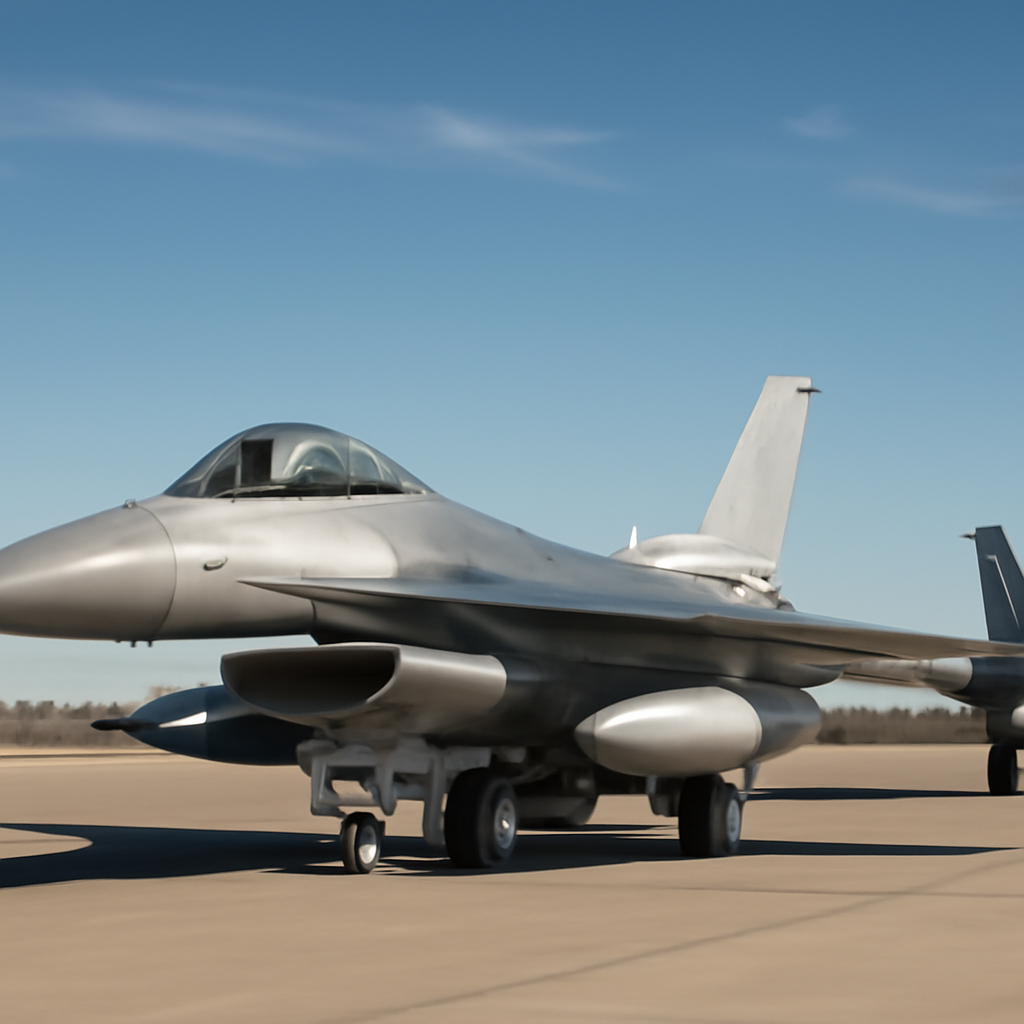
Two single-seat F-16Cs, serials 6727 and 6728, touched down at Chihhang Air Base near Taitung on October 2, marking the first factory-new fighter aircraft delivered to Taiwan in 25 years.
Arrival and the long ferry from Greenville to Taitung
The two jets began their journey from Lockheed Martin’s Greenville, South Carolina, production facility on August 17. They flew to Hawaii but were held there for more than a month after an unexpected issue prevented the planned trans‑Pacific leg. The aircraft finally departed Hawaii on October 1, made a stop in Guam, and landed at Chihhang around noon on October 2. Taiwan’s Defense Minister Wellington Koo said additional Block 70s will arrive before the end of the year but did not specify how many.
Why deliveries slipped: production, software, supply-chain and electronic‑warfare work
Taiwan’s 66-aircraft purchase — roughly an $8 billion program — has seen repeated schedule slips tied to production-line adjustments, supply-chain problems, software issues and COVID impacts. Taiwan’s Ministry of National Defense acknowledged in late September that the development and production of the aircraft’s new electronic‑warfare self‑protection suite contributed to delivery delays. The Block 70s for Taiwan are being fitted with L3Harris’ AN/ALQ-254(V)1 Viper Shield, and L3Harris reported on September 3 that it had completed production of the first 35 Viper Shield systems.
Taiwan opted for the AN/ALQ-254 rather than the AN/ALQ-257 used on U.S. Air Force F-16s. Lawmakers have questioned whether the choice meets requirements associated with an earlier F-16A/B Block 20 modernization to the F-16V standard; Defense Minister Koo has argued that those requirements applied to the Block 20 upgrade rather than the new Block 70 purchase. Taiwanese officials have defended the procurement choice by citing the specific requirements of Taiwan’s F-16 fleet and related procurement considerations.

Audit-ready is a season. It shouldn't be.
Evidence in spreadsheets, controls drifting between audits, frameworks multiplying on flat headcount. Nubivance runs continuous compliance on Rapid7 Cyber GRC - SOC 2, HIPAA, ISO 27001, PCI, CMMC.
End the scrambleWeapons and sensors arriving — some ready, some delayed
The Block 70 package includes modern weapons and sensors, but deliveries are uneven. Taiwan ordered 200 AIM-120C-8 AMRAAMs; the C-8 variant incorporates upgrades from the U.S. Air Force’s Form, Fit, Function Refresh (F3R) effort, including new electronics and improved electronic‑counter‑countermeasures. The AIM‑120C‑8 will pair with the F-16’s AN/APG-83 Scalable Agile Beam Radar and the platform’s networked systems for beyond‑visual‑range engagements.
Air‑to‑surface and anti‑radiation munitions are part of the mix as well. Roy Choo, a defense journalist and TWZ contributor, reported that the first AGM‑88F missiles arrived in Taiwan in 2022. The program’s major remaining shortfall is the AGM‑154C Joint Standoff Weapon (JSOW): U.S. production-line delays mean JSOW deliveries to Taiwan may not begin until 2027 or 2028, and existing stocks were heavily used in Operation Epic Fury.
Sensor capability is expanding too. Under a $328.5 million Foreign Military Sales contract awarded to Lockheed Martin in February, Taiwan is receiving the IRST21 Legion‑ES infrared search and track system for the F-16. The IRST21 is a long‑wave infrared sensor designed to passively detect and track airborne targets without emitting radar energy, giving the Block 70s a passive way to search for and track threats and a potential tool for detecting low‑observable aircraft. Separately, the ROCAF is flight‑ and systems‑testing the MS‑110 reconnaissance pod under its Phoenix Scout project and plans to acquire six pods to replace older reconnaissance gear.
Basing, numbers, and the operational picture the Block 70s enter
The two newly arrived jets will be based at Chihhang Air Base, home to the 7th Tactical Fighter Wing. Roy Choo told TWZ that basing at Chihhang “allows the ROCAF to readily project air power south and eastwards, especially over the Bashi Channel,” and noted that other ROCAF fighter units had previously maintained quick‑reaction alert detachments there. The arrival is only the start of a much larger handover: the ROCAF reports 63 more F‑16C/D Block 70s remain in varying stages of U.S. production and acceptance. When deliveries are complete, Taiwan will operate more than 200 F‑16s combined with its existing F‑16V fleet, which included 141 F‑16A/B Block 20s upgraded to F‑16V standard in a program finished in 2023.
But the jets arrive into a contested environment. The source notes China’s combat aircraft inventory includes J‑20 and J‑35 stealth fighters, large numbers of advanced fourth‑generation fighters, airborne early‑warning and other force‑multiplier aircraft, and a growing array of uncrewed systems. The Block 70s — like Taiwan’s other combat aircraft — will face the persistent challenge of remaining operational in the face of missile and air campaigns that could threaten airbases, shelters, fuel, command‑and‑control and other support infrastructure.
What this means for the ROCAF, Lockheed Martin, and L3Harris
- ROCAF: The arrival begins the acceptance and integration phase of the Peace Phoenix Soaring project. Pilots and maintenance personnel must complete conversion and training while the aircraft undergo Taiwan’s acceptance procedures; the Block 70s add radar, passive‑sensing and EW capability and expand mission options for air defense, counter‑air and maritime strike.
- Lockheed Martin: The company is delivering new‑production F‑16s and the IRST21 under a $328.5 million contract; remaining airframes will be handed over according to production, flight‑test and acceptance milestones in the United States.
- L3Harris: The firm’s production schedule for the AN/ALQ‑254(V)1 Viper Shield has been central to delivery timing. L3Harris reported completion of the first 35 systems on September 3, but the wider availability and integration timeline remains a gating factor for some aircraft going into service.
The two jets on the tarmac at Chihhang are small in number but large in symbolism: the first step in a multi‑year build‑up of Taiwan’s modern F‑16 fleet. They also underscore what remains unresolved — the production and fielding timeline for Viper Shield, the delayed AGM‑154C JSOW deliveries now pushed into 2027–2028, and the practical challenge of keeping an expanded fighter force flying under the threats the source documents. The immediate fact is simple and concrete: after nearly seven years of waiting, two new Block 70s are now on Taiwan soil, and much work remains to turn them into a larger, fully equipped operational force.