When a Smart Toothbrush Becomes an Unlikely Informant
A modern marvel turned murky surveillance tool has emerged as the latest twist in domestic intrigue, raising questions about the intersection of smart technology and privacy. Recent reports from The Daily Mail and The Mirror detail a case where a marital indiscretion was uncovered not through traditional investigative techniques, but via the digital footprint of a smart toothbrush. As technology continues to permeate our daily routines, the incident prompts both admiration of innovation and concern over personal boundaries being silently aided by our own devices.
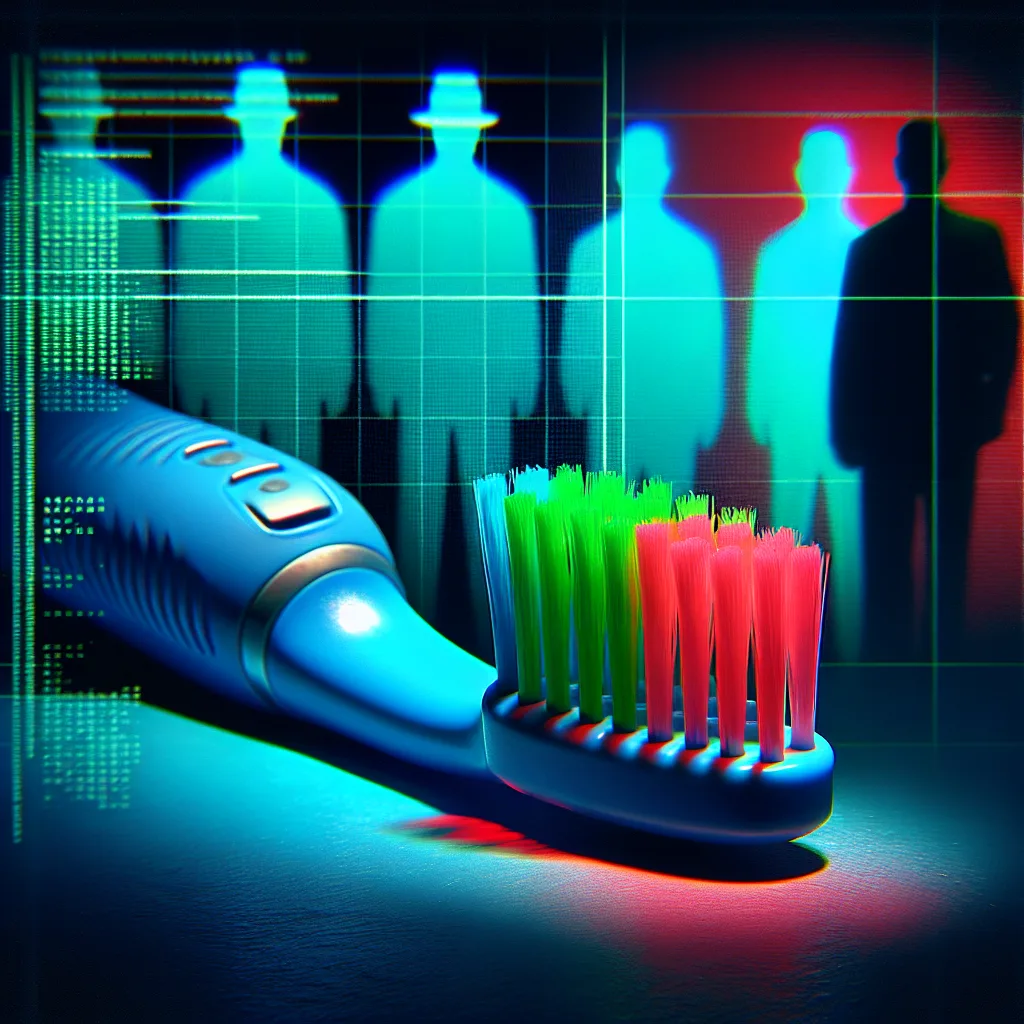
At first glance, a smart toothbrush might seem an innocuous part of a high-tech household, designed to optimize dental hygiene. However, its capabilities extend beyond mere cleanliness. Embedded sensors and connectivity that enable data transmission for performance tracking have inadvertently opened a channel through which personal behavior can be monitored. In the case at hand, a private investigator reported that data recorded by the device provided evidence of a marital partner’s presence at home—contradicting his purported work attendance—and thereby hinted at an extramarital affair.
This revelation is not only startling for those involved but also serves as a poignant reminder of how everyday objects can unwittingly contribute to digital surveillance. In an era defined by the Internet of Things (IoT), where devices ranging from refrigerators to fitness trackers communicate data, the boundary between convenience and intrusion is increasingly blurred. The toothbrush, a symbol of personal care, now finds itself at the center of a debate on privacy, consent, and the unforeseen consequences of technological integration.
Historically, technological advances within our homes have always carried dual potentials: improving quality of life while simultaneously risking encroachment on privacy. In the early days, technology offered a promise of futuristic living, with gadgets expected to simplify tasks. Fast-forward to today, and the evolution of smart home devices means that personal routines—from sleep patterns to grooming habits—can be cataloged, stored, and even analyzed by the manufacturers or third-party applications. It is within this context that the current case gains resonance, embodying both the promise and the peril inherent in pervasive digital connectivity.
According to reports from The Daily Mail, a private investigator tracking discrepancies in a partner’s whereabouts noted that the data from a smart toothbrush conflicted with his stated location. A similar account by The Mirror adds that the device’s recording of usage patterns indicated presence at home during hours the individual claimed were spent at work. Although neither publication has provided details on the technical specifications or data handling protocols of the device, the essential fact remains: a routine item, once confined to the realm of personal hygiene, became an unintended witness to a private transgression.
This incident matters not only on a personal level for the parties involved but also in the broader dialogue about digital privacy and surveillance. For everyday consumers, it intensifies awareness of how interconnected devices might serve a dual role, offering both utility and vulnerability. In households where smart technologies now double as data recorders, users may need to reassess their comfort levels with the trade-offs between convenience and privacy. Furthermore, this case raises essential questions regarding consent: When a device records personal behavior without explicit authorization for such monitoring, do individuals relinquish some privacy in exchange for efficiency and convenience?
Experts in technology policy have long warned of the “surveillance creep” that accompanies rapid IoT adoption. John Palfrey, a noted advocate for digital rights and a former commissioner at the Federal Trade Commission, has stressed in public forums that devices designed to enhance our lives can very easily be repurposed as tools for observation. Although Mr. Palfrey has not commented directly on this particular case, his analysis of IoT security frameworks underlines a critical point: when manufacturers incorporate data-collection capabilities into everyday products, they open the door to unintended applications of that data, whether by legitimate authorities, malicious actors, or even private investigators operating in gray areas of the law.
Legal frameworks have yet to catch up with the rapid evolution of IoT technology. Data protection laws and guidelines typically focus on devices explicitly marketed for their data-gathering functions—cameras, computers, and smartphones—while more benign household items might escape the same scrutiny. The smart toothbrush case underscores a gap in current policy discussions, challenging lawmakers to consider more comprehensive privacy safeguards that account for the myriad ways in which technology now intersects with our private lives.
Looking ahead, consumers and policymakers alike should monitor several key developments. First, there may be increased scrutiny on the manufacturers of smart devices, compelling them to implement clearer privacy policies and robust data management practices. Regulatory bodies, both domestic and international, could be prompted to draft new legislation that specifies the limits of permissible data collection by everyday items. Additionally, the consumer market may witness a surge in demand for “privacy-by-design” technologies, where systems are built from the ground up to protect user data and prevent unauthorized surveillance.
For those on the cutting edge of both technology and personal rights, the smart toothbrush case serves as a cautionary tale. It is a stark illustration of how the integration of digital technology into the most familiar objects can lead to unforeseen consequences. What was once a symbol of self-care now risks becoming a tool for intruding into the intimate moments of daily life.
Ultimately, the convergence of domestic life and high technology—as unsettling as it might seem—forces us all to reexamine the boundaries of privacy in a world increasingly animated by data. In our pursuit of a more connected and efficient life, have we unwittingly opened a Pandora’s box of surveillance possibilities? As smart devices proliferate in every corner of our homes, the challenge remains: to harness their benefits while safeguarding the sanctity of our personal space.
As this narrative unfolds, it leaves us ultimately questioning the true cost of convenience. When every device may have the potential to serve as a digital witness, how do we redefine privacy in the twenty-first century? The answer might well lie in striking a delicate balance between innovation and oversight—a balance that both consumers and lawmakers will have to navigate with care.