“We did see software and hardware issues on the ones on orbit right now,” Gurpartap Sandhoo, the Space Development Agency’s director, told reporters on Wednesday.
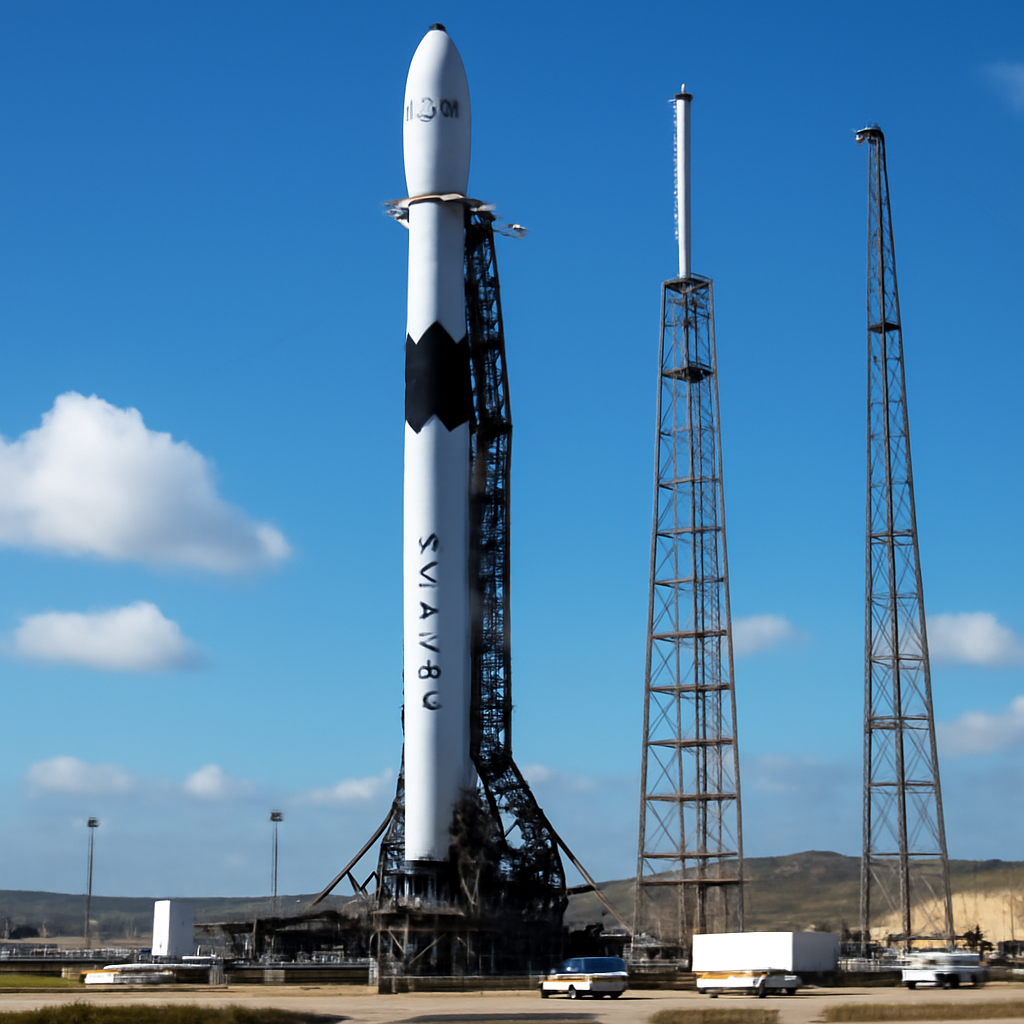
The scheduled Falcon 9 launch from Vandenberg
After a nine-month pause, the Space Development Agency (SDA) is set to launch 21 Tranche 1 satellites on Thursday aboard a SpaceX Falcon 9 rocket from Vandenberg Space Force Base. Those payloads are part of the data-transport layer of SDA’s Proliferated Warfighter Space Architecture, a planned network of hundreds of low-earth-orbit satellites intended for space-based military communications and threat detection. SDA sent the first two batches of Tranche 1 satellites into orbit this past fall, then paused further launches while officials addressed technical problems.
Technical issues: software, hardware, and laser communications
SDA’s pause followed problems that its director acknowledged publicly. “We did see software and hardware issues on the ones on orbit right now,” Sandhoo said, and the agency delayed to ensure it fixed “at least the known issues.” Outside reviewers have also raised concerns. Last year, the Government Accountability Office (GAO) said the program’s laser-communications technology “hasn't fully demonstrated that it works in space.” SDA pushed back on GAO’s finding, saying it had achieved “baseline objectives” with tests. In January, GAO further warned that the program “is at risk of being unable to deliver capability as quickly as planned” and said the agency “should be more realistic and transparent on the technology it can deliver.”

Audit-ready is a season. It shouldn't be.
Evidence in spreadsheets, controls drifting between audits, frameworks multiplying on flat headcount. Nubivance runs continuous compliance on Rapid7 Cyber GRC - SOC 2, HIPAA, ISO 27001, PCI, CMMC.
End the scrambleSchedule, risk tolerance, and the leadership defense
Despite the technical setbacks, Sandhoo said the agency is “in a better place in terms of schedule.” He defended SDA’s approach to moving forward quickly, arguing that taking risks is necessary to field new space-based capabilities. To illustrate that point he invoked an historical program-level mindset: “I would want you to go back and look at the Apollo program. I mean, you did not wait until Apollo 8 landed before you start building Apollo 9, right? You just had to do it,” Sandhoo said. “That's the kind of mindset we're taking. That's what I think the nation needs right now.”
Congressional draft to fold SDA into the Space Force acquisition portfolio
The agency’s future as an independent organization is also in question. A draft version of the National Defense Authorization Act (NDAA) proposes folding SDA and its authorities into the Space Force’s portfolio acquisition executive. Sandhoo acknowledged that SDA employees may have “some concerns” with the draft language, but he emphasized workforce commitment: workers are “here for the mission” and focused on getting the architecture completed.
What this means for technologists, policymakers, and SDA employees
- Technologists and engineering teams will be watching the Thursday launch and subsequent on-orbit behavior to see whether the fixes resolve the software and hardware issues GAO and SDA have discussed.
- Policymakers and acquisition officials will weigh GAO’s assessments about realistic delivery timelines against Sandhoo’s argument for accepting risk to accelerate capability delivery, while considering draft NDAA language that would move SDA under the Space Force acquisition executive.
- SDA employees, per Sandhoo, may carry “some concerns” about organizational change but are continuing work “for the mission” to deploy the transport layer and prepare for Tranche 2 work anticipated to begin in fiscal year 2027.
With Thursday’s launch poised to put roughly half of the transport layer on orbit, the program now faces simultaneous technical, schedule and organizational pressure points: validating laser-communications and on-orbit fixes, sustaining the pace Sandhoo defends, and resolving whether the draft NDAA will fold SDA into the Space Force’s acquisition portfolio. The coming weeks will show whether the fixes and additional launches satisfy GAO’s concerns and how Congress ultimately responds to the draft language affecting SDA’s structure.