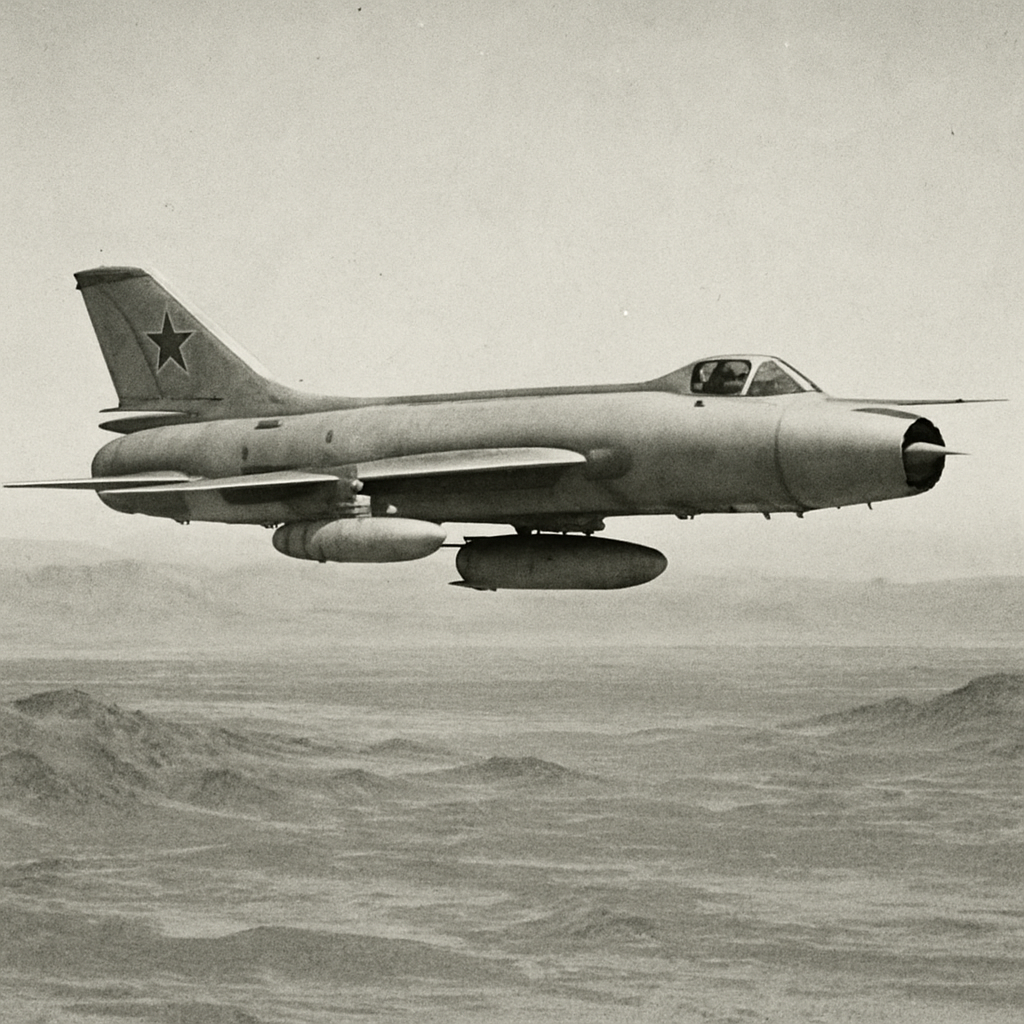
The clip Sam Wise highlighted, and the reporting that follows it, points to a unique Cold War test: on August 27, 1962, a single‑seat Su‑7B piloted by Lt. Col. A. I. Shein carried a live 244N nuclear bomb into the Semipalatinsk range and released it using a toss‑bombing maneuver. The bomb detonated at about 800 feet altitude at roughly 50.4°N, 77.8°E with a reported yield of 11 kilotons. The footage — poor quality and possibly edited — nonetheless matches details that tie it to that Semipalatinsk event and, if authentic, captures one of the very rare instances of a live nuclear weapon being air‑dropped from a tactical fighter‑bomber.
The August 27, 1962 Su‑7 sortie and Shein’s account
According to the record, Lt. Col. A. I. Shein took off in a Su‑7B from a Soviet base and headed to the Semipalatinsk test site — "The Polygon" in the Abai region (now in Kazakhstan). Shein’s own recollection is quoted in the record: “I take off, the excitement subsides, I enter the combat course, and make an approach. Everything is normal, I make an approach for a combat release, bring the aircraft into a nose‑up attitude, and monitor the G‑forces. After four seconds, I hear a signal, then a second, a short third, and I press the ‘release’ trigger. The green light goes out, indicating the release has been completed. The bomb’s release is felt by the shaking of the aircraft. I continue the nose‑up attitude. For control, I note the release angle; it is almost constant and equal to 44–50 degrees. After passing the top point, I then descend at a 50‑60 degree angle, perform a half‑roll, increase engine speed and, consequently, aircraft speed, descend to the lowest possible altitude, and try to get as far and as quickly as possible from the target.”
The aircraft and the ordnance: Su‑7, 244N, RN variants and the IAB‑500
The Su‑7 was the Soviet Union’s first‑generation supersonic attack jet; the streamlined 244N was described as the first mass‑produced Soviet tactical nuclear bomb intended specifically for carriage by supersonic jets. The 244N family was tested and took service in variants up to a maximum cited yield of 30 kilotons. Later developments included the 10‑kiloton RN‑24 and the 1‑kiloton RN‑28, which were carried by MiG‑21 and Su‑7 aircraft, and subsequent RN‑40 and RN‑41 weapons fielded in the 1980s for other aircraft types.
The published analysis also raises an important caveat: the footage could show not a live 244N but an IAB‑500 imitation bomb. The IAB‑500 replicated the shape, weight and flight characteristics of a nuclear device and, when filled with liquid petroleum and white phosphorus, produced a large fireball and mushroom cloud that could look similar to a nuclear detonation on film. Still, the installation of a camera pod under the Su‑7’s wing in the footage argues for an instrumented test rather than routine training.

This site is the portfolio.
OSINTSights runs on Cloudflare Workers, D1, R2, and Vectorize, with an AI pipeline on Hetzner ARM. Nubivance designed, built, and operates it. We do the same for clients.
See what we buildToss‑bombing technique, PBK‑1 and the LABS parallel
The test used an ‘over‑the‑shoulder’ toss technique — the aircraft climbs and releases the weapon into an arcing trajectory so the jet does not have to fly over the target. The Su‑7 in this case was fitted with a PBK‑1 bomb computer (Pritsel dliya Bombometaniya s Kabrirovaniya) mounted at the left of the instrument panel to calculate the release point. The account compares this system to the U.S. Low Altitude Bombing System (LABS), and archive footage of LABS maneuvers is cited for context. Toss‑bombing added variables — altitude, speed and trajectory — that complicated measurements and increased operational risk, which helps explain why such live air‑dropped tests were comparatively rare.
Where this sits in the broader testing record and later practice
Of more than 2,000 nuclear tests since 1945, only a small fraction — roughly 200 to 250 according to records compiled by the Comprehensive Nuclear‑Test‑Ban Treaty Organization — involved a bomb dropped from an aircraft. After the Partial Test Ban Treaty of 1963 pushed most testing underground, air‑dropped live testing became less common. The record cited here notes a few comparable episodes: a U.S. detonation of a nuclear‑tipped Genie rocket fired from an F‑89 interceptor during 1957’s Operation Plumbbob John, and a French live drop of an AN52 from a Jaguar in August 1972. Satellite imagery still shows craters and target markings at Semipalatinsk consistent with past detonations.
What this means for pilots, policymakers, and historians
- Pilots and trainers: The IAB‑500 remains in use to train pilots for nuclear delivery profiles, and archival footage plus evidence of camera pods emphasizes how instrumented sorties were used to record and validate delivery techniques.
- Policymakers and defense analysts: The Semipalatinsk test and later reports of LABS practice flights — for example, USMLM observations of Grossenhain Su‑7 activity in 1967 — underline that tactical air‑delivered nuclear options were operational considerations and continued to influence basing and training decisions in Europe during the Cold War and beyond.
- Historians and open‑source researchers: Rare footage, satellite imagery of craters, and pilot accounts like Shein’s together provide a multilayered record; the still‑unresolved question in the footage — whether it shows a live 244N or an IAB‑500 imitation — is a concrete research target for archival and forensic work.
The clip flagged by Sam Wise serves as a visual reminder of a short, specific chapter in nuclear testing history: a single‑seat fighter conducting an instrumented, live‑or‑simulated tactical nuclear drop. Even if parts of the film are edited or the device imitated, the operational practices it depicts — toss‑bombing, dedicated bomb computers like the PBK‑1, and instrumented camera pods — are well documented in the record. That combination of imagery, pilot testimony, and geospatial traces at Semipalatinsk gives researchers a tightly bounded puzzle: rare footage that corroborates a rare test, and a single unanswered technical question about whether the blast was of an armed device or a convincing imitation.