New Frontiers in Armored Defense: A Cross-Continental Pact of Technology and Strategy
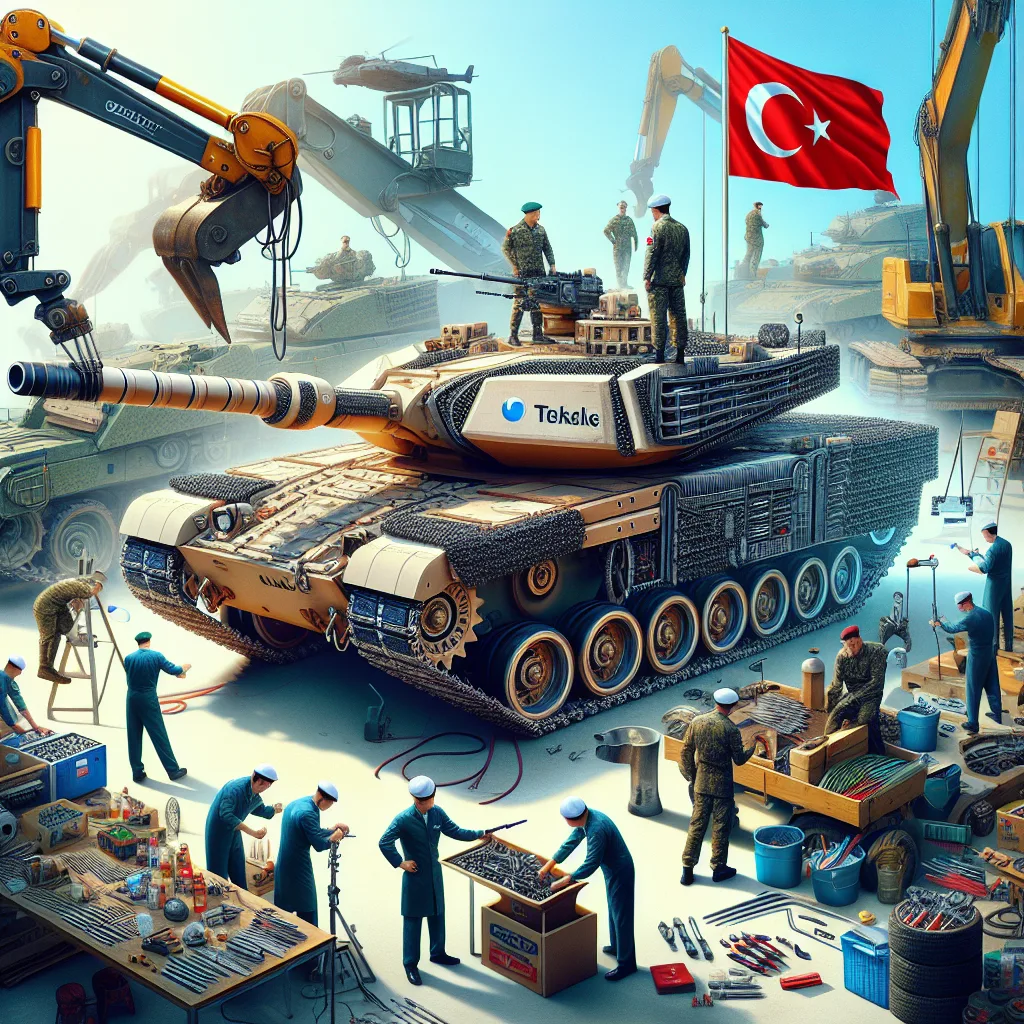
In a move that underscores the global nature of modern defense technology, South Korea’s Samyang Comtech has marked a milestone by landing its first direct overseas export contract: the supply of advanced ceramic ballistic armor components for Turkey’s Altay main battle tank. With this contract approved by South Korea’s Defense Acquisition Program Administration, the deal not only exemplifies the firm’s technical prowess but also signals a strategic alignment between two nations looking to modernize and enhance their armored capabilities.
The Altay tank program has long been central to Turkey’s ambition to modernize its military hardware, aiming to balance conventional strengths with next-generation warfare technologies. As the Altay main battle tank migrates toward becoming a technological showcase, the incorporation of Samyang Comtech’s specialized ceramic armor offers an upgrade that could redefine battlefield resilience. The armor’s composition is engineered to absorb and dissipate impacts from kinetic and explosive threats, promising to give Turkey a competitive edge in a region where security challenges are as complex as they are varied.
Historically, Turkey’s pursuit of advanced defense systems has led it to cultivate relationships with both Western and Eastern defense industries. Traditionally reliant on indigenous upgrades and Western partnerships, Ankara has increasingly looked eastward as part of a broader strategy to diversify its defense portfolio. As military budgets tighten globally and threats evolve rapidly in the 21st century, the export contract from South Korea emerges as a timely infusion of modern technology that leverages decades of material science research and production engineering.
According to a report by the Seoul Economic Daily, the contract received recent approval by South Korea’s Defense Acquisition Program Administration, an endorsement of the technological and strategic merit of the proposed export. This move represents the first instance of Samyang Comtech branching directly into the international export market, potentially paving the way for further overseas deals. The official announcement highlights a clear trajectory: advanced ceramics, once confined to domestic or niche defense applications, are now taking center stage on the global battleground.
Beyond its immediate tactical implications, this deal marks a broader trend in defense procurement strategies. Global adversaries and potential collaborators are increasingly scrutinizing the supply chain and technology transfer channels inherent in such contracts. For Turkey, the modernization of its armored fleet aligns with ongoing efforts to boost operational readiness amid regional uncertainties. For South Korea, the deal enhances its reputation on the international stage by proving that its cutting-edge material technologies can withstand the rigorous demands of modern combat.
Security analysts note that advanced ceramic armor, renowned for its lightweight yet high resistance properties, can be a game changer on the battlefield. Key considerations include:
- Technological Superiority: The armor’s ability to counteract high-velocity impacts and shaped charges can improve crew survivability and extend the service life of armored vehicles.
- Export Milestone: For Samyang Comtech, stepping into the overseas market validates years of research and opens avenues for future contracts with other nations in search of similar technological solutions.
- Strategic Decoupling: As defense procurement becomes increasingly globalized, Turkey’s willingness to source technology from South Korea signals a nuanced approach that is less tethered to traditional allies alone.
Expert analysis from various defense policy forums and industry think tanks suggests that this contract is about both technological innovation and geopolitical maneuvering. While many defense officials in Turkey see the upgrade as an essential step to keeping pace with regional rivals, industry observers from organizations such as the International Institute for Strategic Studies have noted that the synergy between South Korean production capabilities and Turkish operational requirements is a model for future military-industrial collaborations.
This development is also occurring against a backdrop of increased scrutiny over technology transfers in the arms industry. As nations become more cautious about strategic dependencies, export contracts of this nature are carefully calibrated to ensure compliance with international regulations and domestic security policies. In this instance, the contractual framework likely includes rigorous oversight measures to safeguard the integrity and end-use of the technology—a reminder that even technical innovations are embedded within complex diplomatic and security ecosystems.
Looking ahead, the success of Samyang Comtech’s foray into international exports may well have ripple effects throughout the global defense sector. Observers are keen to see whether this contract will serve as a template for further bilateral arrangements, or even prompt a reevaluation of procurement strategies among nations looking to balance national security with industrial competitiveness. Defense industry analysts suggest that watchful eyes will be turned toward how Turkey integrates this new technology into the operational doctrine of the Altay tank series, and whether subsequent export contracts might expand South Korea’s influence in the global arms market.
In a field where every technological breakthrough can tip the scales of conflict, the integration of advanced ceramic armor in Turkey’s flagship tank vehicle is a testament to a continuously evolving strategic narrative, one where innovation and international cooperation stand as cornerstones of modern defense. As nations recalibrate their defense postures in an era marked by rapid technological change and shifting geopolitical alliances, one must ask: Will such collaborations fortify national security, or might they sow the seeds of new strategic vulnerabilities?