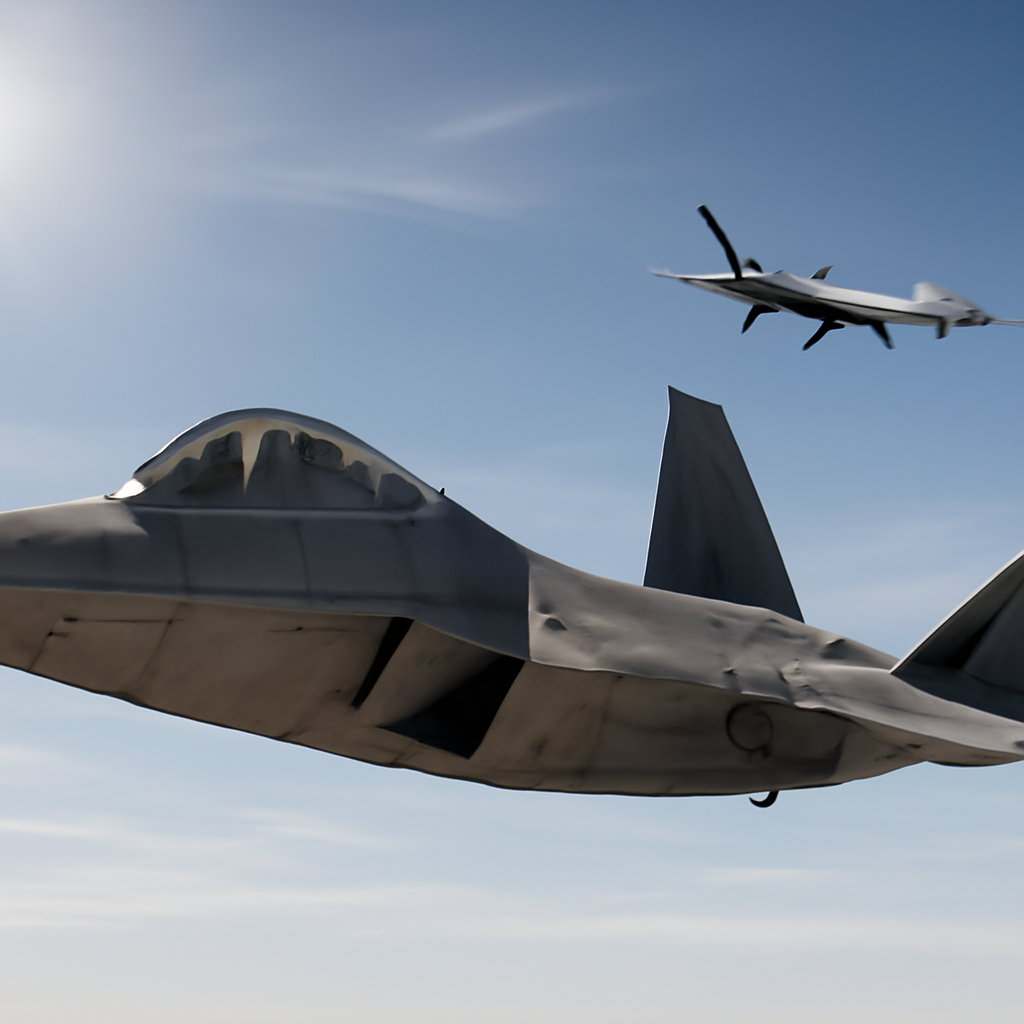
South Korea’s Bold Leap into Carrier-Based Warfare with New Drone Technology
As global tensions rise and military capabilities evolve, South Korea has taken a significant step towards enhancing its maritime strength by unveiling a new carrier-based unmanned combat aerial vehicle (UCAV). But why now, and what does this mean for regional security dynamics? The stakes have never been higher for the Korean Peninsula, and this development could prove to be a pivotal moment in the balance of power in East Asia.
The Korea Aerospace Industries (KAI) has embarked on an ambitious project to create a navalized version of its existing jet-powered drone concept. This UCAV is designed for operation from conventional aircraft carriers, featuring advanced stealth capabilities, modular sensors, and the ability to deploy long-range air-to-air munitions. These attributes position South Korea not just as a participant but as an innovator in the rapidly evolving domain of aerial combat.
Historically, South Korea’s defense strategy has been shaped by its proximity to North Korea, whose ongoing military provocations have necessitated a robust response. The development of indigenous defense technologies has gained momentum over the past few decades, particularly after the establishment of its Defense Acquisition Program Administration (DAPA) in 2006. The push for self-sufficiency in military capabilities has led to projects like the KAI T-50 Golden Eagle jet trainer and the FA-50 fighter aircraft, signaling a clear intention to bolster its aerial forces.
Currently, the global landscape is characterized by significant advancements in drone warfare technologies. Nations such as the United States and China are investing heavily in unmanned systems that can conduct surveillance and strikes without putting pilots at risk. The introduction of South Korea’s UCAV represents not only a response to these developments but also an assertion of sovereignty in defense matters. Official statements from KAI emphasize that this drone will enhance South Korea’s maritime capabilities while providing an essential tool for regional deterrence.
What makes this development especially vital is its potential impact on mission effectiveness and public confidence. As military strategies shift towards integrating advanced technologies like drones into conventional operations, the ability to deploy UCAVs from aircraft carriers could significantly improve reaction times during maritime conflicts. Moreover, public trust in government defense initiatives may strengthen if citizens perceive that their safety is bolstered through homegrown technological advancements.
Experts suggest that while this initiative could provide tactical advantages, it also raises questions regarding regional stability. Dr. Scott Snyder, Director of the Program on U.S.-Korea Policy at the Council on Foreign Relations, notes that “the introduction of sophisticated weaponry like carrier-based drones could provoke responses from neighboring countries.” Thus, while advancing military capability is crucial for national defense, it must be balanced with diplomatic strategies aimed at de-escalation.
Looking ahead, observers should monitor several key trends following this announcement. Firstly, there will likely be increased scrutiny on South Korean military spending as resources are allocated towards the development and deployment of these cutting-edge systems. Additionally, regional allies such as Japan and Australia may reassess their own defense postures in light of South Korea’s advancements. Finally, international arms control discussions could become more complex as nations grapple with the implications of new drone capabilities on traditional security frameworks.
As South Korea charts its course into this uncharted territory of naval warfare technology, one cannot help but ponder: Is this innovation a harbinger of greater security or simply another step toward an escalating arms race? With much at stake for both national interests and regional stability, only time will reveal whether South Korea’s bold leap into carrier-based warfare ultimately leads to peace or provocation.