South Korea Unveils Game-Changer in Missile Defense: The Fixed-Site Launcher for KTSSM
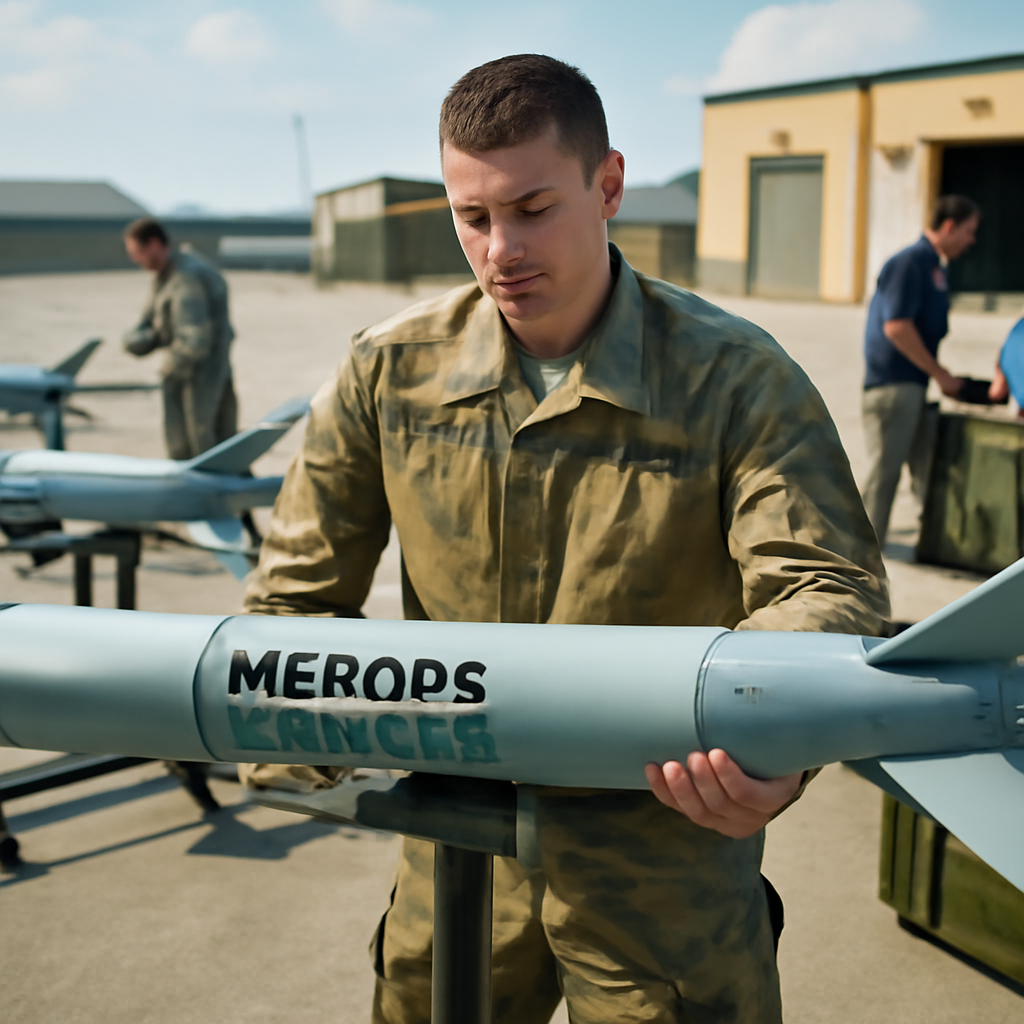
In a significant demonstration of evolving military capabilities, South Korea recently unveiled a fixed-site launcher for its Korean Tactical Surface-to-Surface Missile (KTSSM) – a development that has caught the attention of defense strategists worldwide. The launch facility, prominently displayed during a visit by Joint Chiefs of Staff Chairman Adm. Kim Myung-soo, signals a critical shift in the nation’s defense posture as it underscores the growing sophistication of its missile arsenal.
The KTSSM, colloquially known as “Ure” (or “thunder”), has long been an integral part of South Korea’s tactical deterrence strategy. The recent public display of a fixed-site launcher is emblematic not only of enhancing deployment methods but also of South Korea’s broader ambition to modernize and fortify its defense systems against an evolving array of regional threats. Defense observers note that such developments are pivotal in ensuring readiness and responsiveness in an increasingly complex security environment.
Historically, South Korea’s defense initiatives have been characterized by a continuous recalibration of strategy in response to regional dynamics, particularly those stemming from North Korea’s unpredictable posture and the broader geopolitical tensions in East Asia. The decision to showcase a fixed-site launcher for the KTSSM was as much a signal to adversaries as it was a demonstration of domestic technological prowess. In recent years, the Republic of Korea has invested heavily in both the research and development of advanced military hardware and in the training of its personnel, ensuring that its strategic options remain both credible and versatile.
This latest in a series of defense upgrades comes at a time when the air of the Indo-Pacific region is becoming ever more charged with the realities of modern warfare. The stationary launcher serves as an anchor point for the missile unit and provides a stable, reliable platform from which to deploy the KTSSM. Its fixed nature allows for more streamlined integration with existing defense infrastructure, enhancing the speed and precision with which South Korean forces can execute tactical decisions.
During the unveiling, Adm. Kim Myung-soo remarked on the operational benefits of the fixed-site launcher, highlighting its role in bolstering both deterrence and rapid response capabilities. While the administration has ceased short of discussing all technical details, the public nature of this demonstration has nonetheless provided clear evidence of South Korea’s commitment to staying ahead of potential threats. It is an affirmation of the nation’s strategy to not only adapt to modern warfare but to also shape the terms of engagement in an increasingly competitive regional landscape.
Several factors underpin the importance of this development. First, the integration of a fixed-site launcher into South Korea’s tactical missile framework fortifies its ability to maintain a robust deterrence against both conventional and asymmetric threats. Second, the launcher improves the system’s readiness, ensuring that the KTSSM can be mobilized swiftly and effectively from a pre-determined vantage point. Finally, the demonstration underscores the country’s broader strategy of self-reliance in defense manufacturing—a strategy that has garnered international respect and has helped bolster alliances, particularly with nations that value technological equivalence and forward defense planning.
Experts have cautioned that while the fixed-site launcher offers numerous tactical advantages, it also introduces new challenges that require careful strategic consideration. Notably, a stationary installation, as opposed to a mobile one, may be more vulnerable to surveillance and pre-emptive strikes if its location becomes known to adversaries. However, South Korea is believed to have mitigated such risks through a combination of advanced camouflage techniques, strict operational security protocols, and frequent relocation exercises for its critical defense assets.
Defense analyst Michael Green of the International Security Forum explained, “The fixed-site launcher represents a double-edged sword in missile deployment strategies. While it enhances operational stability and precision, it demands an uncompromising level of security to shield it from strategic targeting. South Korea’s ability to balance these considerations will be watched closely by regional observers.”
Beyond immediate tactical implications, the fixed-site launcher has broader resonance in the context of regional stability and international diplomacy. South Korea’s move comes at a time when the defense community is increasingly aware of the rapid technological advancements in military systems globally. It sets a precedent for how nations balance the benefits of static installations with the inherent risks of predictability. In so doing, it challenges both allies and adversaries to reconsider long-standing assumptions about missile deployment in contemporary security environments.
- Tactical Enhancement: The mover to a fixed-site architecture is designed to increase the KTSSM’s readiness and integration with existing missile defense systems.
- Operational Preparation: This advancement allows for quicker decision-making and a more predictable, controlled engagement process, potentially reducing collateral risk during activations.
- Strategic Messaging: By impressing a fixed-site launcher, South Korea projects an image of technological self-assurance and readiness amidst regional turbulence.
Looking ahead, defense experts predict that the fixed-site configuration of the KTSSM will influence future missile system designs, both in South Korea and globally. Military strategists are likely to examine how similar installations might be integrated into broader defense networks or adapted to counter new forms of threat. Meanwhile, policymakers will be considering the implications for arms control and regional deterrence—a balancing act that has always been delicate in the shadow of nuclear proliferation and asymmetric warfare tactics.
One tangible outcome of this demonstration may be a recalibration of investment priorities among South Korea’s defense contractors, who are now likely to explore further innovations in launcher and deployment technologies. As South Korea continues to fine-tune its tactical assets, its approach will likely ripple outward, influencing both the design philosophies of future defensive platforms and the strategic calculations of its neighbors.
While the fixed-site launcher delineates a clear tactical edge, it also places into sharp relief the enduring complexity of modern defense systems. The balance between offense and defense, mobility and stability, transparency and camouflage remains as challenging as ever. For South Korea—and indeed for every nation operating in a high-stakes, technologically driven security environment—the path forward will be characterized by a nimble adaptability that melds cutting-edge innovation with tried-and-true strategic doctrine.
In an era defined by rapid technological change and unpredictable geopolitical shifts, South Korea’s decision to publicize its new fixed-site launcher for the KTSSM missile emerges as a multifaceted maneuver: one intended to safeguard national security, reinforce deterrence, and signal a readiness to engage modern complexities head-on. As regional tensions simmer and technological arms race accelerates, the true measure of this development will be seen in its impact on both the tactical battlefield and the broader strategic dialogue surrounding national defense in the 21st century.
Ultimately, the unveiling of the fixed-site launcher prompts an essential question for strategic planners and policymakers alike: How can nations optimize advanced military systems to ensure both operational excellence and strategic deterrence without compromising security through predictability? For South Korea, and for the world at large, the answer lies in an ongoing blend of innovation, rigorous evaluation, and the unyielding pursuit of balance in an ever-shifting security landscape.