"From this news, it appears they may have identified a future requirement for a sixth‑generation fighter, although this is unlikely to transition into a program of record for at least another two decades," Roy Choo, a defense journalist and TWZ contributor, told The War Zone.
Singapore's exploratory engagement with GCAP
Janes reports that Singapore has begun early, informal discussions about possible participation in the Global Combat Air Program (GCAP). Those talks are described as exploratory — Singapore is gathering information rather than negotiating membership — and the Singapore government has not made any decision to become a participant. The report represents the first known indication that Singapore is formally examining possible links to GCAP and considering sixth‑generation combat aircraft technologies beyond the Joint Strike Fighter.
What GCAP is designed to deliver and its timeline
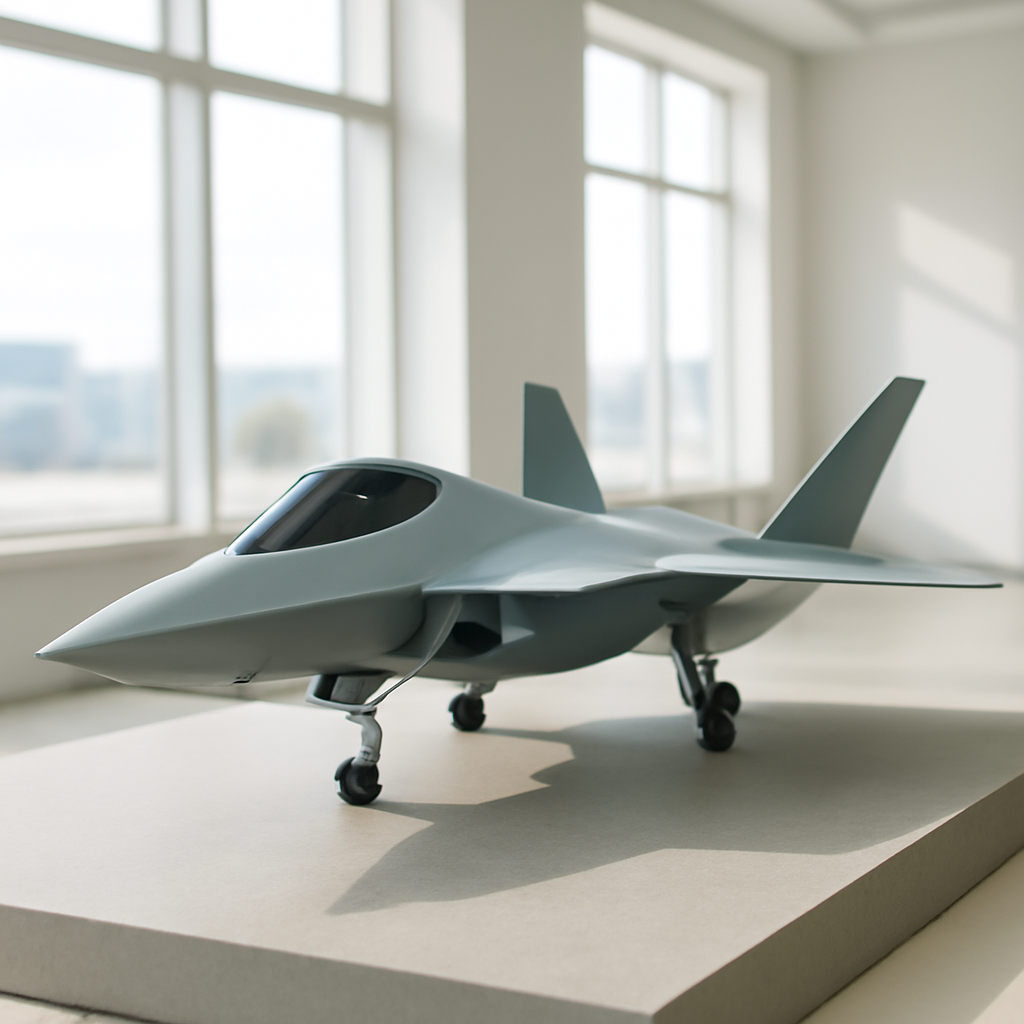
GCAP is a joint next‑generation air combat program led by the United Kingdom, Japan, and Italy that aims to field the Tempest crewed sixth‑generation combat jet and a wider air combat system by around 2035. The program is intended to include the Tempest, an integrated ecosystem of AI‑enabled systems, advanced sensors, networking, air‑launched weapons, and autonomous "loyal wingman" aircraft. With the demise of the pan‑European Future Combat Air System (FCAS), GCAP is described in the source as the preeminent Western sixth‑generation fighter effort outside of the United States.

Audit-ready is a season. It shouldn't be.
Evidence in spreadsheets, controls drifting between audits, frameworks multiplying on flat headcount. Nubivance runs continuous compliance on Rapid7 Cyber GRC - SOC 2, HIPAA, ISO 27001, PCI, CMMC.
End the scrambleRSAF force posture and near‑term modernization
The Republic of Singapore Air Force (RSAF) currently fields a combat fleet centered on 40 F‑15SGs and 49 F‑16C/Ds (a mix of Block 52 and Block 52+). Singapore will also receive eight conventional takeoff and landing (CTOL) F‑35As and 12 short takeoff and vertical landing (STOVL) F‑35Bs; the F‑35Bs are scheduled to be the first to arrive, with deliveries due to start before the end of this year. Those F‑35Bs will initially be based at Ebbing Air National Guard Base in Arkansas for training, with the first F‑35Bs scheduled to be stationed in Singapore from 2029.
Singapore has framed those F‑35 acquisitions as a long‑term program: Singapore joined the F‑35 program as a Security Cooperative Participant (SCP) in 2003 and placed an initial order for four F‑35B in 2020 — 17 years after joining as an SCP, a timeline the source cites as illustrative of Singapore’s cautious, long‑term procurement approach. The RSAF is also planning a midlife upgrade for the F‑16s and later work on the F‑15SGs, which first began deliveries in 2008. The F‑16s are set to remain in service into the mid‑2030s, according to Singapore Chief of Air Force Maj. General Kelvin Fan.
Singapore's small geographic footprint — covering less than 280 square miles — shapes training and basing choices. In preparation for the F‑35B, the RSAF is extending the runway at Pulau Sudong from around 6,500 feet to approximately 9,800 feet, with work to be completed by 2028, a move intended to reduce noise burdens on populated areas and expand local training capacity.
What this means for the RSAF, GCAP partners, and the defense industry
- The RSAF: According to the source, the RSAF will likely remain focused in the next decade on bringing its F‑35A/B program to full operational capability, completing F‑16 midlife upgrades, and sequencing any future sixth‑generation decision well into the 2030s or beyond.
- GCAP partners (United Kingdom, Japan, Italy): The source notes that a plausible entry for Singapore would be observer status — an approach used recently by Canada — which would permit visibility into governance and capabilities without a full commitment.
- Defense industry and supply‑chain actors: The source suggests potential future avenues for workshare and supply‑chain roles if Singapore were to deepen involvement, but stresses that such arrangements would be a long way off given Singapore’s cautious procurement timeline.
Industrial cooperation with Australia and the MQ‑28 consideration
Singapore and Australia recently signed the Industrial Base Resiliency Arrangement (IBRA), which the source describes as establishing a practical framework for closer defence industrial cooperation. The IBRA “allows both countries to engage in cross‑sustainment of common defense platforms, examine priority delivery requests for defence orders, streamline equipment transfers, foster defence industry partnerships, and facilitate information exchanges to mitigate supply chain risk.”
The source notes that common platforms between Singapore and Australia could include the MQ‑28 Ghost Bat, as well as the F‑35A and the P‑8A maritime patrol aircraft once they arrive in RSAF service. The RSAF’s next logical procurement project, the source argues, may involve a collaborative combat aircraft (CCA) to build combat mass — a capability profile the MQ‑28 and similar systems aim to support.
Singapore’s approach, as described in the reporting, is deliberate and long‑term: informal information‑gathering about GCAP today, detailed integration of F‑35A/B capability over the next decade, and a potential sixth‑generation decision that — if it comes — is likely to be measured, staged, and many years away.