"I want to get back to the radical airframe and engine designs like we were always supposed to do," NASA Administrator Jared Isaacman told attendees at the All‑In Summit in Los Angeles — and he backed that line with a silhouette that immediately revived the shape and questions of the SR‑71 Blackbird.
Jared Isaacman and the All‑In Summit silhouette
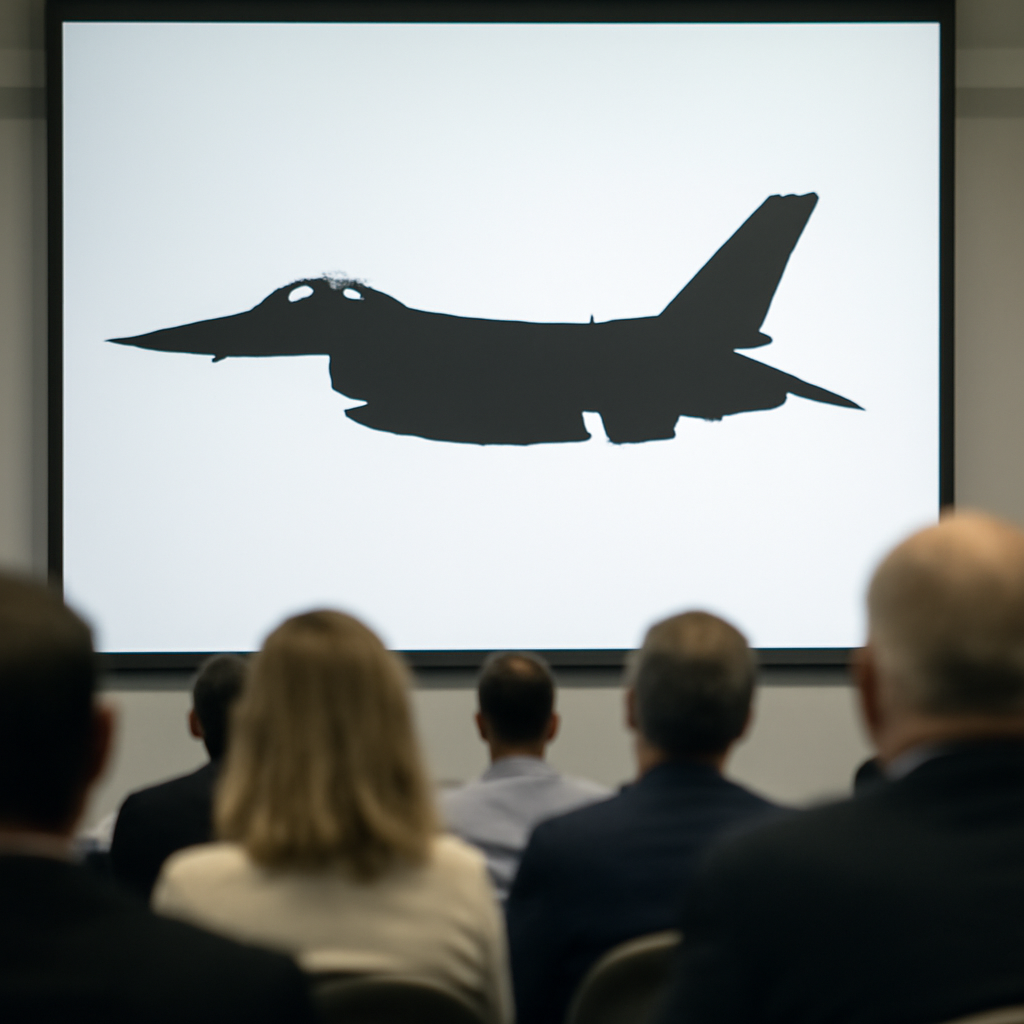
During a speech at the All‑In Summit, NASA Administrator Jared Isaacman displayed a high‑speed aircraft silhouette with the tagline "Rebuilding our X‑plane portfolio." The image appears in the event video at roughly the 12:40 mark and is discussed again around 28:39 during a subsequent interview. When co‑host Chamath Palihapitiya asked whether the picture was of an SR‑71, Isaacman declined to confirm, saying only that "NASA is getting back in the business of flying high and fast again" and otherwise refraining from elaboration. TWZ reported it has reached out to NASA for more information.
The silhouette’s SR‑71 echo and what the graphic shows
The silhouette evoked the SR‑71’s iconic profile — long, sword‑like fuselage, pronounced chines, deeply swept wings and large engine nacelles — by presenting a broad, highly blended aircraft from an unusual head‑on angle. Isaacman pushed back on a direct link to the SR‑71 during the fireside chat, but his remarks and the artwork together suggested an appetite at NASA to reengage the high‑speed flight regime.

Audit-ready is a season. It shouldn't be.
Evidence in spreadsheets, controls drifting between audits, frameworks multiplying on flat headcount. Nubivance runs continuous compliance on Rapid7 Cyber GRC - SOC 2, HIPAA, ISO 27001, PCI, CMMC.
End the scrambleWhere X‑59 and NASA’s aeronautics priorities fit
Isaacman highlighted the X‑59 Quiet Supersonic Technology experimental aircraft (QueSST) at the summit as an example of NASA’s ongoing flight‑test work. The X‑59 reached Mach 1.1 on its first supersonic test flight in June, and NASA’s test program aims to push it to Mach 1.4 — a speed NASA says is “significantly below” the roughly Mach 3.3 record the SR‑71 posted in the mid‑1970s. Isaacman has repeatedly pushed for an expanded X‑plane portfolio: on his second day on the job, in December of last year, he called for revamping aeronautics, and in March of this year he wrote on X that he wanted routine experimental flights.
Budget and program signals back up that tone. NASA’s proposed FY2027 budget explicitly prioritizes “rapid, cost‑effective flight experimentation” and highlights work toward supersonic and hypersonic technologies “that will revolutionize air transportation, strengthen national security capabilities, and position America to lead the future of high‑speed flight.” In April, NASA launched an Aeronautics Flight Accelerator (AFA) initiative and solicited input on concepts and flight test campaigns “suitable for cost shared maturation leading to flight within the next three years,” listing interest in “subsonic (including vertical lift), supersonic, and hypersonic flight technologies.”
Reconstituting an SR‑71 versus building a new demonstrator
Bringing an SR‑71 back into flight would be difficult. The article notes that NASA was the last operator of the type, flying SR‑71s until 1999, and that the airframes are now in museums and on display. While the Pentagon could "technically claw some of them back from their ‘on loan’ status," reconstituting even one would be a major undertaking because "the entire support ecosystem that once sustained them has been gone for decades."
Alternatively, a new test aircraft built to exceed the SR‑71’s performance — or informed by its "DNA" — could leverage modern materials, avionics, controls and propulsion. The piece also notes that demonstrators in this performance class could already exist in the classified domain and that "NASA could possibly assume ownership of one after the Pentagon declassifies it." Whether any of these paths is underway remains unclear from public materials.
What this means for NASA, the Pentagon, and Lockheed Martin
- NASA: The administrator’s public remarks, the AFA solicitation and FY2027 budget language together make clear the agency is prioritizing more routine, rapid X‑plane experimentation and renewed investment in supersonic and hypersonic flight research.
- The Pentagon: Doctrinally and logistically, the Pentagon retains technical and administrative levers — the report notes it could reclaim SR‑71 airframes on loan — and it may hold classified demonstrators that NASA could inherit if declassification occurs.
- Lockheed Martin: The company previously pitched an SR‑72 successor in the late 2010s and surfaced again in public conversation after contributing a fictional hypersonic design for Top Gun: Maverick. TWZ reports that the program went silent after sustained public discussion, which could indicate movement into classified work or a pause in public promotion.
At minimum, the silhouette and Isaacman’s comments amount to a clear signal: under his leadership, NASA is publicly seeking to return to high‑speed flight testing as part of a broader push to expand the X‑plane portfolio. Whether that will mean rebuilding museum‑stored Blackbirds, revealing classified demonstrators, or building fresh prototypes remains a practical and political question — one NASA and the Pentagon are positioned to answer in coming months as budget cycles and the Aeronautics Flight Accelerator process unfold.