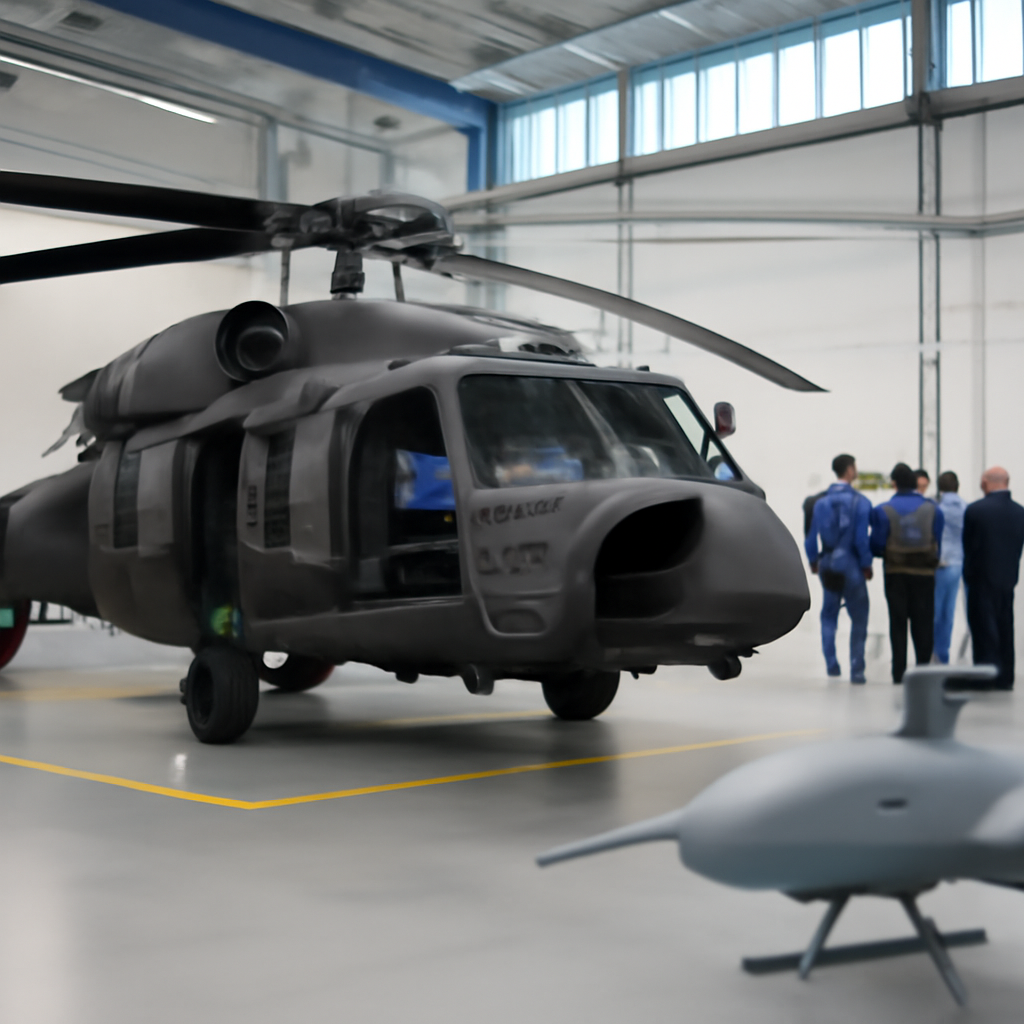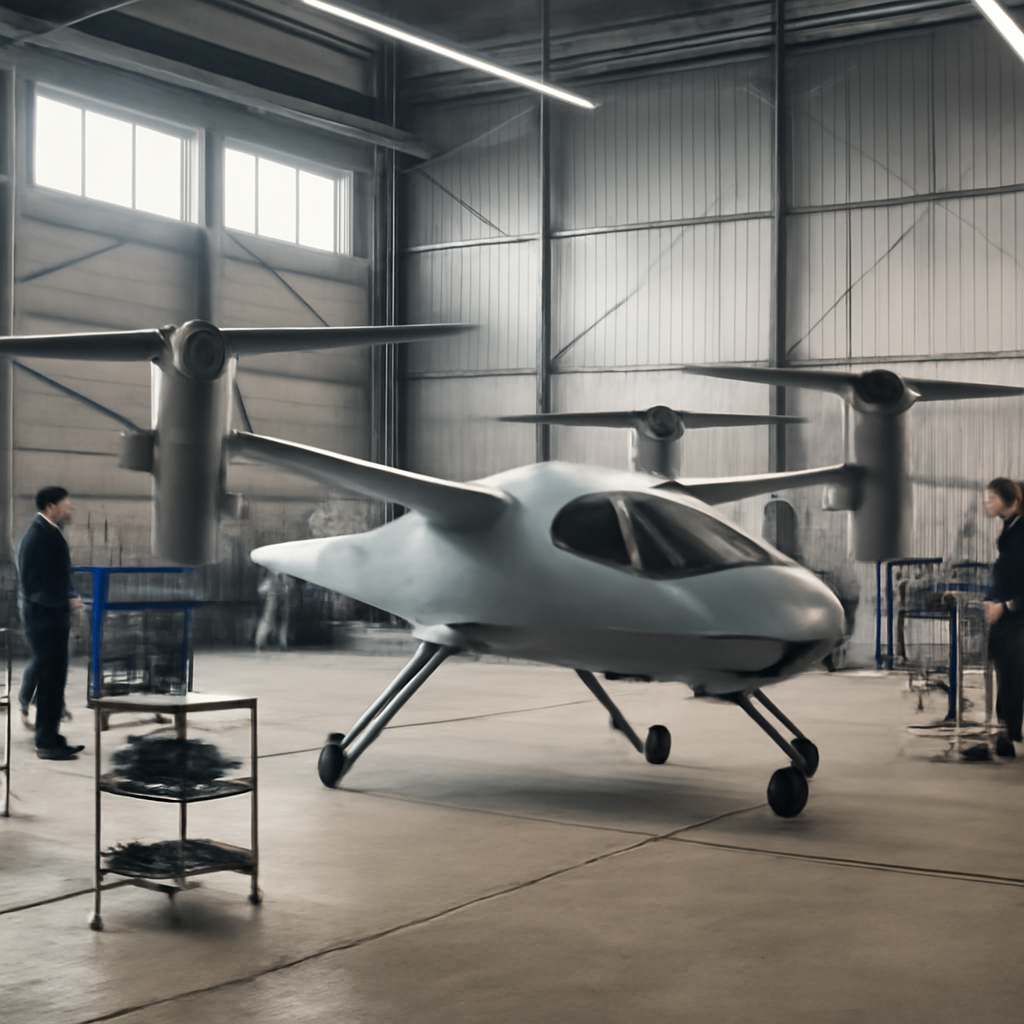
"We’ve taken an iterative approach to development and made improvements to the design based on test data," Armor Harris told reporters at Sea‑Air‑Space 2026 — a short, plain sentence that sums up a radical redraw of Shield AI and General Electric’s X‑BAT autonomous vertical‑takeoff fighter drone.
Armor Harris on the redesign: a new arrowhead planform
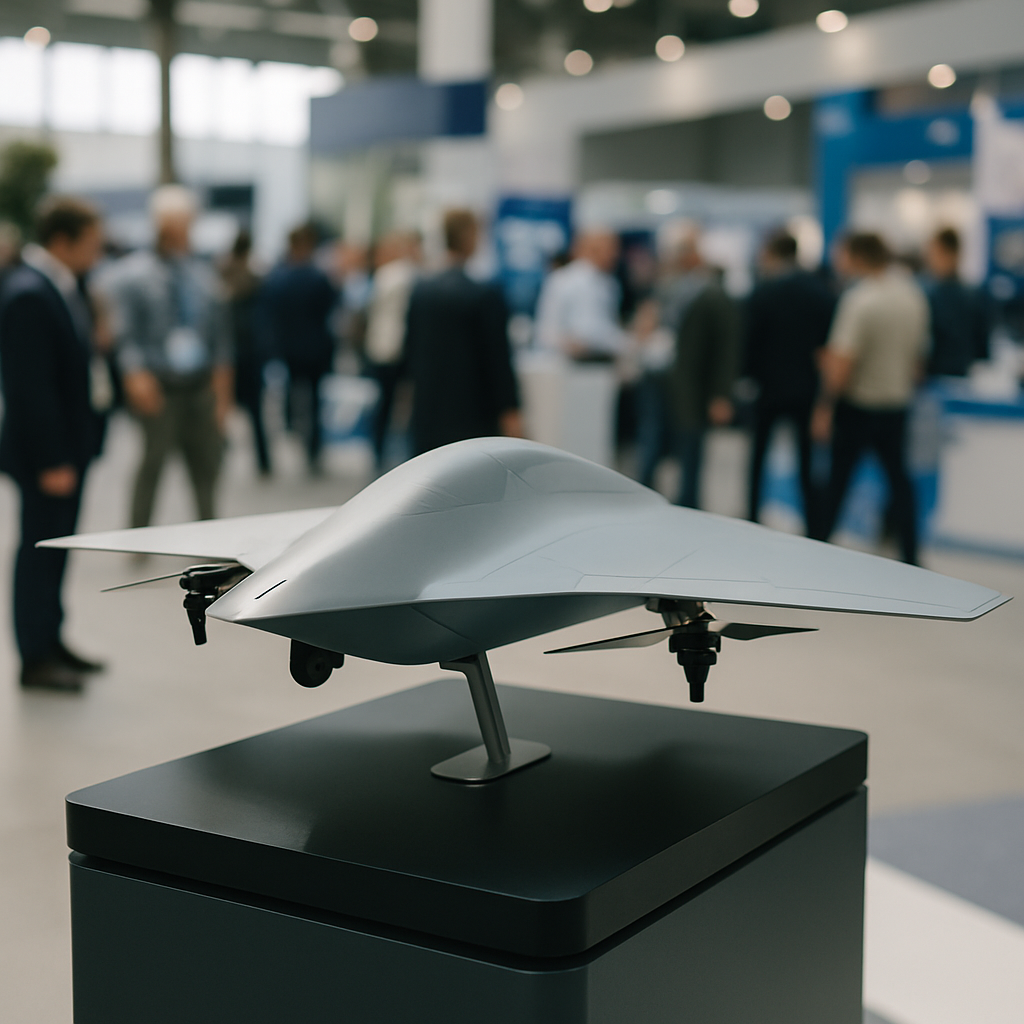
Shield AI has moved the X‑BAT away from the original "cranked kite" planform to a straight leading edge with a dramatic sweep, producing an arrowhead‑shaped profile. Company officials say the new configuration is better optimized for higher‑speed flight. The change was shown on a roughly half‑size model displayed at Sea‑Air‑Space 2026, and was described by designers as an iterative improvement driven by test data.
Propulsion: the GE F110 and an AVEN nozzle borrowed from an F‑16
General Electric is adapting its F110 turbofan for the X‑BAT. The F110 was chosen for size and thrust requirements tied to the demanding VTOL cycle, and for its fuel economy and availability — the companies note roughly 3,400 F110 engines exist globally and that both "certified pre‑owned engines" and new‑build units have been obtained.
Critical to the VTOL concept is thrust vectoring. GE officials said the initial nozzle will be the Axisymmetric Vectoring Exhaust Nozzle (AVEN) — taken from a specialized thrust‑vectoring F‑16 tested out of Edwards AFB in the 1990s and retrieved from storage "Indiana Jones‑style," according to the companies. That AVEN will be used for initial testing while new nozzle designs and actuation systems are developed. Steve Russell of GE’s Edison Works said the nozzle "has worked really well" in integration testing, and noted the nozzle will be "fully vectorable across the flight regime." The current nozzle lacks low‑observable attributes, which Shield AI says will be introduced after prototype testing.

This site is the portfolio.
OSINTSights runs on Cloudflare Workers, D1, R2, and Vectorize, with an AI pipeline on Hetzner ARM. Nubivance designed, built, and operates it. We do the same for clients.
See what we buildVTOL profile, intakes, and the trailer‑based launch‑recovery approach
X‑BAT is a tail‑sitting aircraft that uses the F110 at afterburner for vertical takeoff; it returns to land on military power without afterburner. Shield AI engineers told reporters the air‑vehicle design moves some systems off the aircraft (no landing gear, no auxiliary power unit; engine starts from an external lithium‑ion battery pack) and uses a trailer‑based launch‑recovery vehicle to reduce airframe weight.
To manage exhaust and foreign‑object damage (FOD) during vertical operations, the launch trailer includes a blast deflector designed to direct the plume away from the aircraft. The airframe has a concealed auxiliary inlet on its aft fuselage for demanding inlet conditions, and the planned landing profile approaches the trailer from the side, makes contact, then powers into a latch — the aircraft also leans slightly into the incoming airstream to maintain cleaner intake air.
Payload, range, and multirole capability — including tanker options
Shield AI says X‑BAT is around twice the size of current Collaborative Combat Aircraft (CCA) offerings, and includes a pair of internal payload bays roughly the same size as those on the F‑35. That means internal carriage of stores up to 2,000‑pound class is possible. The companies give a combat radius of about 1,000 nautical miles; in earlier briefings they cited a maximum range of 2,000 nautical miles and a service ceiling near 50,000 feet.
X‑BAT is explicitly multirole: Shield AI lists air‑to‑ground, maritime strike and electronic warfare missions. The drone can also be configured as a "buddy" tanker: two external hardpoints, plumbed to internal fuel tanks, can carry hose‑and‑drogue refueling pods. Shield AI stresses aerial refueling is "definitely not a primary mission" and says it currently sees less interest in X‑BAT receiving fuel in flight itself, though a "holding place" for a nose probe exists if required. The companies contrasted X‑BAT tanker concepts with larger programs such as Boeing’s MQ‑25 Stingray, noting the MQ‑25’s larger size yields greater internal capacity.
Testing pathway, production goals, and market claims
Shield AI and GE outline a staged test plan now underway: F110 adaptation testing on GE stands; propulsion integration into prototype airframes; horizontal and vertical runs while attached to the launch‑recovery trailer; tethered vertical engine testing via a large crane; and finally untethered free flights that take off and reattach to the trailer. Company officials say the untethered vertical flight milestone is targeted "before the end of 2026," and earlier briefings indicated VTOL testing would begin "before the end of this year."
The program accepts failure as part of a "hardware‑rich" approach; officials told reporters they "fully expect to lose one in testing" as they push prototypes quickly. On production and economics, Shield AI is sizing a factory to produce 150 X‑BATs a year on single shifts, and claims life‑cycle air‑power costs "around a tenth" that of an equivalent fifth‑ or sixth‑generation crewed platform. The companies suggested an operator could buy "10 to 20 X‑BATs for the price of something like a B‑21"; the report notes an Air Force‑specified average unit cost of roughly $550 million for the B‑21.
What this means for operators, aerospace suppliers, and potential adversaries
- Operators and military planners: X‑BAT’s VTOL and trailer launch model aims to reduce dependence on conventional airbases, extend forward deployment options with a quoted 1,000 nm combat radius, and offer multirole flexibility including buddy‑tanking — albeit not as a primary tanker mission.
- Aerospace manufacturers and suppliers: demand will center on adapting the widely available F110 for prolonged tail‑sitting regimes, producing vectoring nozzles and actuation systems, and delivering the launch‑recovery trailer and blast‑deflector hardware. Open system architectures also emphasize modular RF/IR sensor swaps and future EW payloads.
- Adversaries and defense planners: GE’s Steve Russell framed the integrated propulsion and control package as presenting "a unique dilemma" for potential adversaries; Shield AI likewise confirms "tremendous interest internationally."
The next concrete test to watch is clear: can the adapted F110 and the AVEN‑derived nozzle survive tethered vertical runs near the trailer and then perform a free vertical takeoff and reattachment before the end of 2026? Shield AI and GE have set that milestone as a technical proving ground — and, by their own account, are prepared to trade prototypes for speed in getting there.