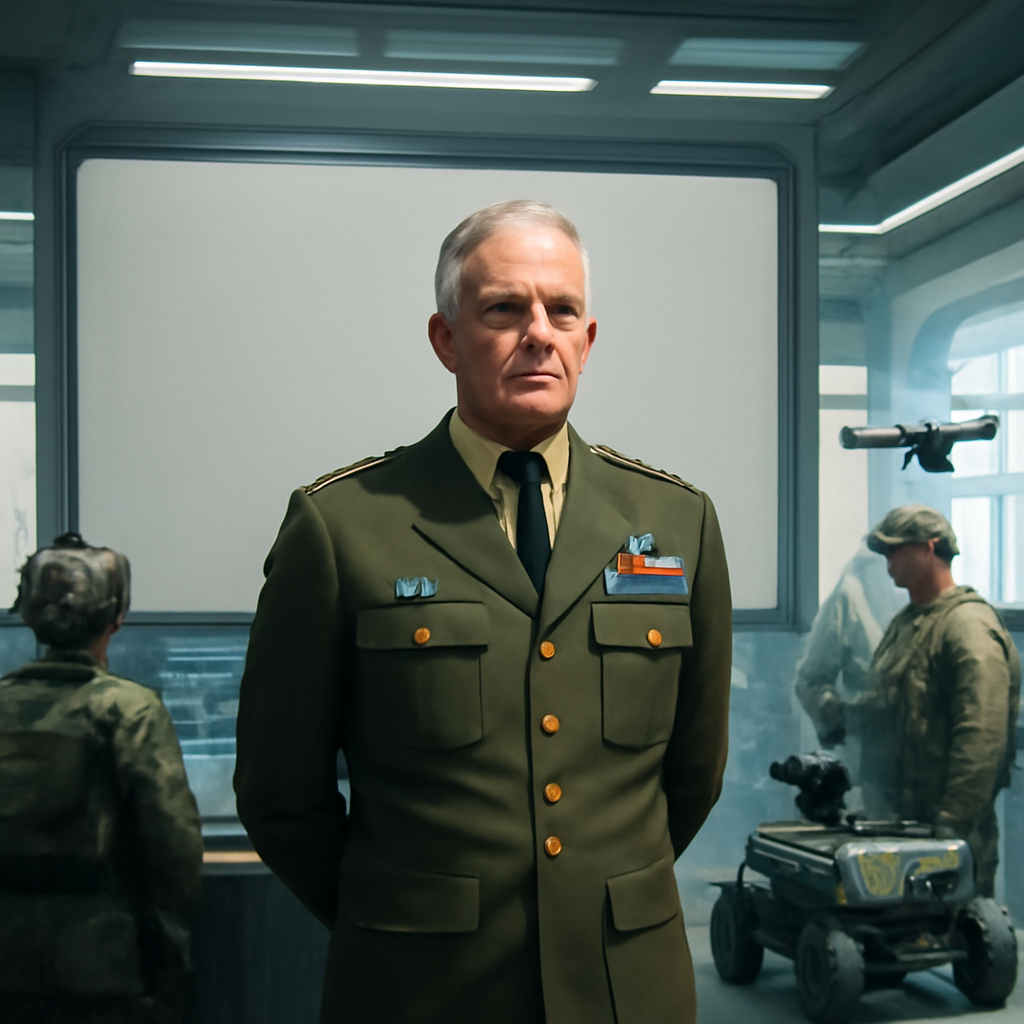
"It’s not a new domain. Uncrewed, unmanned, whatever you want to call them, are in every domain, sub-surface, surface, and aerial, and probably more in the future," a committee staffer told reporters on Thursday, summarizing the Senate Armed Services Committee’s rationale for authorizing a new Robotic and Autonomous Systems Combatant Command.
Committee staff: "a four-star combatant command" to accelerate unmanned force generation
The Senate Armed Services Committee (SASC) has inserted permissive language into its version of the National Defense Authorization Act (NDAA) that would let the Defense Department establish a Robotic and Autonomous Systems Combatant Command, led by a four‑star general. SASC’s summary says the goal is to "adopt the future of warfare" by creating a command that can integrate unmanned systems across domains and speed their transition into service force generation.
The committee passed its version of the NDAA 18‑9, according to staffers, but the full text of the committee’s markup has not been released and spokespeople did not immediately respond to follow‑up questions asking for more details.
Authorities proposed: test, evaluation and limited acquisition powers
Senate staff described the planned command as more than a headquarters. One staffer told reporters it would have "special kinds of test and evaluation authorities, and limited acquisition authorities" to experiment with emerging weapons. The language in SASC’s bill is permissive — it "permits the establishment" rather than mandating it — meaning the Department of Defense would retain discretion to design and implement the command in coordination with the committee.

Audit-ready is a season. It shouldn't be.
Evidence in spreadsheets, controls drifting between audits, frameworks multiplying on flat headcount. Nubivance runs continuous compliance on Rapid7 Cyber GRC - SOC 2, HIPAA, ISO 27001, PCI, CMMC.
End the scrambleHow the proposal intersects with existing Pentagon moves
How the proposed combatant command would operate alongside other Pentagon initiatives is not yet clear. The SASC summary notes uncertainty about interaction with efforts such as U.S. Southern Command’s new autonomous warfare group. In April, Defense Secretary Pete Hegseth said the Pentagon would create a sub‑unified command, modeled on the Joint Special Operations Command, focused on autonomous warfare — a separate but related plan the committee staff referenced in briefing reporters.
Budget fight: the Defense Autonomous Working Group (DAWG) and funding paths
Funding questions are central. As part of the administration’s $1.5 trillion 2027 defense budget request, the Pentagon asked for nearly $55 billion for the Defense Autonomous Working Group (DAWG). According to SASC staff, more than $53 billion of that request would come from a reconciliation bill that has not yet been approved.
House appropriators approved $1 billion in baseline funding for the DAWG this week — a small fraction of the administration’s ask — while the Senate Armed Services Committee’s NDAA backs the administration’s broader $1.15 trillion discretionary funding request. Committee staff said that while committee leadership expects a successful discretionary appropriations process, other budget maneuvers — including a possible supplemental and reconciliation — could come into play.
Sen. Tim Kaine, Sen. Roger Wicker, and the legislative posture
Sen. Tim Kaine, D‑Va., said he voted against the NDAA for the first time in his career and described the bill as turning a "blind eye" to the administration’s global military pursuits. Kaine told reporters he supported the amendment that would probe creation of the new combatant command, but emphasized the amendment is permissive, "not mandatory." In his words, the language "does allow the DoD to sort of work with the committee to kind of flesh out what this might look like."
Committee staff also quoted Sen. Roger Wicker, the committee chairman, as expecting a successful discretionary appropriations process and signaling readiness to debate supplemental appropriations and reconciliation if necessary. Staff said members would stay in "very, very close coordination with the administration and the appropriations subcommittees" during what they called an "uncertain six months."
What this means for the Defense Department, Congressional appropriators, and U.S. Southern Command
- Defense Department: The proposal would offer the DoD an option to stand up a 4‑star combatant command with test, evaluation and limited acquisition authorities, but only if the department and committee agree on structure and authorities; the bill’s permissive language does not force immediate action.
- Congressional appropriators: The push for large DAWG funding via reconciliation — and committee staff references to supplemental and reconciliation pathways — signals a budget fight ahead, with appropriators already expressing concern about bypassing the regular appropriations process.
- U.S. Southern Command and existing autonomous efforts: The committee acknowledged uncertainty about how a new combatant command would interact with existing initiatives such as U.S. Southern Command’s autonomous warfare group and the Pentagon’s planned sub‑unified command focused on autonomous warfare.
The SASC language and the budget figures create an immediate, specific question: will the permissive authorization become an operational reality, and if so, under what authorities and funding path? The committee has signaled willingness to coordinate with the Defense Department and appropriators, but with the full markup not yet released and multiple funding routes on the table — discretionary appropriations, a supplemental, and reconciliation — the next months will determine whether the Robotic and Autonomous Systems Combatant Command remains a concept or becomes a reshaping of military command structure.


