"Port Alpha is designed from the ground up to produce both autonomous and manned vessels at scale, with modularity and throughput shaping the facilities architecture," Saronic co‑founder and CEO Dino Mavrookas said at the ground‑breaking.
Port Alpha: a new shipyard in Brownsville, Texas
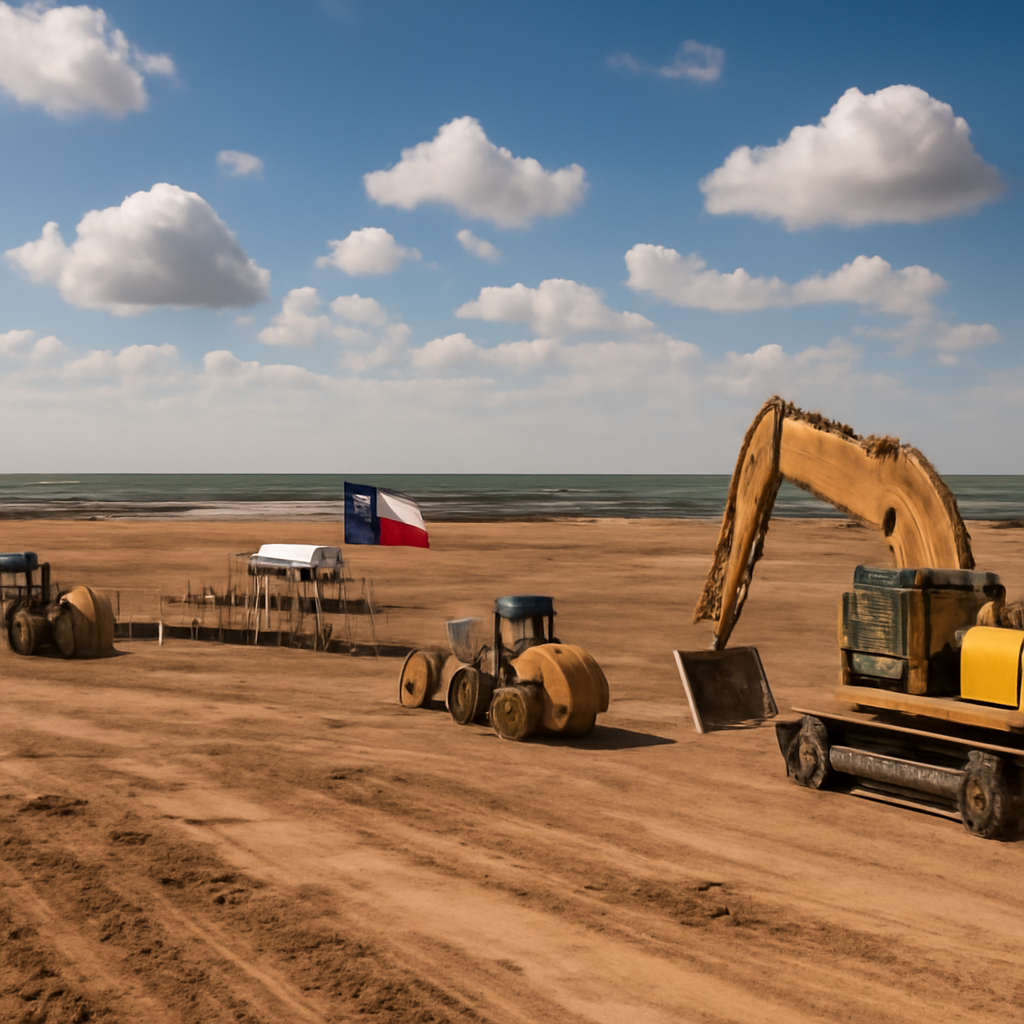
Maritime defense technology firm Saronic broke ground today on a new shipyard in Brownsville, Texas, that the company calls Port Alpha. The project is described by Saronic as an entirely new shipyard being built from scratch. The initial footprint will be roughly 800 acres, with the possibility to expand to a total of 4,000 acres, the company said.
Landing Craft Utility work and the $280 million award
Saronic told attendees the new yard will build its Landing Craft Utility (LCU) vessels. Earlier this month, the Navy selected Saronic as one of three companies to build LCU vessels as part of a roughly $280 million deal. The Navy expects deliveries of those vessels, which are designed to shuttle personnel, weapons, and cargo, to begin in late 2028, according to the Navy.

The cyber insurance questionnaire just landed. Now what?
SOC 2, HIPAA, insurance renewals - someone has to own security strategy. Nubivance provides fractional CISO leadership without the full-time salary.
Get a security leadProduction ramp at Franklin, La., and the Marauder program
Saronic already operates a shipyard in Franklin, Louisiana, where it produces several autonomous surface vessels, including the Corsair, which the company said U.S. forces have utilized in recent operations in the Middle East. The Franklin yard also produces a medium unmanned surface vessel called the Marauder. The Navy said Tuesday it is buying 10 Marauders as part of the service’s MUSV marketplace program.
At the event, Mavrookas said: “Starting January 1st of 2027, three months from now, we’ll have the production capacity to build 20 Marauders per year, and we were actually just awarded a production contract for Marauder from the United States Navy for the MUSV program.” Saronic also said it has invested $300 million for new shipyard infrastructure at the Franklin yard to support Marauder production.
Workforce, roles, and local political attention
Saronic has said Port Alpha aims to hire roughly 10,000 direct workers, naming roles such as welding and machining and also positions in robotics, software engineering, and naval architecture. Among those who attended the ground‑breaking ceremony were Vice President JD Vance and Texas Gov. Greg Abbott, underscoring political attention on the project.
How the Navy, Texas officials, and Saronic are positioned
- The Navy and Marine Corps: The Navy has contracted for LCUs and for Marauder units under the MUSV program and has set an expected delivery window for LCUs beginning in late 2028. The Navy’s selection of Saronic for LCU work and its purchases of Marauders directly link the service’s amphibious and unmanned surface capabilities to Saronic’s production plans.
- Texas officials and the Brownsville workforce: With state and federal officials attending the ceremony, the project is positioned as a local economic driver; Saronic projects roughly 10,000 direct hires in trades and technical disciplines, anchored on the 800‑acre initial site and potential expansion to 4,000 acres.
- Saronic and its production footprint: The company is simultaneously expanding at Franklin, La., with a reported $300 million infrastructure investment to support Marauder output and declaring a production increase to 20 Marauders per year starting January 1, 2027, while beginning greenfield construction at Port Alpha to add LCU capacity and broader vessel production.
The facts on the table are straightforward: Saronic has begun construction on Port Alpha in Brownsville with plans for large acreage and a substantial workforce; it has recent Navy business for both LCUs and the Marauder; and it has invested in existing infrastructure at Franklin to increase current unmanned vessel production. What remains to be observed in coming months are the pace of construction at Port Alpha, the translation of hiring projections into actual jobs, and the delivery cadence that will meet the Navy’s late‑2028 LCU timeline.