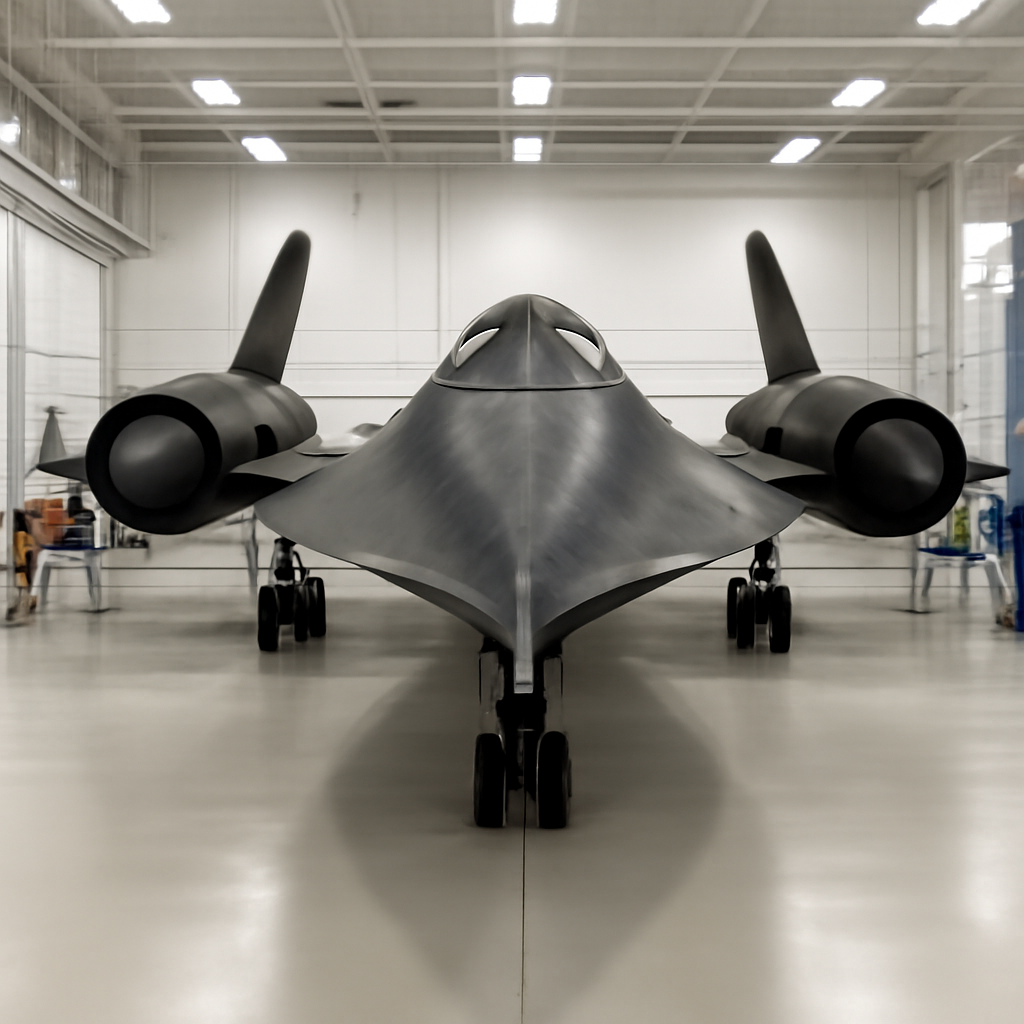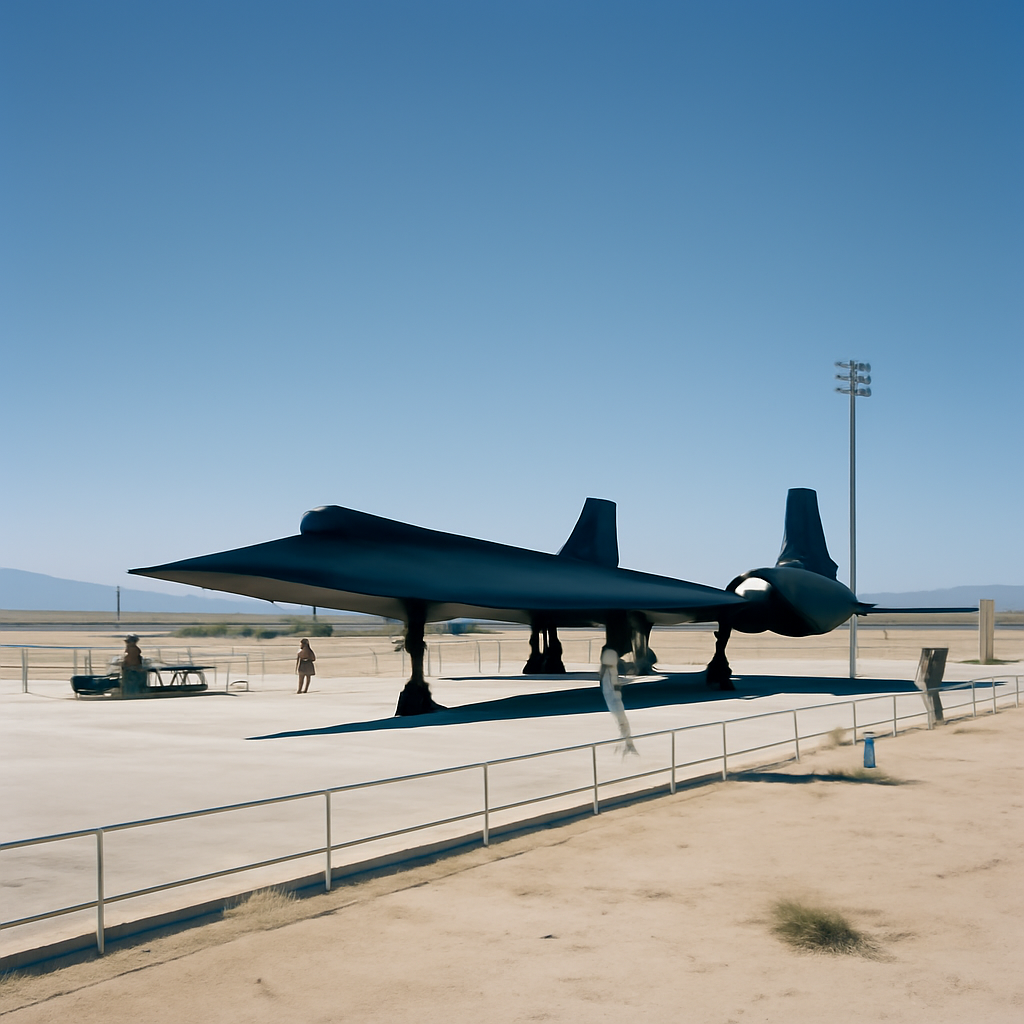
The Blackbird is the only aircraft ever built that can launch a 5‑tonne vehicle at Mach 3.
Why a half-century‑old capability matters again
That specific launching capability explains much of the renewed interest in flying one of the Lockheed Blackbird family again. The original Blackbird‑family carrier — variously referred to as the M‑12 or M‑21 in the record — was used to air‑launch the D‑21, a five‑tonne ramjet‑powered drone designed in 1962 to overfly China’s Lop Nor nuclear test site. The D‑21 programme suffered a catastrophic mid‑air collision on its fourth test flight with its carrier; the crew ejected, and a back‑seater did not survive after parachuting into the Pacific. After that episode the D‑21 was modified to launch from B‑52s with rocket boosters and made some flights over China before President Richard Nixon agreed to cease all overflights. NASA contemplated the use of the Blackbird for air‑launching high‑speed vehicles into the mid‑1970s.
Signs from NASA and the Edwards SR‑71 (0844)
The most public prompt came in September when NASA administrator Jared Isaacman made coy comments implying the agency was looking at a new start in high‑speed aeronautics and showed a graphic that resembled the view between the Blackbird’s inward‑canted tails. Aviation Week reporter Steve Trimble then reported a concrete development: SR‑71 tail number 0844 — described as the last Blackbird to fly, in 1999 under NASA ownership — had been removed from its display pylon at Edwards Air Force Base. Trimble also reported that current and retired NASA personnel with Blackbird experience had been contacted about assisting a return‑to‑flight programme.

Audit-ready is a season. It shouldn't be.
Evidence in spreadsheets, controls drifting between audits, frameworks multiplying on flat headcount. Nubivance runs continuous compliance on Rapid7 Cyber GRC - SOC 2, HIPAA, ISO 27001, PCI, CMMC.
End the scrambleTechnical hurdles and why a restart is still feasible
Reconstituting flight operations for a Blackbird is no routine restoration. The type incorporated unusually bespoke engineering: titanium primary structure; inlet, engine and exhaust arrangements that functioned as a virtual turbo‑ramjet; hydromechanical computers running at extreme temperatures; and a quadruple stability‑augmenting flight control system implemented hydromechanically. Contractors as unlikely as a surf‑fishing‑rod manufacturer produced high‑temperature plastics used on the type. Many original parts were manufactured in ways not repeated before or since, and the last parts rolled off production more than 60 years ago.
Still, none of the surviving Blackbirds was scrapped, which provides a source of spares. The aircraft’s veterans remain available to transfer tacit knowledge. Practically speaking, that makes a return‑to‑flight possible even if difficult: a programme could combine cannibalised parts, specialist manufacturing to reproduce obsolete components, and knowledge transfer from living experts. The Blackbird’s early mishap rate was high, but after 1972 only one was lost, indicating operational lessons were learned over time.
Payloads and propulsion: from the D‑21 to scramjets and rotary detonation
If a Blackbird flies again, the most plausible mission is air‑launch of a large high‑speed test vehicle. That vehicle could be a compact, affordable testbed rather than an operational strike system — sufficient to deliver realistic data for development. The historical precedent is the D‑21. Modern candidates include vehicles using combined ramjet–scramjet propulsion or newer concepts such as rotary detonation engines under study by General Electric and RTX. At the Air Force Association in September, startup Hermeus demonstrated a Quarterhorse unmanned supersonic aircraft concept carrying two mini‑D‑21‑style drones, underscoring contemporary interest in air‑launched high‑speed testbeds.
What this means for NASA, Hermeus, and General Electric and RTX
- NASA: A return‑to‑flight would require deliberate recovery of institutional knowledge, bespoke procurement to recreate obsolete parts, and careful safety engineering given the Blackbird’s unique systems and earlier mishap history.
- Hermeus: The company’s Quarterhorse demonstration shows commercial actors see value in air‑launch approaches; a flying Blackbird could offer a proven platform for carrying and releasing large supersonic or hypersonic test vehicles.
- General Electric and RTX: Engine developers studying ramjets, scramjets or rotary detonation concepts would gain a rare, high‑speed, high‑altitude test option if an air‑launch Blackbird programme proceeds — a way to reduce dependence on rocket boosters for initial acceleration.
The facts in the record point to a narrow, practical explanation: returning a Blackbird to flight is likely less about reviving a Cold War reconnaissance role and more about preserving and leveraging a unique air‑launch capability to advance high‑speed propulsion and test vehicles. Whether the aircraft can be made airworthy again, and whether such a programme will clear the cost, safety and engineering hurdles, remain the next concrete steps for NASA and potential partners to decide.