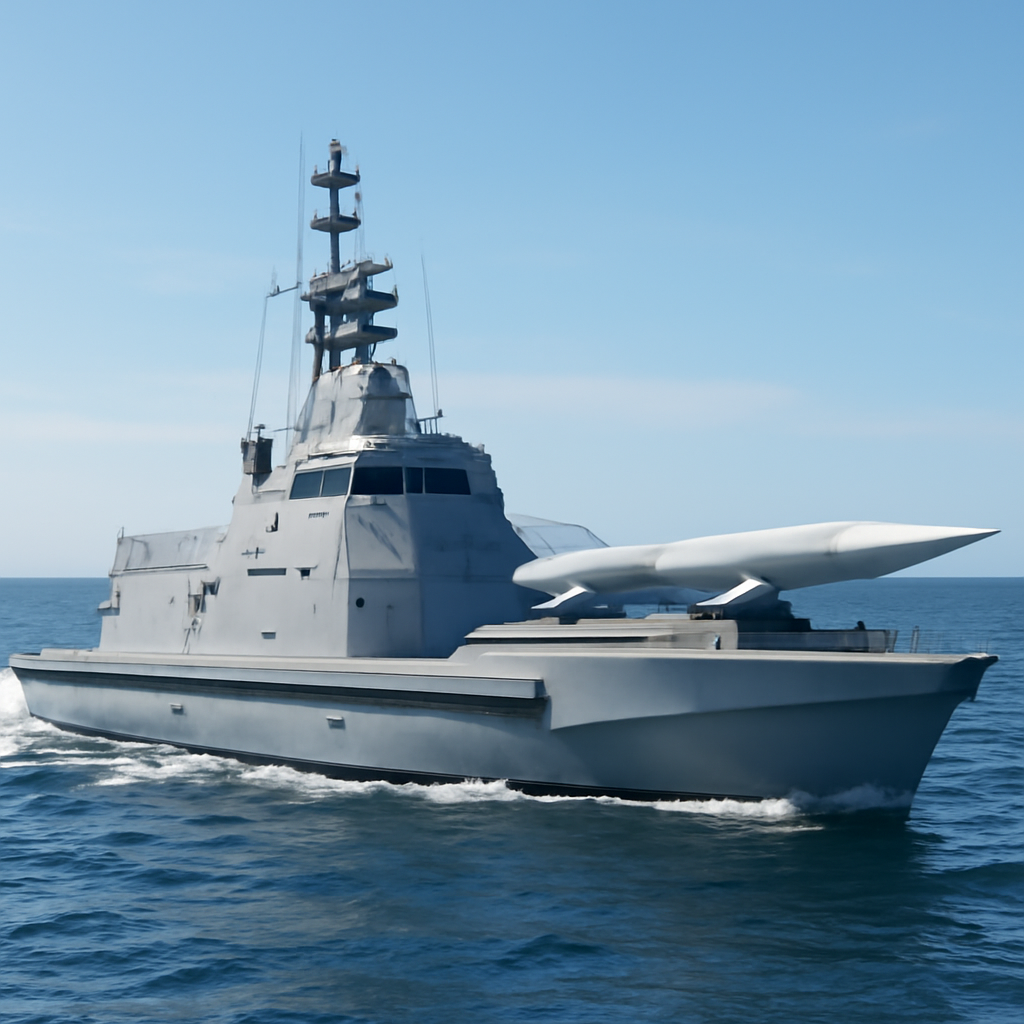
"Launching a Castelion hypersonic from a Marauder MUSV significantly changes the approach for any adversary calculating where and how the U.S. can strike," said Dino Mavrookas, co‑founder and CEO of Saronic, as the two companies announced a partnership to pair a Marauder medium unmanned surface vessel (MUSV) with Castelion’s Blackbeard hypersonic vehicle.
Saronic and Castelion: a claimed first for hypersonics on an ASV
Saronic and Castelion described the arrangement as the first integration of hypersonic vehicles on an autonomous surface vessel (ASV). The firms said a maritime launch demonstration is slated for 2027. Castelion announced it is increasing Blackbeard production to "several thousand" missiles annually and noted that the company previously received awards in October to integrate Blackbeard onto Army and Navy platforms.
Castelion co‑founder and CEO Bryon Hargis framed the pairing in operational terms: "Blackbeard and Marauder will give our warfighters more shots, from more places, with fewer constraints." Saronic’s public statements emphasize scalability, affordability, and speed to field as central aims of the partnership.
Marauder MUSV: size, payload and the production ramp
The Marauder is a 180‑foot MUSV that Saronic says can carry up to 150 metric tons. Saronic announced that the Marauder began on‑water trials late in May. To support production, Saronic is expanding a Louisiana shipyard with work expected to conclude by the end of the year. With that added capacity, the company said it is equipped to deliver 20 Marauders each year.

Audit-ready is a season. It shouldn't be.
Evidence in spreadsheets, controls drifting between audits, frameworks multiplying on flat headcount. Nubivance runs continuous compliance on Rapid7 Cyber GRC - SOC 2, HIPAA, ISO 27001, PCI, CMMC.
End the scrambleNavy MUSV marketplace and near‑term testing milestones
Separately, the Navy named Saronic as one of seven companies that submitted designs for the service’s MUSV marketplace; those designs will participate in at‑sea testing this summer. The companies that successfully complete that at‑sea phase, which is expected to conclude in October, will receive $15 million and qualify for follow‑on production. That schedule places commercial demonstrations and service testing on a fast timeline ahead of the 2027 maritime hypersonic launch demonstration announced by the two firms.
Task Force 59, Corsair ASV, and a recent rescue off Oman
Saronic’s family of ASVs already includes the Corsair, which the company says can carry up to 1,000 pounds over 1,000 nautical miles. The Navy’s Task Force 59 in Bahrain, focused on unmanned operations, began fielding those vessels in March. US Central Command (CENTCOM) said Navy units, including Task Force 59, supported rescue operations of two crew members from a US Army AH‑64 Apache after their aircraft was downed near the coast of Oman.
"The surface drone that assisted in Monday’s rescue of the Apache crew off the coast of Oman was a U.S. Navy Corsair unmanned surface vessel operated by U.S. 5th Fleet’s Task Force 59," CENTCOM spokesperson Capt. Tim Hawkins said in a statement to Breaking Defense.
What this means for warfighters, the Navy, and shipbuilders
- Warfighters: Castelion and Saronic position the combination as increasing the number of available shots and launch locations — a claim echoed in company statements that the pairing will provide "more shots, from more places, with fewer constraints."
- The Navy and testers: The MUSV marketplace at‑sea testing this summer and the October milestone tied to $15 million and follow‑on production will be concrete checkpoints for whether prototype MUSVs like the Marauder meet service needs before any hypersonic integration.
- Shipbuilders and Saronic’s Louisiana yard: The announced shipyard expansion and the company’s target to deliver 20 Marauders a year tie industrial capacity directly to the planned fielding and to Castelion’s production ramp of Blackbeard to "several thousand" annually.
Lockheed Martin’s ACES platform also appears in the background of parallel modernization efforts: the platform is described as delivering a shared virtual battlespace that strengthens readiness, interoperability, and faster decision‑making through advanced, integrated modeling and simulation capabilities.
The partnership between Saronic and Castelion puts a series of near‑term milestones on the calendar: Saronic’s at‑sea MUSV testing this summer and its shipyard expansion concluding by year‑end, Castelion’s stated production ramp, and the companies’ planned maritime hypersonic launch demonstration in 2027. Those dates and production targets will determine whether the companies’ claims about scalability and rapid fielding are borne out in practice.
Original reporting: Breaking Defense