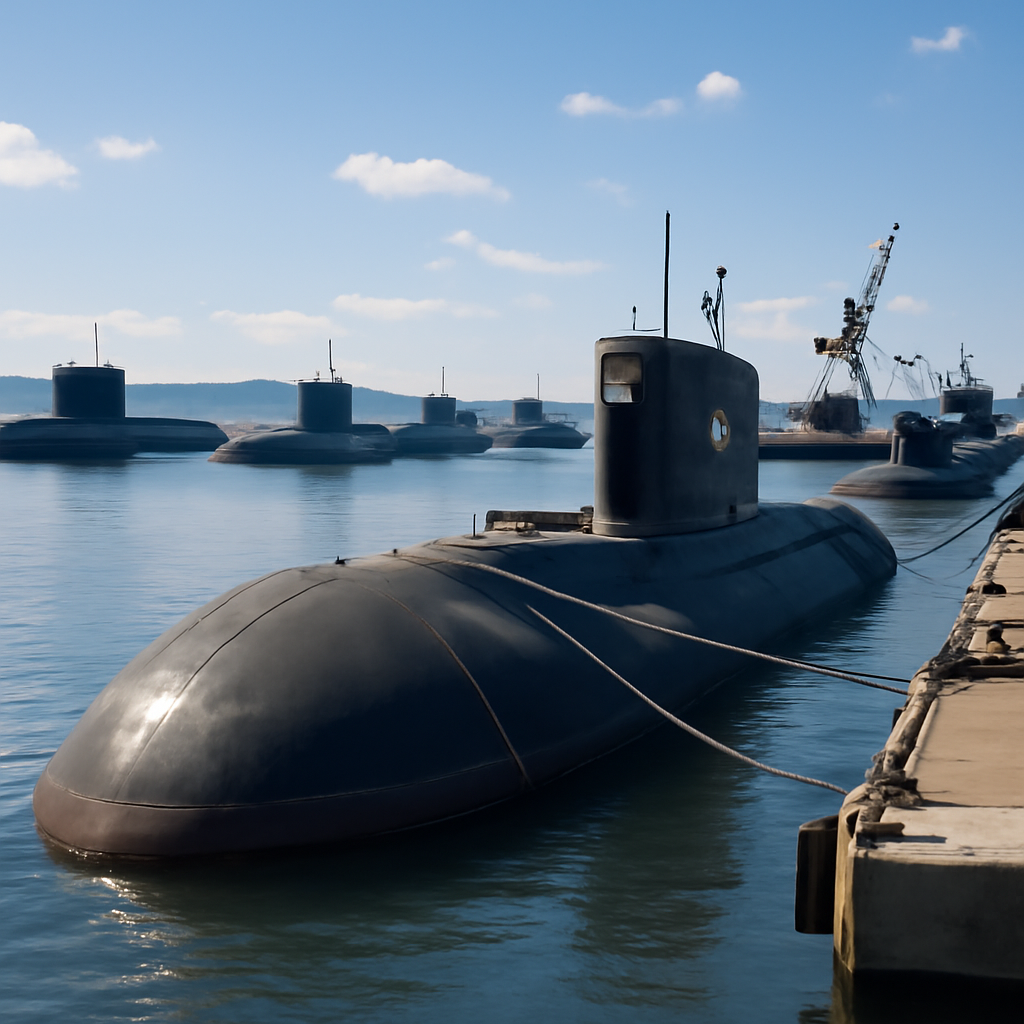
Russia has 23 submarines in the Pacific, outnumbering the 17 operated by China’s northern fleet — a fact that the Australian Strategic Policy Institute (ASPI) highlighted on 13 August in an explainer that reframes how allied planners should view a future Pacific crisis.
The fleet by the numbers
ASPI’s explainer lays out a clear order of battle: of Russia’s 23 Pacific submarines, five are ballistic‑missile boats assigned to a nuclear deterrence mission, eight are nuclear‑powered attack submarines, and 10 are conventional attack submarines optimised for conventional warfare. The comparison with China’s northern fleet — 17 submarines in a similar area of responsibility in the north Pacific — is offered to underline the operational heft Russia could bring to bear in a regional crisis.
Geography: bases and the First Island Chain
Location matters. Russia’s nuclear‑powered attack submarines are based at Vilyuchinsk on the Kamchatka peninsula, while its conventional attack submarines are based at Vladivostok on the Sea of Japan. Both basing areas sit outside the so‑called First Island Chain — a geographic detail ASPI argues gives Russian forces operational options to work in the north‑west Pacific and to affect operations directed at Japan.

Audit-ready is a season. It shouldn't be.
Evidence in spreadsheets, controls drifting between audits, frameworks multiplying on flat headcount. Nubivance runs continuous compliance on Rapid7 Cyber GRC - SOC 2, HIPAA, ISO 27001, PCI, CMMC.
End the scrambleThree plausible crisis roles identified
The explainer examines three grounded scenarios, each drawn from activities China and Russia already undertake, and each with distinct operational effects.
- Undersea infrastructure disruption: Russian submarines are well placed to disrupt the undersea data cables that link the US mainland to Japan, South Korea, the Philippines and other Southeast Asian countries.
- Sea‑line interdiction: Russia could interdict key sea lines of communication between the United States and Japan, complicating US efforts to use Japan as a base of operations during a Taiwan contingency.
- Land‑target strikes: Russia’s nuclear‑powered submarines, equipped with cruise missiles, could strike ports and logistics nodes on land — actions that have both direct effects and deterrent value.
ASPI notes that even the possibility of these operations would force allied planners to respond, creating operational dilemmas and potentially drawing US and allied forces northward — an outcome that could free Chinese submarines to concentrate their efforts closer to Taiwan.
Strategic incentives: why Moscow might act
ASPI points to Russia’s growing economic and strategic dependence on China as a factor shaping Moscow’s stake in the outcome of a Pacific conflict. The explainer argues that a Chinese defeat would have serious consequences for Russia’s own strategic ambitions, creating a plausible incentive for Moscow to support Beijing. That potential alignment increases the importance of counting Russia’s Pacific fleet into allied contingency planning.
What this means for Australian, Japanese, and US planners
- Australian and allied policymakers: Australia, the explainer argues, should factor the Russian Pacific Fleet’s submarine arm into contingency planning for a conflict involving China and explore how to deter possible Russian participation. ASPI recommends considering deeper coordination with European partners as defence ties with Europe deepen.
- Japanese defence planners: Russia’s basing outside the First Island Chain — with assets sited to operate against Japan in the north‑west Pacific — presents a direct operational challenge to Japan’s maritime security and to allied use of Japanese bases.
- US naval planners: The combination of undersea cable vulnerability, potential SLOC interdiction, and strike options from cruise‑missile‑armed nuclear submarines introduces choices about force posture and resource allocation between northern and southern theatres.
The ASPI explainer delivers a compact but consequential argument: Russia’s Pacific submarine fleet is not a peripheral player. Its numbers, basing and potential missions create operational dilemmas that could reshape a Pacific contingency and therefore must be treated as an integral variable in allied planning and deterrence strategies. The policy prescription it offers is straightforward — acknowledge the capability, consider deterrence options, and extend coordination beyond the immediate Asia‑Pacific partners to include deeper ties with European allies.