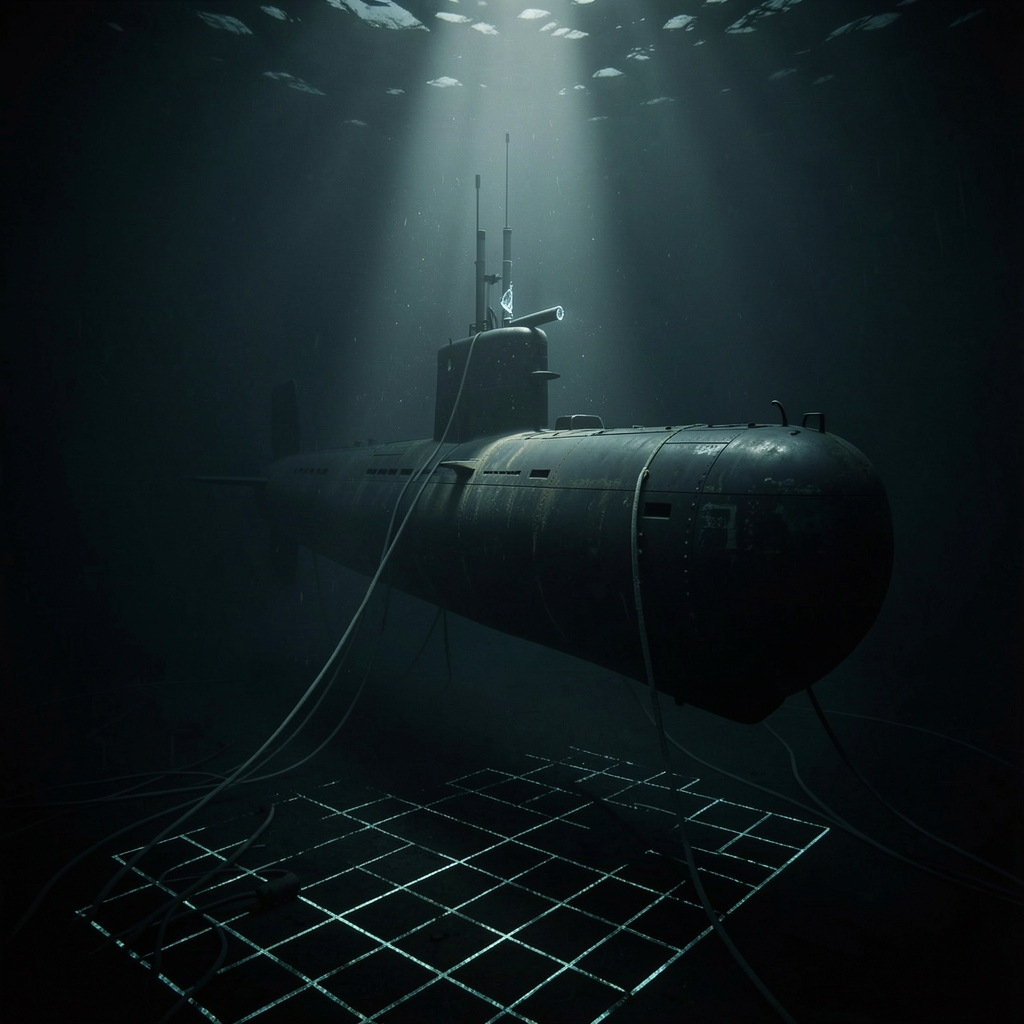
What does it mean when warships slip beneath the waves not to fight other ships but to shadow the arteries of global communications? The United Kingdom says it has an answer: a covert submarine deployment, attributed to Russia, that put undersea cables at risk and was monitored “every mile” by British forces and their allies.
What the UK reported
British defense secretary John Healey told reporters that the UK, working “together with allies,” tracked “every mile” of a submarine deployment involving an Akula‑class submarine and a pair of Main Directorate for Deep Sea Research (GUGI) surveillance submarines. That public account frames the episode as a coordinated monitoring effort by the UK and partner nations to follow the movement of specific Russian assets beneath the surface.
Context and contours of the allegation
The UK’s statement centers on two distinct categories of submarine platforms: a single Akula‑class boat and two submarines identified as GUGI surveillance vessels. The allegation, as presented by the British defense secretary, is that those submarines formed part of a covert deployment that posed a threat to undersea cables. Beyond the identification of the platforms and the claim of constant tracking, the UK’s account emphasizes allied cooperation in observing the operation.

Audit-ready is a season. It shouldn't be.
Evidence in spreadsheets, controls drifting between audits, frameworks multiplying on flat headcount. Nubivance runs continuous compliance on Rapid7 Cyber GRC - SOC 2, HIPAA, ISO 27001, PCI, CMMC.
End the scrambleWhy this account matters
- Operational visibility: The UK’s claim that it tracked the deployment “every mile” signals that allied maritime and intelligence assets were engaged in continuous surveillance of the submarines named by the British defense secretary.
- Attribution and public messaging: By identifying platform types and attributing the operation to a specific country, the UK framed the incident as a deliberate maritime activity of potential consequence, and did so in public remarks by a senior defense official.
- Allied coordination: Healey’s wording underscores that the UK did not act alone; the reporting highlights a collective monitoring effort involving allies, which carries diplomatic as well as operational weight.
- Strategic signaling: Public disclosure of tracking such submarines serves multiple purposes — alerting domestic and international audiences, shaping perceptions about intent below the surface, and setting a narrative baseline for any follow‑up steps.
Perspectives and possible next steps
Technologists and infrastructure managers, though not cited in the UK’s statement, are likely to weigh the implications for risk assessment and resilience planning. Policymakers will judge the disclosure for its diplomatic leverage and for what it permits in terms of allied responses or further public warnings. Users and businesses reliant on undersea links will watch for guidance or changes in risk posture. From an adversary perspective, public tracking reports alter the calculus of secrecy and may affect how future undersea operations are conducted and concealed.
Because the UK’s account focuses on identification of platforms and continuous allied tracking, subsequent developments to watch for include additional official disclosures, allied statements that corroborate or expand the timeline, and any operational measures announced to protect vulnerable seabed infrastructure. The raw elements reported by the British defense secretary — the platform types and the claim of allied, continuous tracking — frame the debate without detailing intent, tactics, locations, or any kinetic outcomes.
If the UK’s description is accurate, the incident raises questions about how states observe and contest activity in the deep ocean, and about how transparency and secrecy intersect beneath the waves. Will public tracking and attribution reduce risk by deterring harmful action, or will it prompt new patterns of concealment? The answer may determine how quiet the oceans remain — and how loudly those who manage global connectivity must call attention to what moves below.