"Europe’s first sixth generation Air Force," Defence Minister Luke Pollard told attendees at the Global Air and Space Chiefs’ Conference on 16 July 2026, laying down a public marker for the Royal Air Force’s next push into autonomous combat aviation.
Storm Fighter and the wider “Storm” drone family
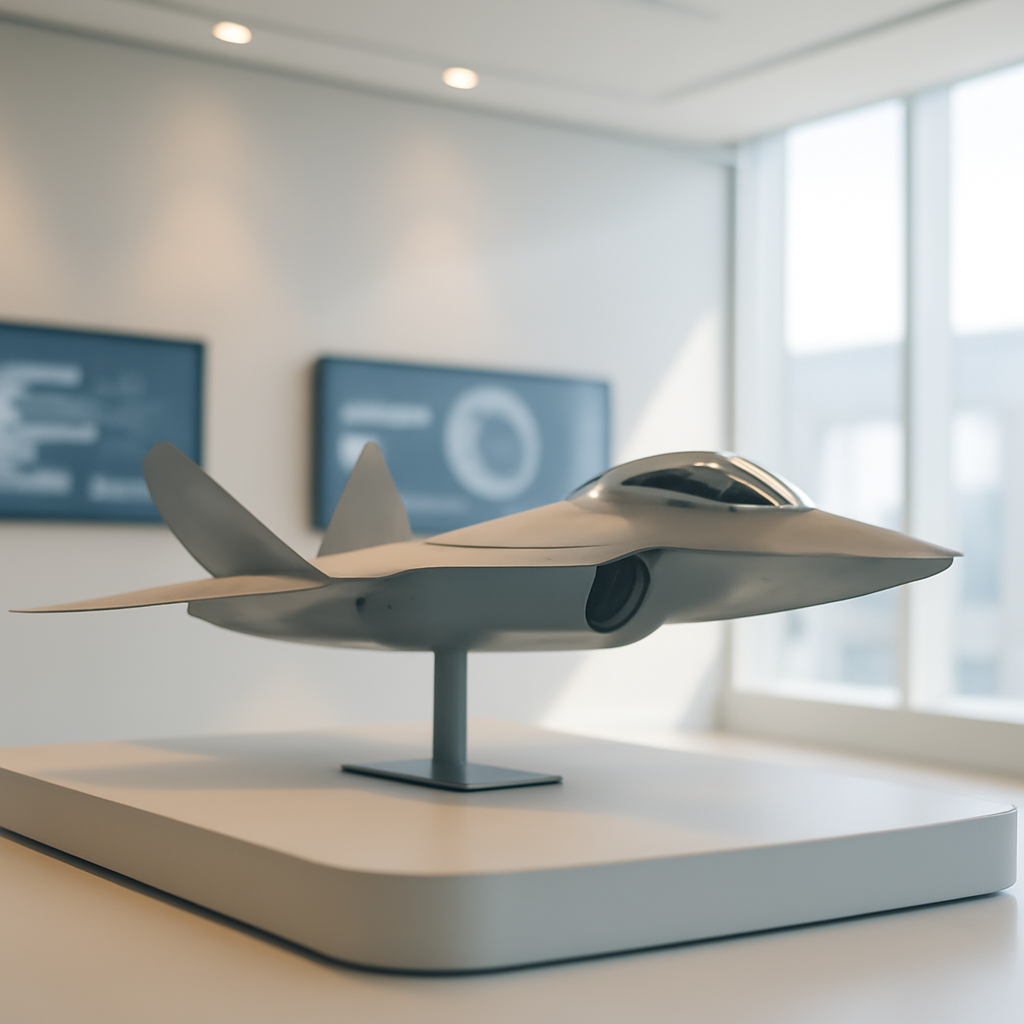
The RAF has named its Collaborative Combat Aircraft (CCA) effort Storm Fighter, positioning it as the larger, crewed-side companion inside a family of uncrewed systems. Storm Fighter is intended as an autonomous loyal-wingman to fly alongside crewed platforms — the F-35, the Eurofighter Typhoon and the future Tempest — and to add both lethality and survivability for the pilots operating with it. The programme revives a British effort into autonomous combat aviation after the cancellation of Project Mosquito under the Lightweight Affordable Novel Combat Aircraft (LANCA) programme in 2022.
Storm Shroud: the operational template
Storm Fighter builds directly on Storm Shroud, the RAF’s uncrewed electronic warfare aircraft that entered service on 2 May 2025 as the first of a family of Autonomous Collaborative Platforms (ACP). Storm Shroud is a small, catapult-launched drone based on the Tekever AR3 airframe, with a wingspan of about 3.5 metres and a range near 100 kilometres. It carries Leonardo UK’s BriteStorm jammer and was delivered in under six months. Since entering service, 216 Squadron at RAF Waddington — operating alongside the RAF Regiment and Royal Auxiliary Air Force — has expanded trials from single-aircraft sorties to multi-platform operations across RAF ranges, using Storm Shroud to fly ahead of crewed jets and disrupt hostile radars and integrated air defences.

This site is the portfolio.
OSINTSights runs on Cloudflare Workers, D1, R2, and Vectorize, with an AI pipeline on Hetzner ARM. Nubivance designed, built, and operates it. We do the same for clients.
See what we buildTwo smaller Storm types and capability roles
Air Chief Marshal Sir Harv Smyth named two smaller members of the family: Storm Chrome, an electronic attack drone, and Storm Fire, a one-way attack type with a projected range of up to 1,000 miles (1,600 kilometres). Both smaller types are built on the Storm Shroud airframe, while Storm Fighter will be a larger platform. Together the family spans radar-jamming, electronic attack and long-range strike roles, and the RAF says the newer designs draw on the operational experience Storm Shroud has accumulated in service.
Funding, timelines and targets in the Defence Investment Plan
The Storm Fighter announcement draws on funding set out in the Defence Investment Plan (DIP) published on 2 July 2026. The DIP allocates £300 million ($406 million) for collaborative combat aircraft inside a wider commitment of £5 billion for drones and advanced systems, itself part of a £298 billion overall plan. The DIP directs £31 billion to air and space over four years and also funds a technology demonstrator that the DIP says could fly by 2030 at the earliest. The RAF, however, has signalled its ambition for a demonstrator alongside a Typhoon as soon as 2027, and Chief of the Air Staff Sir Harv Smyth has set a target of an operational CCA capability before the end of the decade.
Industry interest, sustainment funding and export ambitions
BAE Systems and Boeing have both indicated interest in the CCA requirement; BAE has already submitted its Autonomous Collaborative Platform concept ahead of a formal competition. The wider air package in the DIP also includes £1.1 billion to sustain Typhoon into the 2040s and more than £2 billion toward the first F-35As that will return the RAF to NATO’s tactical nuclear mission. Defence Minister Luke Pollard described the CCA work as a blueprint for an AI-enabled air force and argued it would lay the ground for exports, growth and cooperation with friendly nations.
How the RAF, BAE Systems, and Boeing are positioned
- RAF: The service is using operational lessons from Storm Shroud to accelerate development across a family of autonomous platforms, targeting an operational CCA capability before 2030 and seeking an earlier demonstrator flight alongside the Typhoon in 2027.
- BAE Systems: BAE has already placed a near-term bid into the conversation with its Autonomous Collaborative Platform concept, signalling engagement before a formal competition and a desire to shape the requirement.
- Boeing: Boeing has publicly indicated interest in the requirement, positioning itself to compete for work as the programme moves from demonstrator to operational intent.
Storm Fighter ties together rapid fielding and longer-term ambition: an in-service electronic warfare drone delivered in months, a planned set of strike and attack types using the same airframe, and a funded pathway toward larger autonomous loyal wingmen intended to change the cost calculus of air combat. The next concrete milestones to watch are demonstrator flights — RAF’s hoped-for Typhoon-paired demonstrator in 2027 versus the DIP’s 2030 earliest date — and how industry responses translate into formal competition awards.