Russia’s Strategic Surge: The Resurgence of the Su-34 Fighter-Bomber
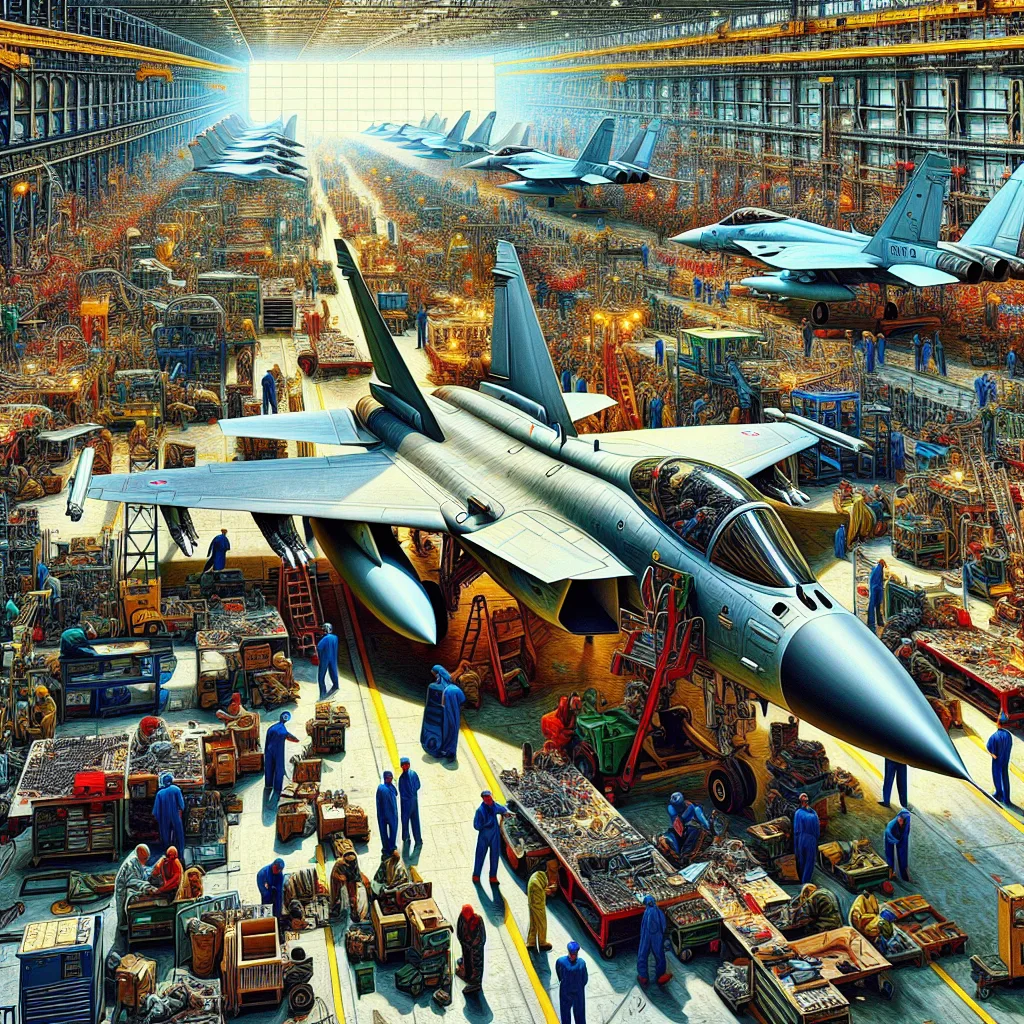
In a move that underscores its military ambitions, Russia’s United Aircraft Corporation (UAC) has announced the delivery of a new batch of Su-34 fighter-bombers to the Ministry of Defense. This development, confirmed earlier this week, marks a significant step in Russia’s ongoing efforts to modernize its air force amid a backdrop of geopolitical tensions. As the world watches, one must ask: what does this mean for regional stability and global military dynamics?
The Su-34, a twin-seat, twin-engine fighter-bomber, has been a cornerstone of Russia’s aerial capabilities since its introduction. Designed for both ground attack and air superiority missions, the aircraft boasts advanced avionics and weaponry, making it a formidable asset in modern warfare. The recent delivery includes aircraft that have successfully completed rigorous factory testing and have been transferred to operational airbases, ready for deployment. This uptick in production is not merely a logistical achievement; it reflects a broader strategy aimed at enhancing Russia’s military readiness.
Historically, the Su-34 has played a pivotal role in various conflicts, including operations in Syria, where it demonstrated its effectiveness in precision strikes against ground targets. The aircraft’s ability to carry a diverse array of munitions, coupled with its advanced electronic warfare capabilities, positions it as a key player in Russia’s military doctrine. The current increase in production can be traced back to a series of strategic decisions made by the Kremlin in response to perceived threats from NATO and other Western powers.
As of now, the geopolitical landscape is fraught with uncertainty. The ongoing conflict in Ukraine, coupled with heightened tensions in Eastern Europe, has prompted Russia to bolster its military capabilities. The UAC’s announcement comes at a time when NATO is also ramping up its presence in the region, leading to a potential arms race that could destabilize the delicate balance of power. Official statements from the Russian Ministry of Defense emphasize the importance of maintaining a robust military posture in the face of external pressures.
Why does this matter? The implications of increased Su-34 production extend beyond mere numbers. For one, it signals Russia’s commitment to modernizing its military infrastructure, which could embolden its actions on the global stage. Furthermore, the enhanced capabilities of the Su-34 may alter the strategic calculations of neighboring countries, prompting them to reconsider their own defense postures. The potential for miscalculation or escalation in a region already rife with tension cannot be overlooked.
Experts in military strategy suggest that the Su-34’s enhanced production is part of a broader trend of military modernization that Russia has been pursuing for years. According to Dr. Mark Galeotti, a prominent expert on Russian military affairs, “The Su-34 is not just a tool for combat; it is a symbol of Russia’s intent to project power and influence.” This perspective highlights the aircraft’s role not only as a military asset but also as a political statement in the context of international relations.
Looking ahead, the trajectory of Russia’s military capabilities will likely continue to evolve. Observers should watch for potential shifts in defense spending, as well as the introduction of new technologies that could further enhance the Su-34’s effectiveness. Additionally, the response from NATO and other regional powers will be critical in shaping the future security environment. Will we see an increase in joint military exercises among NATO allies, or perhaps a renewed focus on air defense systems in Eastern Europe?
In conclusion, the ramp-up in Su-34 production is more than a logistical achievement; it is a reflection of Russia’s strategic ambitions and a potential catalyst for change in the global military landscape. As nations navigate this complex web of military readiness and geopolitical maneuvering, one must ponder: how will the balance of power shift in the coming years, and what are the risks that accompany such a transformation?