Russia Hardens Its Stance: Dismissing Ceasefire Talks and Issuing a Stark Ultimatum
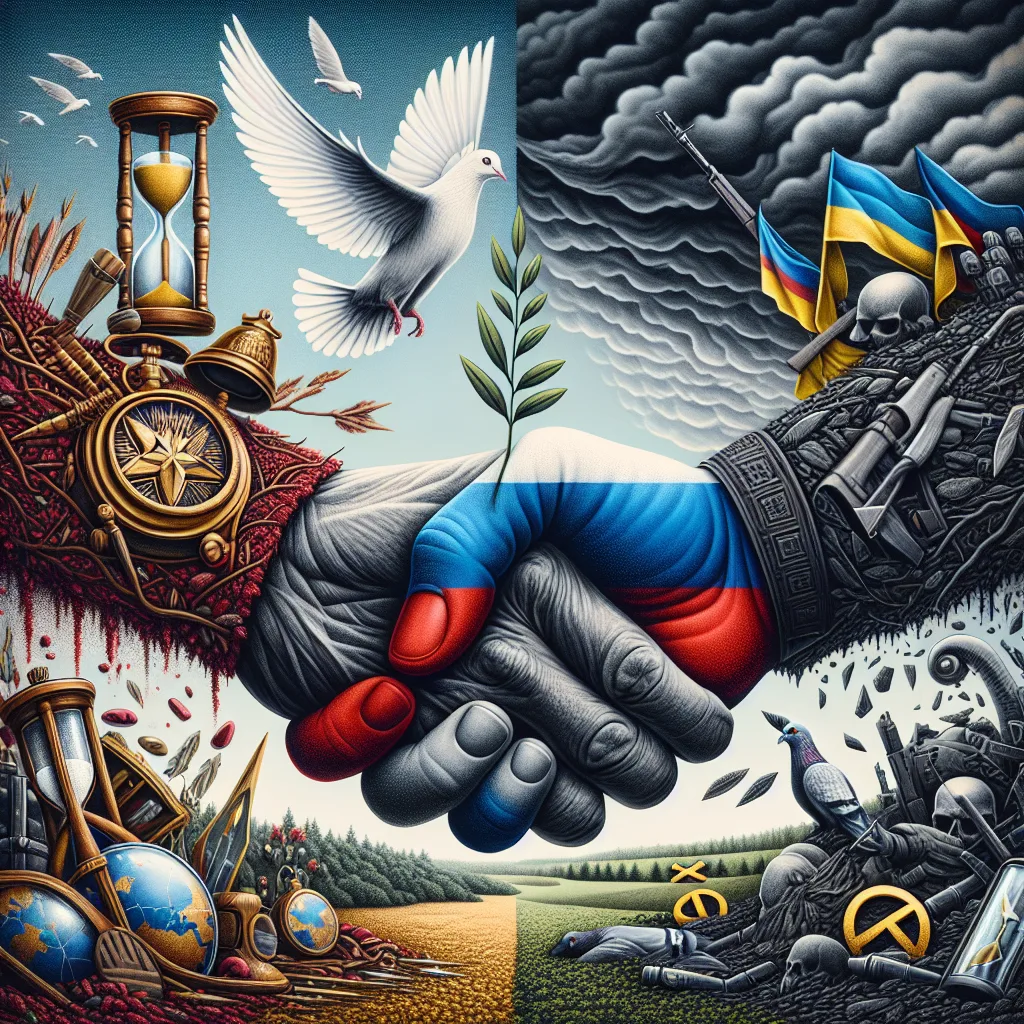
In a dramatic escalation that underscores the enduring volatility of the Ukraine conflict, Russia has unequivocally dismissed the prospect of ceasefire talks. Amid stoked tensions and a protracted struggle marked by bitter rhetoric, Deputy Foreign Minister Sergei Ryabkov declared via Russian state media that without redressing what Moscow terms the “root causes” of the war, any pause in hostilities remains off the table. The stark ultimatum, heavily criticized by Kyiv and its Western allies as tantamount to capitulation demands, casts fresh uncertainty on prospects for peace in the region.
At a time when diplomatic engagement is already strained and the stakes continue to climb, Moscow’s position sends a powerful signal: the Russian government is neither ready nor inclined to allow any temporary respite until its preconditions are met. This recent pronouncement comes as the international community grapples with the potential ramifications of a conflict that has now endured for over eight years, affecting geopolitical alignments, global markets, and the lives of millions caught in the crossfire.
Historically, ceasefire negotiations in the context of the Ukraine conflict have been fraught with complications. Since the annexation of Crimea in 2014 and the subsequent insurgencies in Eastern Ukraine, intermittent dialogues have offered hopeful, albeit short-lived, moments of reprieve. Yet, each attempt at a ceasefire has ultimately succumbed to unchecked hostilities or shifting political mazes on both sides of the divide. Russia’s latest ultimatum sharply reminds observers of these unresolved complexities—raising questions about whether genuine conflict resolution is ever within reach.
Russian officials have long argued that the conflict’s origins stem from a broader confrontation between competing geopolitical visions. By insisting on addressing these “root causes,” Moscow is attempting to reframe the negotiation narrative. However, this maneuver has been met with considerable skepticism outside Russia. Kyiv and its Western partners view such conditions as a veiled attempt to shift blame and secure strategic concessions, rather than a genuine effort to forge lasting peace.
To understand the current standoff, it is essential to appreciate the historical trajectory and the legal-political context around this conflict. Following the collapse of the Soviet Union, Ukraine embarked on a path of asserting its sovereignty, often clashing with Russian interests. The recurring disputes, punctuated by moments of both negotiation and armed escalation, provide important context for today’s ultimatum. Analysis from reputable sources such as Reuters and the Council on Foreign Relations has noted that the Ukraine conflict is not merely a territorial dispute but reflects deep-seated ideological divides and competing narratives.
So, what exactly is unfolding now? The Russian government has articulated a set of demands that Moscow insists are critical to ending the hostilities. According to Deputy Foreign Minister Ryabkov’s remarks, any attempt at halting the ongoing conflict must address these underlying issues—a notion that Kyiv and many Western allies dismiss as an unacceptable precondition. Instead of a mutual pause for a negotiated settlement, the conditions laid out appear to place the onus solely on Ukraine and its partners to concede significant geopolitical and security interests.
This latest development compels us to consider the implications through a multifaceted lens. Key points include:
- Geopolitical Realities: The ultimatum underscores Russia’s commitment to altering the terms of international engagement, suggesting a willingness to risk broader instability rather than yield to diplomatic pressures.
- Human Impact: For the millions of civilians enduring the hardships of war, the dismissal of ceasefire talks spells the likelihood of continued violence and further displacement.
- Military Posturing: With no prospect for an immediate de-escalation, both sides may resort to recalibrated military strategies, potentially leading to intensified confrontations on the front lines.
- International Diplomacy: The ultimatum is set to complicate ongoing negotiations among NATO members and the European Union, all of whom are closely monitoring Russia’s posture in this evolving conflict.
In examining the broader strategic landscape, it is crucial to recognize that this latest move by Russia is consistent with a long-standing pattern of leveraging military might to extract diplomatic concessions. Influential voices such as former U.S. Secretary of State Henry Kissinger and policy analysts from the Carnegie Endowment for International Peace have emphasized that conflicts of this nature rarely find swift resolutions. They warn that such ultimatums may be intended more as bargaining chips than as steps toward any real negotiation.
Moreover, Kremlin insiders have hinted that behind the stern rhetoric lies a calculated effort to reshape the security framework of Eastern Europe. By forcing Ukraine and its allies into a reactive posture, Russia appears to be banking on a scenario where prolonged instability can be exploited to consolidate territorial or strategic gains. This view is reinforced by recent commentaries from experts at the International Crisis Group, who note that any emergency measure from Moscow is likely aimed as much at domestic audiences as it is at international detractors.
In Kyiv, officials have responded with a mix of indignation and cautious pragmatism. Ukrainian leadership, drawn from a tradition of resilient governance in the face of external pressure, contends that capitulation to Moscow’s noted conditions would undermine national sovereignty. Public addresses by Ukrainian officials have reiterated the commitment to national defense and the pursuit of internationally backed negotiations, despite acknowledging the difficulty of the path forward.
From the perspective of Western policymakers, the ultimatum reaffirms long-held concerns about Russian objectives in the region. European Union foreign policy spokesperson Josep Borrell, for instance, has been quoted in previous statements emphasizing the need to maintain a robust defensive posture while seeking diplomatic channels that do not compromise democratic values or international law. These perspectives are echoed by officials at NATO, who stress that any agreement must safeguard not only Ukraine’s territorial integrity but also the broader stability of the region.
International energy markets and economic stakeholders are also braced for potential fallout. Russia’s geopolitical maneuvers have always had a pronounced impact on global trade and energy supplies—a factor that echoes today as well. With Russia being a major supplier of natural gas and oil to Europe, any prolonged conflict or a shift in political stability in the region triggers caution among energy analysts. The possibility of renewed sanctions or trade disruptions adds another layer of complexity, reminding us that geopolitical struggles rarely stay confined to military theaters.
Expert analysis on the matter often highlights the difficulty of reconciling starkly divergent narratives. Political scientist and columnist Anne Applebaum has noted in her works that when one party frames conflict as a struggle to address the deep historical and cultural grievances, it can blur the lines between genuine negotiation and outright coercion. In this instance, Moscow’s insistence on redressing these “root causes” arguably serves to sidestep accountability for its own actions while imposing a highly conditional framework on any potential peace.
While Russia’s current posture might evoke memories of past Cold War brinkmanship, modern conflicts are invariably shaped by an interplay of cyber, economic, and diplomatic strategies. This convergence complicates traditional paradigms of military engagement. For instance, insights from the Atlantic Council have underlined that modern warfare now incorporates hybrid tactics that blend conventional kinetic actions with digital and economic warfare. Observers warn that if the conflict intensifies, it may well serve as a testing ground for these emerging strategies, with consequences that extend far beyond Eastern Europe’s borders.
Looking ahead, several possible scenarios warrant close attention. Should Moscow maintain its uncompromising stance, further prolongation of hostilities seems likely. At the same time, the international community may intensify diplomatic outreach in an effort to mitigate the spiraling conflict. Under such circumstances, key developments to watch for include:
- Diplomatic Shifts: Whether Western allies might recalibrate their approach to pressure a reconsideration of Moscow’s demands or, alternatively, adopt a stricter stance against any form of capitulation.
- Military Realignments: The potential for tactical redeployments on either side that could either consolidate positions or, contrarily, lead to further inadvertent escalations.
- Economic Backlashes: Possible reactions in global markets, especially concerning energy supplies and sanctions regimes, which may amplify the economic stakes of any military escalation.
- Humanitarian Impacts: With renewed hostilities, relief agencies and international humanitarian organizations are poised to issue urgent calls for assistance to avert a deepening crisis among displaced populations.
Ultimately, this development is a stark reminder of the perennial challenges of conflict resolution. As history has demonstrated, conflicts enshrouded in a mix of historical grievances and modern geopolitical contestations are rarely resolved without significant compromise—often at high human and economic costs. The current ultimatum from Moscow not only underscores its own policy parameters but also signals to the world that a temporary ceasefire will not suffice unless deep-seated issues are fundamentally addressed.
For policymakers, military strategists, and humanitarian actors alike, the unfolding situation offers both a cautionary tale and a call to renewed, comprehensive engagement. As Western allies and Ukrainian representatives continue to counter Moscow’s assertions, the global community must brace itself for another round of intense diplomatic maneuvering—an effort that, despite optimism, may well require years to bear fruit.
In reflecting on the broader picture, one is left to wonder: In a conflict defined as much by ideology as by territorial disputes, can there ever truly be a moment of silence that paves the way for genuine dialogue? When the conditions for peace are inextricably linked to solving disputes that date back decades, the promise of a ceasefire remains a tantalizing mirage—a brief, illusive pause in a landscape too fraught with historical mistrust and evolving ambitions.
With every new declaration and unequivocal statement, the stakes continue to mount. The human cost remains the most poignant reminder of what is at risk. As soldiers brace for further clashes and civilians face the ongoing inevitability of disruption, the international community is compelled to navigate this labyrinth of competing claims, historical narratives, and strategic imperatives. In the end, the question looms large: Will the pursuit of power and principle yield lasting peace, or is the cycle of conflict destined to perpetuate further hardships for generations to come?