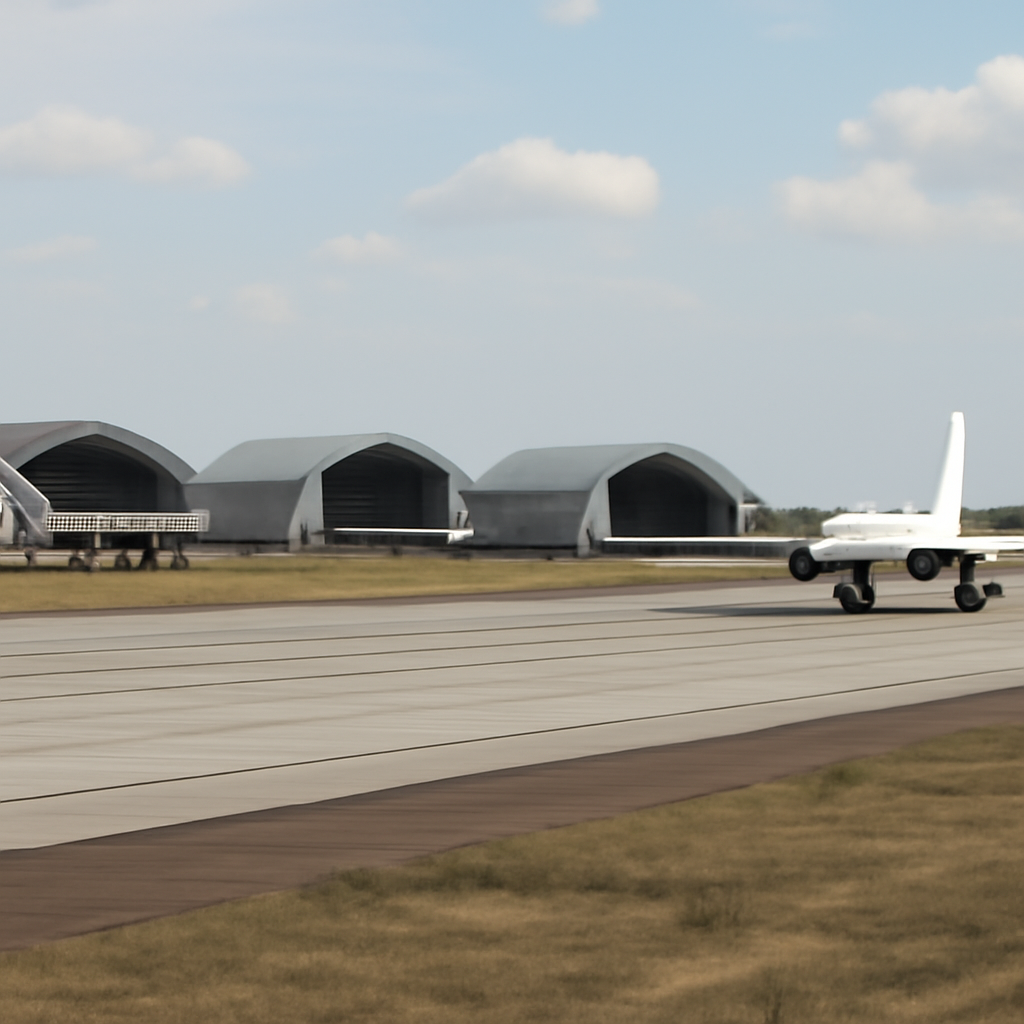
No fewer than 17 protective shelters appear to be under construction at Engels Air Base, according to a June 20, 2026 satellite image obtained by TWZ from Planet Labs.
What the imagery shows at Engels Air Base
The Planet Labs photograph dated June 20, 2026, and reviewed by TWZ documents extensive construction work in the northeast corner of Engels Air Base in the Saratov region. The new structures are much larger than previously built Russian hardened aircraft shelters, matching the dimensions required to house Tu-95MS "Bear‑H" and Tu-160 "Blackjack" strategic bombers permanently stationed there.
Engels — also called Engels‑2 — already features two long runways reconstructed between 2012 and 2017 (around 11,500 feet long; one roughly 230 feet wide and a later parallel runway about 200 feet wide), and a refurbished aircraft parking area. The June 20 imagery is the clearest indication yet that the protective‑shelter program is being extended from tactical aircraft to strategic bombers.
Why Engels matters: units, missions, and prior attacks
Engels houses the 22nd Heavy Bomber Aviation Division, which includes Russia’s only squadron of Tu‑160s and at least one squadron of Tu‑95MS aircraft. Both bomber types have been employed in strikes in the conflict in Ukraine, including attacks on energy infrastructure and other civilian and military targets.
The base has been repeatedly targeted. In January 2025 a "massive" Ukrainian drone attack burned a fuel storage tank farm (Rosreserv) near Engels for days, prompting a regional state of emergency. In March 2025 long‑range Ukrainian drones struck what appears to have been a weapons storage area at the base. Engels was also attacked multiple times in December 2022; on at least one occasion Russian officials said the strike used Soviet‑made jet‑powered uncrewed aerial vehicles modified to carry explosives. Those operations underscored that relatively slow, low‑flying drones can reach strategic targets deep inside Russian territory.

This site is the portfolio.
OSINTSights runs on Cloudflare Workers, D1, R2, and Vectorize, with an AI pipeline on Hetzner ARM. Nubivance designed, built, and operates it. We do the same for clients.
See what we buildHow Russia has tried to protect aircraft so far
Since the start of the conflict, Russian airbases have pursued multiple force‑protection measures. Aircraft dispersal has been used where possible; one runway at Engels has long functioned as dispersed parking. Bases installed blast walls between active aircraft and have added dozens of hardened aircraft shelters sized for tactical jets.
Because earlier shelters were too small for strategic bombers, Russia adopted alternative countermeasures for its largest aircraft: discarded airframes as decoys, painted silhouettes on concrete, and—most unusually—stacks of vehicle tires placed on upper surfaces of some Tu‑95MS airframes to confuse image‑matching seekers. TWZ first observed tires on Engels bombers in August 2023.
What the new bomber shelters might — and might not — provide
The construction of bomber‑sized shelters is unprecedented in recent Russian practice. TWZ notes two common shelter builds in Russia: (1) more robust tactical shelters using steel frames with prefabricated concrete elements that can blunt many drone and cluster‑munition strikes but would not necessarily survive a direct hit by a large cruise missile; and (2) lighter curved sheet‑metal hangars that can serve primarily as a screen against small FPV and "bomber" drones. A metal hangar at Marinovka Air Base shows extensive shrapnel damage after a Ukrainian drone strike, illustrating the limits of lighter constructions.
At present it is unclear which shelter type is being installed at Engels. Even more fragile shelters could still deny visual observation of parked bombers, complicate targeting, and reduce damage from smaller drones; more robust shelters could materially raise the cost and difficulty for attackers attempting to disable or destroy strategic aircraft on the ground.
What this means for Russia’s Long‑Range Aviation, Ukraine, and the U.S. military and Congress
- Russia’s Long‑Range Aviation Branch: The shelter program represents a doctrinal shift toward active hardening of high‑value strategic assets. For aircraft that are costly or difficult to replace, such as the Tu‑95MS and the slowly‑revived Tu‑160 program, base hardening is a tangible attempt to preserve capability.
- Ukraine: Consistent drone and cruise‑missile operations against bomber facilities have been cited as the direct reason for extending shelter protection to bombers. Shelters will complicate targeting and may force adaptation in Ukrainian operational planning if bombers are moved under cover.
- The U.S. military and Congress: TWZ notes a parallel debate in the United States about investing in hardened shelters and active air‑and‑missile defenses after high‑profile drone swarms exposed vulnerabilities at bases such as Barksdale AFB. Russia’s decision to harden bomber fields underscores the operational consequences of sustained drone and cruise threats for basing decisions and infrastructure priorities.
Construction at Engels marks what TWZ calls a "new doctrine of force protection" for Russia’s strategic bomber fleet, driven by repeated strikes that are costly to absorb. The central unanswered fact is the level of hardening the new shelters will provide; that detail will determine whether they materially blunt future attacks or serve primarily to conceal movements and complicate targeting.
https://www.twz.com/air/russia-is-building-huge-protective-shelters-for-its-strategic-bombers